
GHIAL commissions cargo terminal 2 at Hyderabad International Airport
The new facility begins with 50,000 metric tonnes annual capacity, expandable to 100,000 and includes a temperature-controlled pharma zone.
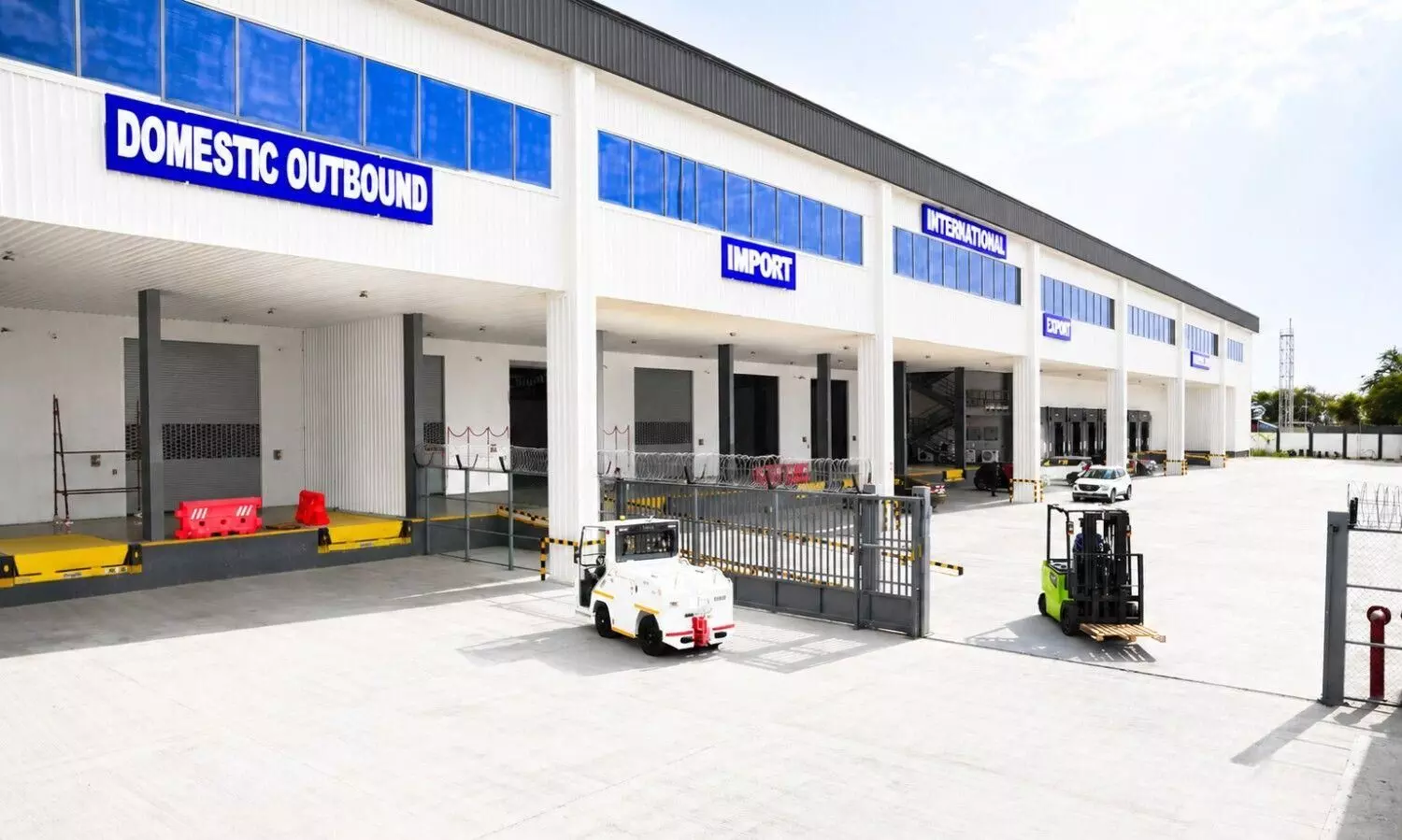
GMR Hyderabad International Airport (GHIAL) has commissioned Cargo Terminal 2 at Hyderabad International Airport, marking a major step in the airport’s cargo expansion plans. The new facility is designed to meet rising domestic and international cargo demand and support airlines, freight forwarders, logistics operators and regulatory agencies with next-generation cargo infrastructure.
Spread across 16,864 sqm, the terminal has been developed to improve operational efficiency and support long-term growth. It will begin operations with a cargo handling capacity of around 50,000 metric tonnes per annum, with dedicated expansion space allowing capacity to increase to 100,000 metric tonnes per annum.
Kadhir Kadhiravan, CEO, GHIAL, said the commissioning of Cargo Terminal 2 marks an important moment for the airport and Hyderabad’s position as an air cargo and logistics gateway in Asia. He said the terminal has been built to support cargo segments including pharmaceuticals and express shipments, offering the speed, precision and reliability required by global supply chains. He added that the facility will support the airport’s efforts to strengthen cargo infrastructure and contribute to regional economic growth.
Sanjiv Edward, CEO, GMR Aero Cargo & Logistics, said the launch of the new cargo terminal strengthens India’s air logistics ecosystem and reflects the company’s commitment to world-class infrastructure and value-added services for the industry.
The terminal includes dedicated inbound and outbound cargo zones, export and import processing areas, multi-level racking systems for storage, and build-up and breakdown areas to allow parallel shipment processing. A key feature is a fully temperature-controlled pharma zone designed to handle pharmaceutical and perishable cargo.
The facility is equipped with temperature cut-off systems and continuous monitoring technology to support cold-chain handling. According to GHIAL, the terminal will help improve cargo processing, support faster regulatory clearances and reduce cargo dwell times. It also includes enhanced airside-landside connectivity, dedicated road access and power infrastructure to support uninterrupted handling of pharmaceuticals, perishables, express consignments and general cargo.
GHIAL said the terminal has been developed with a focus on sustainability through energy-efficient lighting, optimised HVAC systems, insulation in temperature-controlled areas and resource-efficient building materials. Workflow planning and layout design are also aimed at reducing equipment idling time and lowering energy consumption.
The terminal is also equipped with a multi-level fire detection and alarm system for early hazard detection, aimed at maintaining safety standards for cargo, infrastructure and personnel.