
DSV opens Incheon hub to fortify global healthcare supply chains
DSV’s new Air ThermoDirect facility at Incheon Airport offers cold storage and tarmac access to connect South Korea’s biotech hub with global markets.
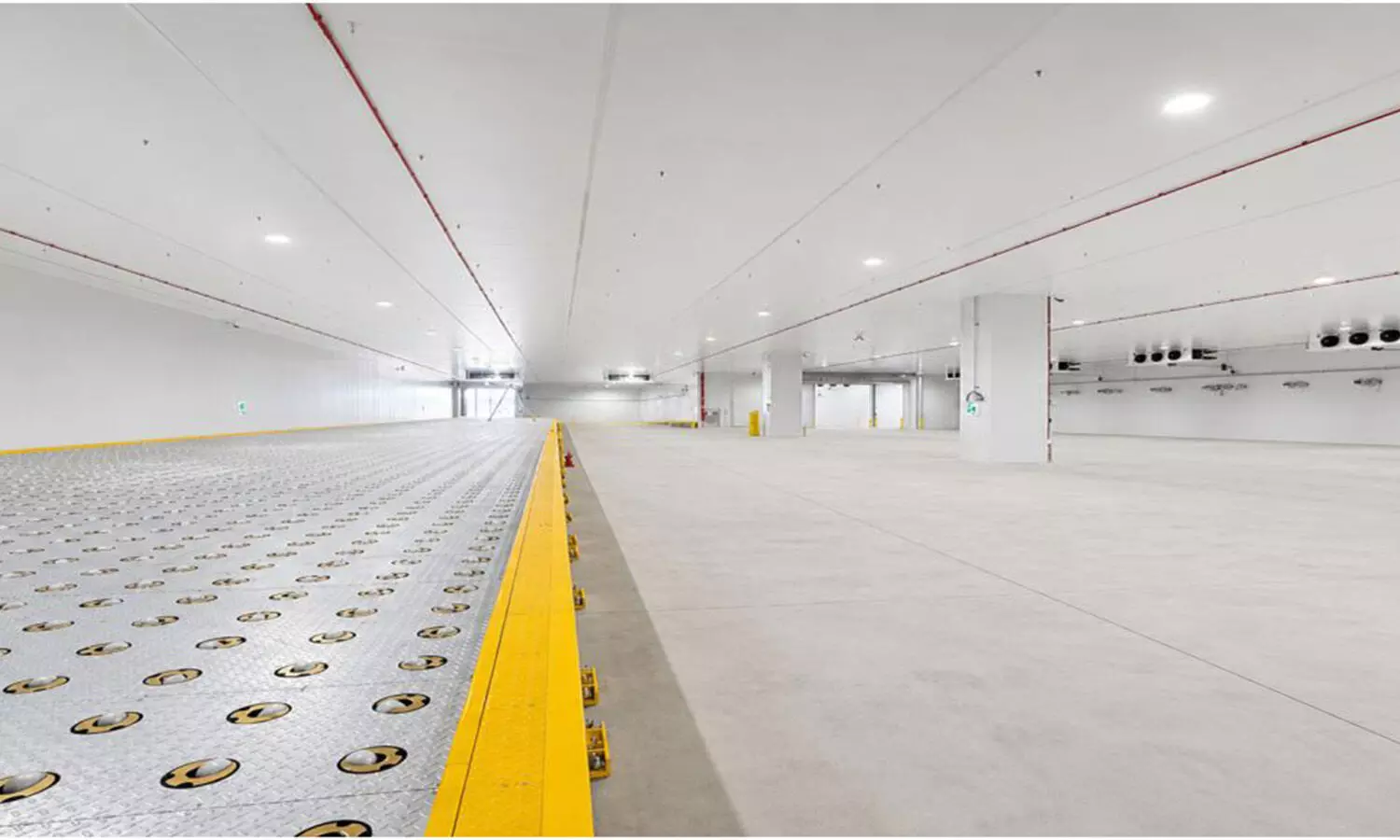
Image source: DSV - Global Transport and Logistics
Global biomanufacturing has experienced a major shift towards East Asia, with South Korea emerging as an undeniable heavyweight in contract manufacturing and biosimilar production. To keep pace with the delicate logistics demands of these high-value biological products, transport giant DSV has launched a specialised Air ThermoDirect facility at Incheon International Airport. The expansion aims to fortify the critical cold-chain bridge between South Korea’s burgeoning biopharmaceutical sector and major clinical and commercial markets across North America and Western Europe.
South Korea’s life sciences footprint has expanded rapidly, anchored by massive biomanufacturing complexes in Songdo and advanced research hubs surrounding Seoul. However, producing sophisticated biopharmaceuticals, monoclonal antibodies, and temperature-sensitive vaccines is only half the battle; getting them safely across oceans requires an unbroken temperature-controlled infrastructure. DSV’s new Incheon facility addresses this challenge directly with more than 2,000 sqm of dedicated storage maintained strictly between 2-8°C. Built to adhere strictly to Good Distribution Practice (GDP) standards, the hub features direct tarmac access, a crucial structural asset that minimises ramp exposure time, one of the most perilous failure points in temperature-controlled air freight.
Beyond physical footprint, the facility relies on a combination of dedicated air transport capacity, reusable passive and active thermal packaging systems, and real-time end-to-end tracking capabilities. By integrating reusable thermal containers, the solution not only mitigates environmental impacts and waste management burdens for drug manufacturers but also maintains strict thermal integrity over extended transit durations. In an industry where temperature excursions can render millions of dollars of delicate biologics completely useless, seamless cold-chain continuity provides critical risk mitigation for life sciences shippers.
Emphasising the strategic necessity of this infrastructural move, Kenneth Kallström, Executive Vice President, Global Enterprise Vertical Head, Healthcare at DSV, highlighted the broader supply chain dynamics:
"By expanding Air ThermoDirect into Korea through Incheon, we are connecting two of the world's most important healthcare and life sciences markets with one of Asia's leading pharmaceutical and biopharmaceutical hubs. This investment strengthens the resilience, visibility and control that healthcare customers increasingly need across global supply chains."
The opening comes at a crucial moment for global life sciences logistics. Supply chain recalibrations, paired with the rapid commercial growth of high-value biologics, cell and gene therapies, and specialised vaccines, have forced freight forwarders to move beyond standard cargo offerings. The Asia-to-North America and Asia-to-Europe trade lanes are notoriously vulnerable to congestion, cargo hold-ups, and variable climate conditions. Having dedicated air charter networks operating alongside specialised airport facilities provides biopharma companies with predictive schedules and faster transit times, essential for time-critical therapies and clinical trial materials.
As South Korea continues to funnel investments into expanding its biomanufacturing capacity, the supporting logistics architecture must evolve in tandem. By pairing localised tarmac access with specialised thermal storage and global air corridors, logistics providers like DSV are building the backbone required for the next generation of global biopharmaceutical trade. For drugmakers looking to mitigate geopolitical disruptions and supply chain vulnerabilities, robust end-to-end cold chains are no longer just an added operational benefit. They are a prerequisite for staying competitive in modern healthcare markets.