


Behind the scenes: 700 tonnes of stage gear airlifted to São Paulo
Challenge Group coordinates a complex multi-airline freight operation to power a major stadium concert tour stop in Brazil.
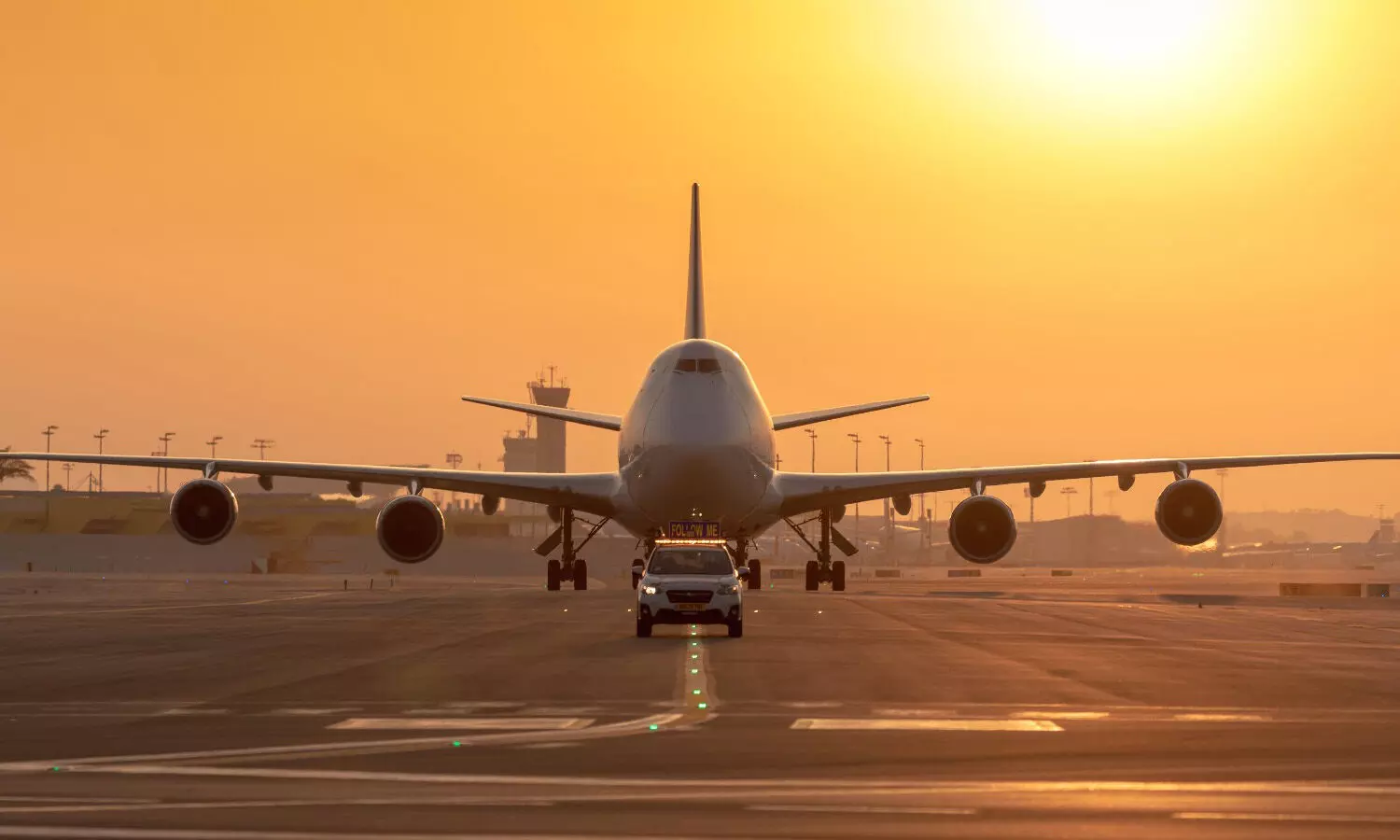
In the global live entertainment industry, the opening countdown of a stadium concert represents an unyielding deadline. Tickets are sold months in advance, fans travel from across international borders, and stage crews operate on non-negotiable assembly schedules. Behind the flashing light arrays, sound systems, and massive video displays lies one of the most demanding and time-critical supply chain movements in civil aviation. When a major global recording artist scheduled a tour stop in São Paulo, Brazil, the air logistics requirement was immense: moving 700 tonnes of high-value production cargo from Europe to South America within a compressed three-day window.
The mammoth airlift required an armada of seven Boeing 747 freighter aircraft departing from Liège Airport (LGG) in Belgium and arriving at Viracopos International Airport (VCP) in São Paulo. Whilst the transatlantic movement of widebody freighters naturally draws public attention, the true operational crucible of concert logistics is forged on the ground. Transporting 700 tonnes of specialised gear is not simply a matter of loading aircraft holds to volumetric capacity. Instead, it is a masterclass in chronological staging, precise weight distribution, regulatory synchronisation, and cross-organisational orchestration.
Every single pallet position across the aircraft holds must be meticulously mapped to match the site assembly sequence. A single mismanaged pallet or out-of-sequence delivery can cause immediate delays for ground assembly teams thousands of miles away, threatening the concert schedule itself.
A multi-carrier coalition in the skies
Executing an airlift of this magnitude across a tight 72-hour operational window required a collaborative, multi-airline framework. Although Challenge Group acted as the central orchestrator and ground handling architect at origin, the air transportation phase engaged four distinct cargo carriers operating out of the Liège hub.
Highlighting the collaborative nature of the mission, Yossi Shoukroun, Chief Executive Officer of Challenge Group, provided important context regarding the distribution of responsibility across the project: "While Challenge Group played a central role in this project, the air-transportation itself was performed by four airlines: Challenge Airlines, Atlas Air, Cargolux, and Network Aviation. This was a collaborative effort, and each carrier contributed to the successful execution of the project.
The real operational complexity, however, was on the ground. Challenge Handling, an integral part of Challenge Group, was responsible for managing the highly demanding warehouse and ground handling operation. Receiving hundreds of tonnes of production equipment within a very short timeframe, planning the build-up, and loading each aircraft precisely according to the sequence required for assembly at destination was the true logistical challenge."
The allocation of flights illustrated the versatility necessary for heavy-lift event logistics. Challenge Airlines operated one of the seven Boeing 747 freighter flights, focusing primarily on oversized project cargo and specialised technical equipment critical to the core stage infrastructure. The remaining six departures were shared amongst partner carriers, namely Atlas Air, Cargolux, and Network Aviation. This distribution ensured that the sudden influx of tour freight was absorbed without over-straining any single carrier's fleet or regional schedule.
Managing cargo acceptance across four distinct air carriers meant adhering strictly to each airline's operational standards. The shipments encompassed varied items, including dangerous goods such as lithium batteries used to power touring electronics, requiring precise documentation and individual loadmaster sign-offs before acceptance onto each respective aircraft. Ramp handling responsibilities at Liège were similarly divided to maintain operational momentum: Challenge Handling performed the ramp handling for the Challenge Airlines flight and one partner carrier flight, while two other major ground handling providers handled the remaining departures.
Pre-flight ground choreography at Liège Airport
Long before the first heavy goods vehicle arrived at the loading docks at Liège Airport, months of preparation had already been undertaken. Detailed planning between Challenge Handling, the client, and operational stakeholders began at the end of May, establishing a comprehensive operational blueprint designed to map every stage of the cargo lifecycle.
When the live operation commenced, the sheer volume of incoming freight presented an immediate spatial and physical challenge. Over two peak operational days, approximately 80 heavy trucks arrived at the Challenge Handling facility in Liège. Offloading 80 trucks carrying 700 tonnes of specialised equipment while maintaining an uninterrupted warehouse flow required precise schedule management.
To manage the footprint, Challenge Handling dedicated the initial day of the operation entirely to infrastructure preparation. A total of 156 Unit Load Devices (ULDs), the specialised pallets and containers used in widebody freighter aircraft, were positioned and prepared across the facility floor before the main cargo influx began. This staging phase eliminated operational bottlenecks, providing immediate build-up points as trucks arrived at the warehouse bays.
To maintain continuous throughput without exceeding facility capacity, Challenge Handling deployed three specialised operational teams working concurrently. The flow was governed by backward-engineered schedules that integrated truck arrival times, warehouse storage capacity, security screening throughput, ULD availability, cargo build-up, airline acceptance procedures, and ramp readiness. Controlling this end-to-end cargo stream ensured that no individual aircraft movement created a downstream bottleneck for subsequent departures.
Reverse-engineered build-up and assembly sequencing
Unlike standard commercial freight, such as manufactured goods or agricultural produce, touring production gear cannot be processed as interchangeable volume. A stadium concert stage is erected in strict chronological phases. Base scaffolding, structural steel, and primary rigging must be assembled long before delicate lighting systems, audio arrays, video walls, or musical instruments are unboxed on site.
Consequently, the physical build-up of cargo on ULDs at the origin airport directly governs the construction timeline at the destination venue. If essential foundation components are inadvertently built onto a ULD scheduled for a later flight, or placed deep within a lower deck container, the construction crew at Viracopos International Airport faces immediate operational delays.
Every single pallet position across the seven Boeing 747 freighters was mapped to align with the stage construction sequence in Brazil. Cargo was sorted, built, and secured onto the 156 ULDs at Liège in the exact order required by the ground crews awaiting its arrival. This detailed planning yielded immediate efficiency upon arrival in South America. For the Challenge Airlines flight landing at Viracopos, ground teams achieved a complete aircraft offload in approximately 1 hour and 30 minutes, allowing the production crew to transfer priority gear straight into road convoys heading to the concert venue without delay.
Navigating security protocols and customs procedures
Processing 700 tonnes of high-value international freight within a tight 72-hour window requires total regulatory synchronisation. Any delay in customs clearances or security screening can instantly ground a flight, causing cascading delays across the entire tour schedule.
Security screening for the operation at Liège was carried out on a large scale. Challenge Handling deployed two dedicated Explosive Detection Dog (EDD) teams operating across eight continuous shifts. These K9 units screened incoming freight in real time as it was offloaded from the 80 arriving trucks, ensuring every item met stringent aviation security standards without slowing the physical build-up process in the warehouse.
At the same time, administrative documentation was managed through the airport's cargo office. Because international concert tours involve millions of pounds worth of specialised gear moving temporarily between nations, customs compliance relies heavily on ATA Carnets. A total of 28 ATA Carnets had to be checked, processed, and stamped during the export operation. Challenge Handling integrated the physical cargo processing with documentation validation, ensuring that customs clearance, security screening, and loadmaster sign-offs progressed in parallel streams.
The human element and cross-functional collaboration
Behind the technical metrics, ULD counts, and flight schedules was a highly dedicated workforce operating under intense focus. Across the two main operational days at Liège Airport, Challenge Handling deployed 55 employees dedicated to the project. These air cargo specialists worked alongside stagehands from Rock-it Cargo and representatives from the artist's production team.
This tripartite collaboration, combining air cargo handlers, professional stagehands, and tour production managers, was fundamental to executing the operation. Ground handling personnel contributed expertise in aviation safety, warehouse staging, ULD build mechanics, and apron operations. Stagehands brought detailed knowledge of the touring equipment, identifying delicate gear, fragile electronics, and assembly-critical components. Loadmasters from each participating airline provided final validation, confirming that ULD builds met weight distribution and structural integrity standards before signing off for flight acceptance.
Recognising that intense logistics operations depend on human stamina, Challenge Group established dedicated support facilities on site. This included continuous catering support and structured rest areas for personnel working extended shifts through the day and night. Supporting the workforce was treated as an essential operational requirement, ensuring precision and safety were maintained throughout the heavy-lift period.
Risk mitigation and strategic contingency planning.
In tour logistics, traditional operational buffers do not exist. When show dates are fixed, contingency planning must be built directly into flight and ground architectures rather than applied reactively.
From a flight planning perspective, maximum-payload calculations were performed well in advance to determine where additional fuel reserves could be carried to offer operational flexibility. Flight paths were plotted to avoid regions presenting elevated weather risks, while destination alternate airports in Brazil and en-route alternates were selected based on real-time weather data and facility capabilities.
On the ground at Liège, contingency management relied on real-time communication networks and agile schedule adjustments. Operations were planned hour by hour and, during critical flight preparation windows, minute by minute. Detailed scenarios covered potential truck delays, weather shifts on the apron, security screening surges, or minor maintenance holds on incoming aircraft. Rather than relying on static time blocks, Challenge Handling maintained continuous communication across all operational leaders, allowing warehouse, apron, customs, and airline teams to adjust manpower and equipment immediately whenever real-world conditions deviated from the schedule.
The successful execution of the São Paulo tour operation illustrates a broader evolution in heavy logistics. Providing freighter aircraft capacity is no longer sufficient on its own; modern high-value supply chains require total end-to-end operational orchestration.
Elaborating on the broader ethos behind managing high-complexity operations, Yossi Shoukroun highlighted the standard of execution required for missions of this scale: "In projects like these, it is not simply about filling an aircraft with cargo. Every pallet position matters. Every piece of equipment must arrive in the exact order required by the stage construction teams, because there is virtually no room for delay. Concert schedules are fixed months in advance, tickets have already been sold, and thousands of fans expect the show to begin on time. Any deviation in planning or execution can have a significant impact on the entire production."
He further underscored how integrated capabilities enable Challenge Group to deliver on demanding assignments: "This project perfectly illustrates what Challenge Group stands for. Our strength lies not only in providing airlift capacity but in understanding the operational complexity behind every critical shipment and orchestrating all elements of the logistics chain with precision, speed, and reliability. This operational excellence, combined with the expertise of our airline, handling, logistics, and support teams, is what allows us to deliver on some of the industry’s most demanding missions. It is also what gives real meaning to our motto: 'Challenge Accepted.' It is not simply a slogan, it reflects our mindset and our commitment to finding solutions where complexity is the norm."
As global stadium tours grow in scale, technical complexity, and geographical reach, the demand for specialised air freight orchestration will continue to rise. The São Paulo operation demonstrates that when multi-carrier capacity, expert ground handling, precise build sequencing, and proactive risk management converge, even the most complex logistical challenges can be delivered seamlessly on time.

"I bring stories to life from the heart of the air cargo, logistics, and aviation supply chain industries. As a News Correspondent at Stat Publishing Group, my focus is on delivering in-depth coverage, industry trends, and expert insights that drive conversations and shape perspectives. With a background in visual communication, photography, and content creation and storytelling, ensuring every report provides value to industry professionals.


