
UPS advances multi-year, $2B network upgrade across continents
UPS reaffirms its 2024–2028 plan exceeding $2 billion, adding facilities in the Philippines, Canada and Hong Kong to boost its global network.
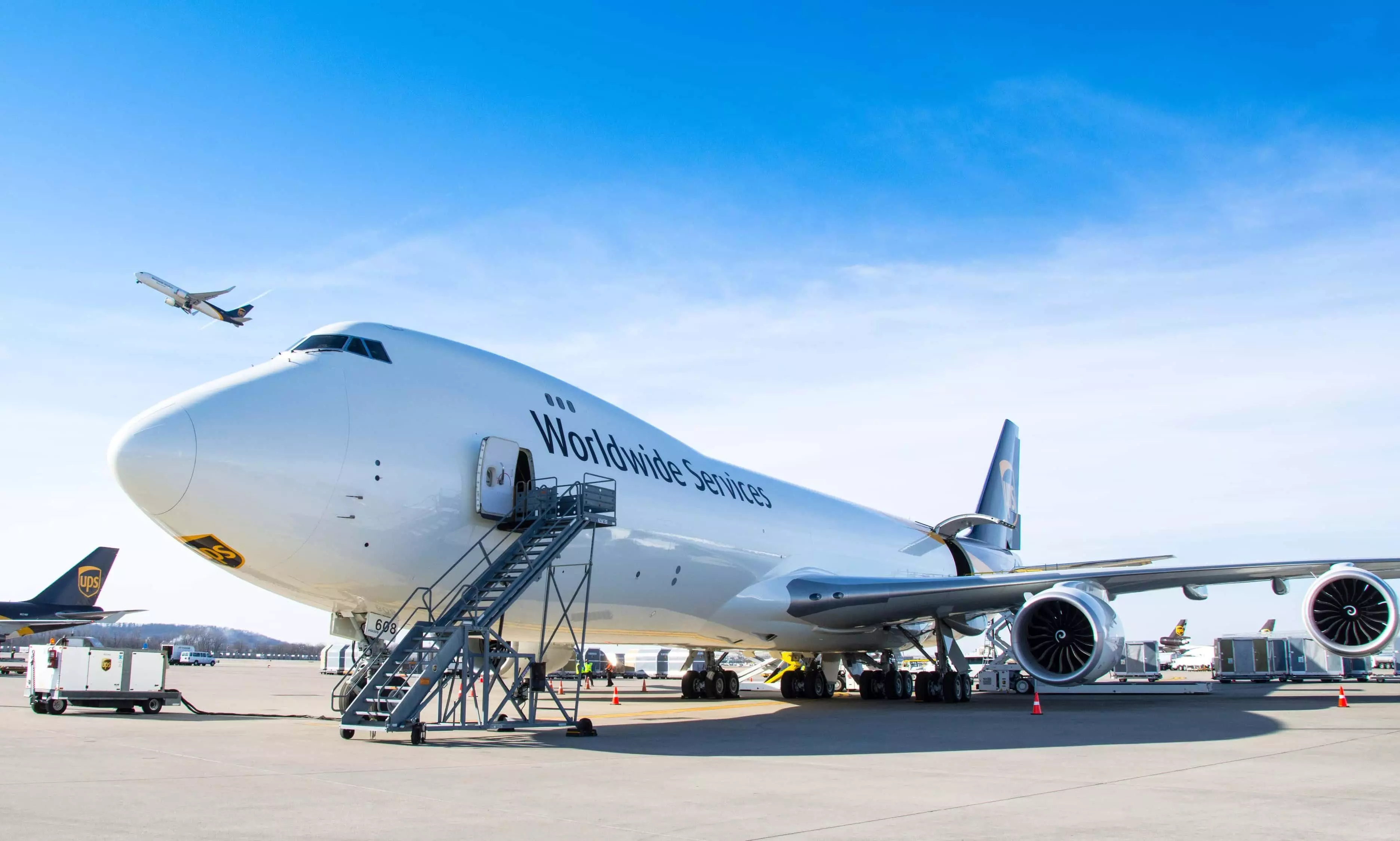
UPS has provided an update on its ongoing capital investment programme across its International, Healthcare and Supply Chain Solutions businesses, confirming that spending under the initiative, first launched in 2024 and running through 2028, now exceeds $2 billion. The figure represents the cumulative value of projects already underway rather than a new, standalone commitment.
The investment plan is aimed at helping customers manage shifting trade routes, evolving regulations and ongoing supply chain uncertainty, with a particular focus on speed, reliability and end-to-end visibility across UPS’s global network.
Among the projects currently in progress are a new hub at Clark International Airport in the Philippines, expected to open in the fourth quarter of 2026; a new facility in Barrie, Ontario, scheduled for 2027; and a new air hub at Hong Kong International Airport, planned for 2028. The company said these facilities build on recent investments in healthcare logistics as well as high-tech, automotive and industrial manufacturing sectors.
Kate Gutmann, UPS Executive Vice President and President of International, Healthcare and Supply Chain Solutions, said the plan is designed to bring multiple service lines together under a single, more streamlined offering. “These investments allow us to bring air, ground, brokerage and distribution together in one solution, with fewer handoffs, more end-to-end control and less complexity,” she said, adding that the combination of real-time tracking and proactive monitoring allows UPS to handle “the most temperature-sensitive, time-critical and high-value shipments” across both short and long distances.
Recent additions to UPS’s network under the programme include 27 temperature-controlled freight cross-dock facilities designed to support short-term storage and handoffs between air and ground transport while preserving cold-chain integrity. The company has also opened a technology-enabled logistics centre in Taiwan and expanded its air hub in Incheon, South Korea, both featuring automation aimed at increasing processing speed.
In Amsterdam, a new UPS Supply Chain Solutions facility now combines freight, brokerage and cold-chain services in a single location. UPS has additionally increased capacity across its intra-Asia air network in response to regional demand from healthcare, technology, industrial manufacturing and automotive customers, and added flights operating five times weekly between Paris and Hong Kong, and between Shenzhen and Sydney.
The company pointed to its relationship with Anker, the smart hardware technology company, as an example of how the expanded network is being used by customers navigating growth. Adam Liu, Chief Supply Chain Officer at Anker, credited UPS with supporting the company through an expanding manufacturing footprint. “UPS didn’t just help us move products. They helped us navigate the challenges that came with growth by bringing transportation, brokerage and trade expertise together,” Liu said, noting that as Anker faced new trade requirements and markets, UPS "gave us confidence that we could keep moving forward while managing risk along the way."
UPS said its broader network now includes the fastest integrated ground network in Europe, covering every address on the continent with Saturday delivery available in eight markets, and one of the largest Asia-Pacific networks of IATA CEIV Pharma-certified facilities for handling high-value, time-sensitive healthcare shipments. In Canada, UPS remains the only integrated carrier offering automatic Saturday residential ground delivery alongside optional Saturday commercial delivery.
The company has also expanded its North American Air Freight capabilities, introducing time-definite heavy air freight service to and from Mexico and broadening coverage across the wider North American region.
UPS, which reported 2025 revenue of $88.7 billion, operates in more than 200 countries and territories.