


Couture in transit: Fashion’s high-flying cargo story
Fashion weeks sparkle under the spotlights, but the real drama unfolds in the skies, where couture races against time, packed in cargo holds.
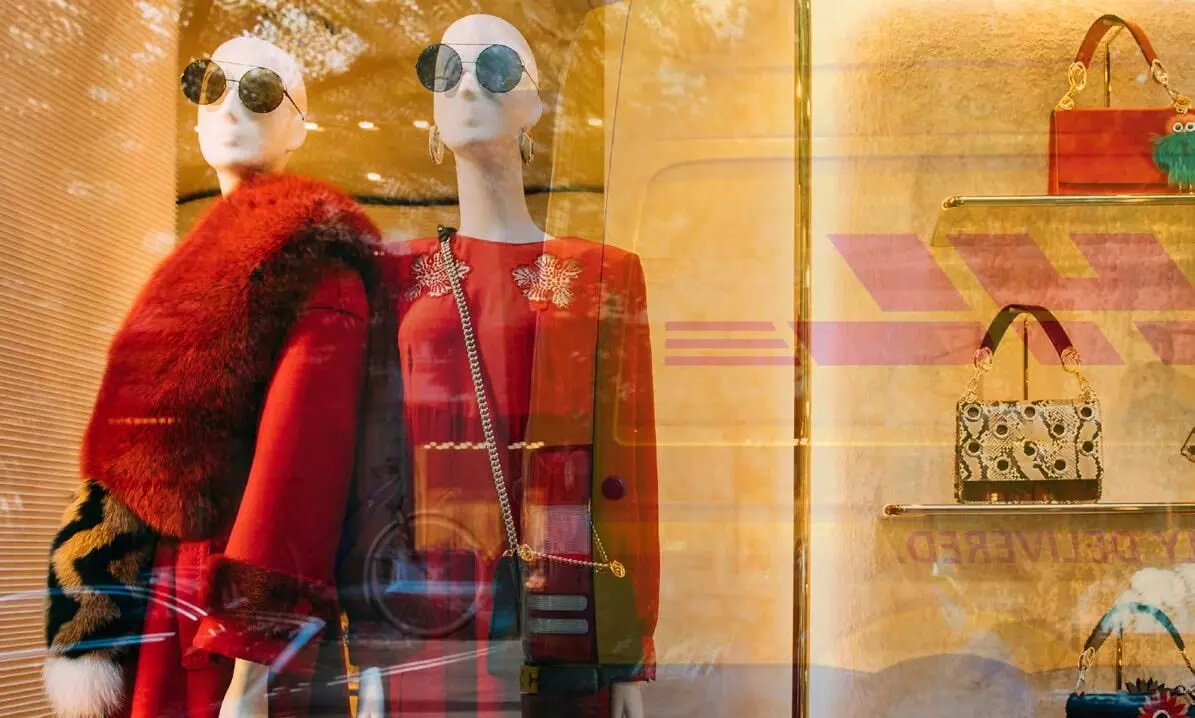
A runway model wearing a Chanel piece or a Dior in Paris Fashion Week is no less than watching a walking work of art. Parisian museums like the Louvre, including Palais Galliera, Grand Palais, and Petit Palais hosting high-fashion events, front row celebrities, VIPs, waiting for the couture models to walk in with the exclusive collection of Louis Vuitton, Miu Miu, or Saint Laurent, and all the lights on runway. Models with trendy outfits and luxurious accessories are what fashion shows are all about, right?
There’s much more happening behind the glamour. From sketching designs and sourcing fabric swatches to building samples and drafting technical specifications, every step is meticulously planned. Choosing the right suppliers for cutting, sewing, and specialty work, then managing pre-production, production, and marketing, all form a vast logistics network working tirelessly behind the scenes to deliver a seamless fashion experience.
And this is where, besides glamorous brands and models, unfashionable logistics providers step in. Assia Belkhodja, Head of e-Retail and Fashion, Europe at DHL Express, has underscored the unlikelihood that fashion logistics will be the same as retail logistics. She said, “Fashion logistics is deadline-driven, highly sensitive, and can require bespoke handling rather than standardised workflows. Collections move under immovable show dates and sometimes rely on tailored services to ensure both schedule and presentation.”
Because fashion weeks unfold under tight calendars and require quick deliveries to meet the show's deadlines, their logistics do not align with the general logistics pattern as they are often planned for steadier and longer demand cycles.
“Fashion logistics is deadline‑driven, highly sensitive, and can require bespoke handling rather than standardised workflows. Collections move under immovable show dates and sometimes rely on tailored services to ensure both schedule and presentation.”Assia Belkhodja, DHL Express
Rhenus Group said, “Unlike regular retail, fashion logistics often supports everything from runway shows to flagship store replenishment, not just standard distribution flows. Rhenus’ fashion logistics solutions are therefore designed to manage time-critical shipments, SKU-level tracking, dedicated handling for hanging garments, and high-value goods, alongside strict quality control from origin to destination.”
How precisely everything moves in the fashion world and comes together superlatively right before the show begins is intriguing to know more about. Since the fashion logistics are extremely time-bound, with last-minute changes in designs, fittings, and the final dispatch of dresses, the entire process is tight and fragile.
Rhenus Group described its approach to planning end‑to‑end air cargo logistics for fashion events like Paris Fashion Week: “Starting with route and carrier selection and extending through pickup, air freight, customs clearance, last‑mile delivery, and on‑site coordination.” Air freight is typically prioritised for fashion events due to tight timelines, and Rhenus leverages its global Air & Ocean Freight network, including express and charter options where needed.”
In addition, the planning also includes risk assessments, alternative routings, and close coordination with designers, event organisers, and venues.
Airlines, meanwhile, play a crucial role in speeding up cargo delivery and maintaining efficient logistics movement. Ashish Kapur, Regional Head of Cathay Pacific Cargo, Southeast Asia and Oceania, shared, “We support these requirements through our extensive global network, strong connectivity via our Hong Kong hub, and close coordination with freight forwarders and supply chain partners. This enables us to respond to changing demand patterns while maintaining consistent service standards across the journey. Southeast Asia remains an important sourcing region for the fashion industry, including markets such as Cambodia and Vietnam, and our network is well-positioned to connect these flows to key consumption markets worldwide.”
He added that fashion logistics is a highly time-sensitive and trend-driven segment, often linked to seasonal launches, retail cycles, e-commerce demand, and major fashion events. Unlike some other cargo categories, the value of fashion goods can be closely tied to timing, so speed, reliability, visibility, and flexibility are especially important, particularly for last-minute shipments, replenishment orders, or event-related movements.
“For high-value, delicate, or premium fashion shipments, including garments, accessories, samples, or couture collections, careful handling, reduced transit time, shipment visibility, and operational reliability are critical.”Ashish Kapur, Cathay Pacific Cargo
To ensure the accuracy and synchronisation between fashion timelines and cargo delivery, Belkhodja said, “We work with a single consolidated timeline shared across designers, production teams, and DHL operations. This is supported by continuous monitoring and the ability to activate dedicated special services when timelines compress or change unexpectedly.”
Kapur described tight schedules, unpredictable demand, logistical disruptions, and ensuring product quality and presentation remain intact as the main challenges in fashion logistics. “Strong collaboration across the logistics chain is therefore essential. Across all cargo segments, including fashion, we work closely with freight forwarders and customers to understand their priorities and support solutions that best fit their operational and business needs”, he said, in addition.
However, they say, ‘Expect the unexpected’. The geopolitical tensions in the Middle East have blocked or delayed trade shipments and cargo, including higher costs and thinner margins. The conflict-driven route closures affect a large share of South Asia to Europe cargo, as India, Bangladesh, and Pakistan are manufacturing powerhouses for fast fashion brands that include Zara and H&M.
In such situations, alternative flight options, backup hubs, routing strategies, and close coordination with airline partners assist. The fashion logistics need careful handling for air cargo, particularly because many fabrics are fragile and lightweight.
Last-minute adjustments are common in fashion events, and Rhenus Group prioritises direct routings and premium air freight solutions. “We can combine express and even On Board Courier services, alternative hubs, and flexible routing to minimise transit time. Continuous tracking allows teams to adapt instantly if operational conditions change, safeguarding last-minute deliveries.”
Rhenus Group mentioned strict quality checks, professional packing standards, and documented handling procedures, including insurance processes, to avoid cargo damage. “The objective is always to protect show schedules and minimise downstream impact on events or launches”.
Efficient customs clearances are another way to maintain faster transit times, and Rhenus Group secures that approach by providing “integrated customs clearance services as part of its global fashion logistics offering. For international fashion companies, this includes documentation management, regulatory compliance, and coordination with local customs authorities, helping designers focus on their collections rather than administrative complexity.”
However, the vulnerability of high-value accessories during air cargo transportation cannot be overlooked. When high-profile fashion events like the Met Gala 2026 deliver a jewellery extravaganza, such as a 50-carat sapphire necklace by Bulgari worn by Blackpink’s Lisa or a 1930s diamond ring by Fred Leighton featured on global pop icon Rihanna’s finger, it becomes a high-stakes operation for logistics providers.
Belkhodja commented, “High-value fabrics and accessories carry increased risk from theft, environmental impact, and physical handling, addressed through premium handling standards, controlled environments, enhanced security, and engineered packaging solutions.”
Meanwhile, some dresses require a garment-hanging solution, such as couture silhouettes, custom-sculpted pieces, structured bodices, and skirts that cannot be crushed or folded. These creases in delicate fabrics require a specific approach, like dedicated solutions for hanging garments as well as special packaging and handling processes. “These services form part of Rhenus’ value-added fashion logistics portfolio and are designed to preserve garment shape, fabric integrity, and presentation quality throughout transport and storage”, shared Rhenus.
From an aviation logistics standpoint, Kapur highlighted that Cathay Cargo works closely with their partners to understand shipment requirements, identify shipment needs, and facilitate the right handling solutions specifically, “For high-value, delicate, or premium fashion shipments, including garments, accessories, samples, or couture collections, careful handling, reduced transit time, shipment visibility, and operational reliability are critical.”
The Met Gala is one of the biggest fashion events held annually in New York, but its logistics connection stretches all the way to India. Kerala-based Neytt by Extraweave has been crafting the iconic carpet for the event since 2022, marking its fourth year doing so in 2026.
Sivan Santhosh, Founder and CEO of Neytt, shared that, for an event of this scale, the design process usually begins six to nine months in advance, with the carpet fully customised to the event’s theme and requirements. “In the case of the Met Gala specifically, we ensure the carpet reaches New York by January for the May event, as the base carpet then goes through an additional artistic process where it is hand-painted and transformed by artists on-site before the final installation. Because of this, timelines are planned very carefully with buffers built in for design revisions, production delays, logistics, customs, and installation handling.”
He mentioned that for specific events like the Met Gala, the shipments are usually “moved via air freight” as sea freight schedules lack the flexibility needed for event-based installations.
“In the case of the Met Gala specifically, we ensure the carpet reaches New York by January for the May event, as the base carpet then goes through an additional artistic process where it is hand-painted and transformed by artists on-site before the final installation.”Sivan Santhosh, Neytt
For tracking the cargo, Santhosh said, “Tracking is managed through the nominated forwarder’s systems. Along with milestone-based coordination covering pickup, export clearance, uplift, arrival, customs clearance, and final delivery. For projects of this nature, communication and coordination become equally important as the physical shipment itself.”
For projects of this magnitude, logistics providers are generally selected by the importer based on established ties with airlines, customs agents, and local handling teams. According to Santhosh, a key yet often underestimated aspect of a project like this is ensuring seamless documentation and effective coordination. “For an event operating on extremely tight schedules, every stakeholder, from the manufacturer and forwarder to customs brokers and installation teams, has to work in complete alignment. In many ways, the success of these projects depends more on planning and coordination than the freight movement itself.”
Beyond designer outfits and customised carpets, fashion events also showcase exceptionally valuable luxury jewellery and accessories, creating another layer of complexity for logistics providers. For instance, Emily Blunt wearing a $500,000 custom Mikimoto pearl body necklace, crafted with Akoya pearls and more than 45 carats of diamonds, and Keke Palmer’s Keke Palmer $1 million Wempe necklace featuring 1,200 diamonds, require highly specialised handling.
Belkhodja said, “Luxury jewellery can pose challenges due to valuation, temporary import rules, and security restrictions. These are managed through pre‑clearance, close coordination with customs authorities, and, where necessary, dedicated oversight across every stage of the clearance and delivery process.”
Fashion may steal the spotlight, but logistics writes the script behind it all.

Shefali is a correspondent with over six years of experience in the media industry. She has worked with leading news platforms, including BW Businessworld and India Today, before joining the Taiwan-based EAT News portal, where she covered diverse beats in geopolitics and international relations alongside human interest stories. Six of her stories were put forward for nomination at the SOPA Awards 2022 across categories such as human rights, women's issues, environmental reporting, and the Scoop Award. Outside of work, she enjoys dancing, travelling, and balancing fitness with food.


