SuperLink China Direct: a new route for Vietnam’s export cargo
Building on the pilot shipment from Hanoi, Hacis is developing its Vietnam–Hong Kong road feeder service to offer exporters greater routing flexibility and access to Hong Kong’s global air cargo network.
A consignment of coffee beans from Hanoi has demonstrated a new way for Vietnamese cargo to reach Hong Kong International Airport (HKIA). Travelling overland through mainland China to SuperTerminal 1 of Hong Kong Air Cargo Terminals Limited (Hactl), the pilot shipment has laid the groundwork for a service that will give exporters of electronics, technology components, garments, and other manufactured goods more options to reach international markets.
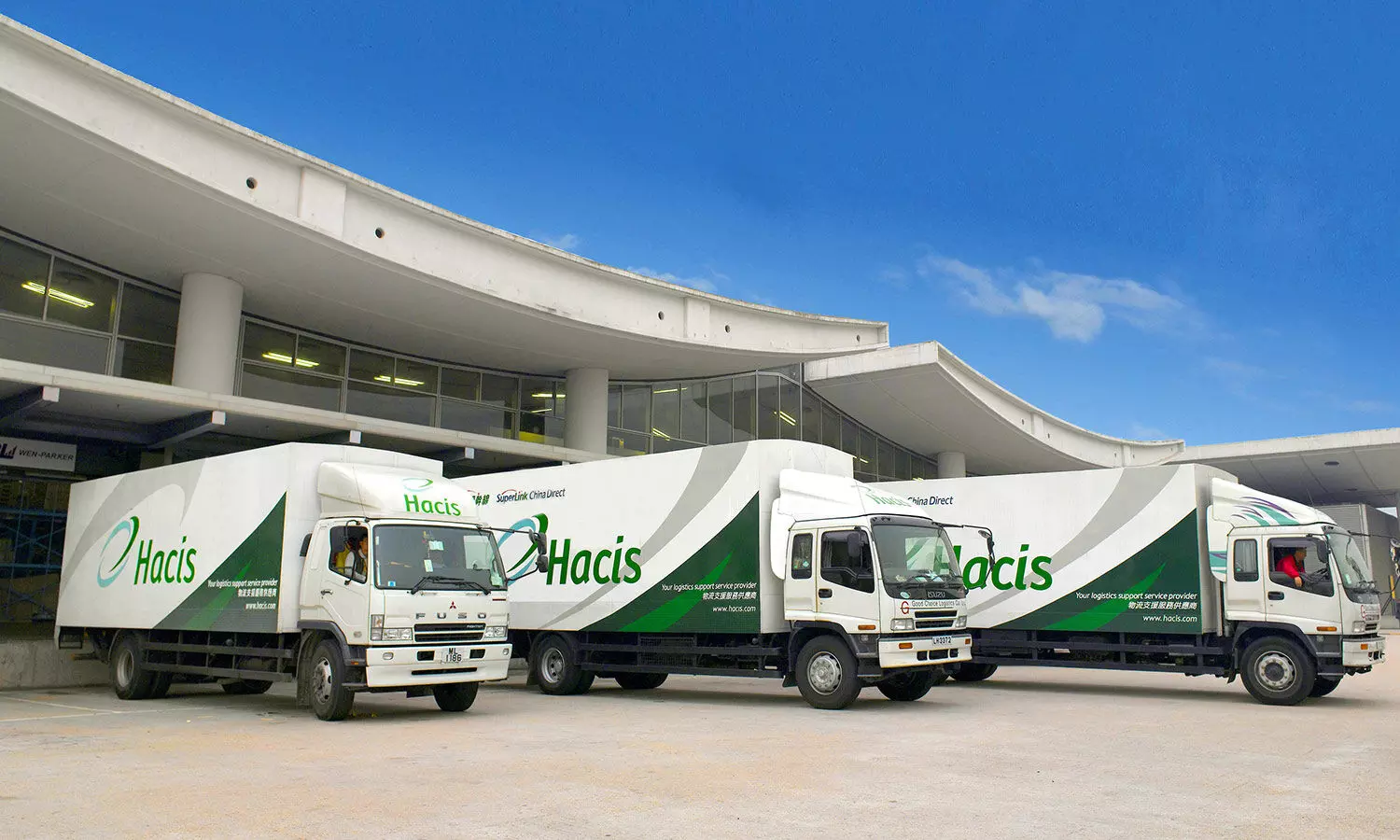
SuperLink China Direct is a Customs-bonded road feeder service operated by Hong Kong Air Cargo Industry Services Limited (Hacis), the logistics arm of Hactl, linking HKIA with the Chinese Mainland. After announcing its extension to Vietnam in September 2026, Hacis is focusing on developing the corridor.
The pilot linked Hanoi with Hong Kong through the Wuzhou Comprehensive Bonded Zone, before crossing into Hong Kong via Shenzhen Bay Port under the Single E-lock Scheme, a cross-boundary Customs facilitation arrangement designed to simplify cargo clearance between the Chinese Mainland and Hong Kong while maintaining security throughout transit.
“The service is primarily targeted at high-value and time-sensitive cargo, including electronics, technology components, industrial products, garments.”
Ringo Chan, Hacis
For the Vietnamese logistics company U&I Logistics Corporation, the journey offered an opportunity to assess how procedures, coordination, and connectivity work at each stage. “The key advantage is flexibility,” says Nguyen Xuan Phuc, Chief Executive Officer of U&I Logistics Corporation. “The service provides an additional transportation option between Vietnam and Hong Kong, particularly for cargo that requires faster movement than conventional sea freight but may not require a fully air-freighted solution.”
Le Van Hy, President of the International Institute of Logistics & Supply Chain (IILS), explains, “Traditional sea and air transportation each have their own advantages, but there is a gap in the market for a solution that can combine reasonable transit time, cost efficiency and flexibility.”
While coffee beans served as the pilot cargo, Hacis sees the commercial opportunity principally in Vietnam’s manufacturing sector. Ringo Chan, Executive Director of Hacis, identifies electronics, technology components, industrial products, and garments as the service’s target commodities, alongside other high-value, time-sensitive manufactured goods. “Service frequency will initially be demand-driven, allowing us flexibility to respond to market requirements while volumes are being developed,” says Chan.
“This pilot has shown that when all parties are committed to working together, challenges can be solved and new logistics solutions can be developed.”
Le Van Hy, International Institute of Logistics & Supply Chain (IILS)
U&I sees scope for customers to make more tailored transport decisions. Says Phuc, “It also creates opportunities to optimise logistics costs while maintaining a relatively short transit time. More importantly, customers can have greater flexibility in choosing the most appropriate transportation solution according to their cargo requirements, urgency and budget.”
The pilot’s use of the Single E-lock Scheme is key to the model. As Gary Lau, Chairman of the Hongkong Association of Freight Forwarding and Logistics (HAFFA), explains, “Once cargo is fitted with Hong Kong Customs’ Single E-lock, it will be tracked by GPS throughout transit.”
“This ensures safe delivery to destination, eliminates redundant customs-declaration time, and enhances the stability and efficiency of the entire logistics chain,” he adds.
“The service provides an additional option, particularly for cargo that requires faster movement than sea freight but may not require a fully air-freighted solution.”
Nguyen Xuan Phuc, U&I Logistics Corporation
The partners also envisage demand from e-commerce businesses and exporters of high-value consumer products. “As the corridor develops, we will work closely with exporters and logistics companies to understand their requirements and adapt the service accordingly,” Hy says.
HAFFA is calling for regional customs authorities and government transport departments to coordinate and simplify clearance procedures. Lau also proposes additional Single E-lock designated zones in Vietnam or Guangxi. “We believe that policy improvements and streamlined customs procedures will attract more shippers to adopt this service,” he says.
For Hacis, the immediate task is to turn the successful trial into a growing cargo corridor through HKIA before expanding geographically. That focus links Hacis' and Hactl's ambitions with the needs of Vietnamese exporters: an overland connection, coordinated handling, and access to Hong Kong’s international cargo network.
“We also suggest establishing more Single E-lock designated zones in Vietnam or Guangxi to facilitate shippers’ access to this service.”
Gary Lau, Hong Kong Association of Freight Forwarding and Logistics (HAFFA)
For U&I, building customer confidence in those arrangements underpins growth. “We want to build a stable, reliable and sustainable service together with our partners. Once the foundation is strong, we believe the volume will naturally follow,” says Phuc.
Hy also pointed out that this pilot has shown that when all parties are committed to working together, they can solve challenges and develop new logistics solutions. “We are confident that with continued cooperation, this initiative can become a successful and sustainable service for Vietnamese exporters and the wider logistics community.”
The article was originally published in the October 2026 issue of The STAT Trade Times.