Aramex sets new revenue record for second consecutive quarter
Freight Forwarding remained the primary driver of Group revenue growth, delivering another record quarter in Q3 2026, following the milestone achieved in Q2 2026.
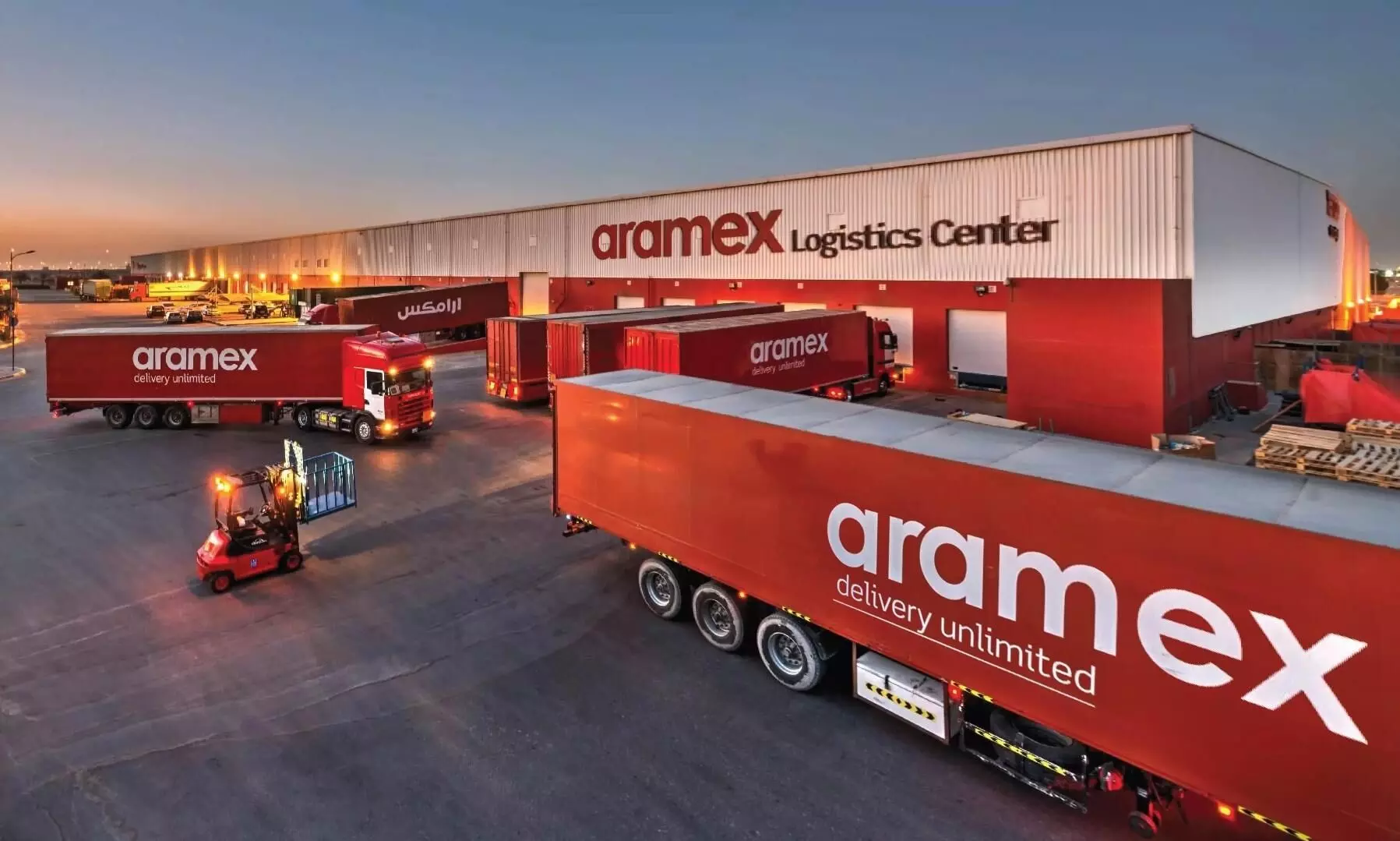
Aramex delivered its highest quarterly revenue in the Company's history for the second consecutive quarter, with Group revenue reaching AED 1.98 billion in Q3 2026, an increase of 24% year-on-year (YoY). The performance surpassed the previous record achieved in Q2 2026, when revenue reached AED 1.83 billion. Group revenue for the first nine months of 2026 reached AED 5.41 billion, up 16% compared with the corresponding period last year.
Freight Forwarding remained the primary driver of Group revenue growth, delivering another record quarter in Q3 2026, following the milestone achieved in Q2 2026. Sustained customer demand, pricing discipline and the Company's diversified multimodal offering continued to support performance, alongside solutions tailored to customer requirements.
Additionally, Aramex maintained uninterrupted services during Q3 2026, leveraging its established network and flexible routing capabilities to support customer supply chains. Alternative Europe-to-Middle East land routes and air and sea charter capacity continued to provide transportation options, while proactive commercial measures helped address operating pressures across relevant markets.
Revenue growth extended across all four business segments during Q3 2026, with Domestic Express, International Express and Logistics & Supply Chain Solutions, all recording year-on-year increases.
Amadou Diallo, Group Chief Executive Officer, said: “Following the record performance achieved in Q2, we have continued this momentum into Q3, with Freight Forwarding once again leading our growth. The improvement in profitability also reflects our continued focus on disciplined execution, operational efficiency and strengthening the Company's financial performance.
Throughout the quarter, our teams remained focused on meeting customer requirements and delivering reliable services across our network. Our diversified operating model and multimodal capabilities continue to provide the flexibility needed to respond to changing market conditions and evolving customer needs.”
Group Gross Profit increased 12% YoY to AED 415 million in Q3 2026, while Gross Profit for the first nine months reached AED 1.15 billion, up 8% compared with the corresponding period last year. Gross Profit Margin stood at 21.0% for the quarter, compared with 23.2% in Q3 2025, while the nine-month margin was 21.2%, compared with 22.8% in 9M 2025. The year-on-year margin movement reflected a change in the Group's business mix, with a higher contribution from Freight Forwarding.
Continued revenue growth, alongside management of operating costs and overheads, supported improved profitability in Q3 2026. EBIT increased 46% to AED 94 million, while Net Profit rose 817% to AED 48 million, compared with Q3 2025 results.
For the first nine months of 2026, EBIT increased 65% to AED 233 million compared with the 9M 2025 period, with EBIT Margin expanding to 4.3% compared with 3.0% in the prior-year period. Net Profit reached AED 112 million, an increase of 759% from the corresponding AED 13 million in 9M 2025. The improvement reflects stronger operating profitability during the year, supported by continued cost management and the Company's focus on executing its transformation priorities.
Freight Forwarding's contribution to growth also reflects a broader shift in Aramex's strategy. In an interview with STAT Publishing Group in Mumbai last month, Group CEO Amadou Diallo said the company had nearly completed a phase focused on process optimisation and operational efficiency and was turning its attention to new growth opportunities. These include logistics requirements arising from the expansion of data centres, automotive manufacturing and food production, particularly across emerging markets.
Diallo said the company's focus was on addressing customer demand rather than concentrating on specific industry verticals or modes of transportation. "It is not about the vertical or the mode of transport," he said. "It is really related to the growing demand that is coming out of emerging markets."
He also highlighted the importance of multimodal capabilities in responding to geopolitical tensions and changing trade routes. "You can make crossing a border complicated, but you cannot stop trade," Diallo said, explaining how the company looks to develop alternative solutions when conventional trade routes face disruption. This approach was reflected in the third-quarter performance, with Aramex maintaining uninterrupted services through alternative land routes and additional air and sea charter capacity.
Watch our conversation with Diallo, recorded at Aramex's Navi Mumbai office on 15 October 2026, for more on the company's growth strategy, emerging-market ambitions and approach to navigating global trade disruptions. The interview was recorded during a visit to India by Aramex's leadership team in October, which included the signing of an MoU with GMR Airports to expand its airport-side capabilities, the opening of a new office in Ahmedabad and celebrations marking the company's 30 years of operations in India.