


The logistics powering the global events economy
Inside the global supply chains powering concerts, festivals, and mega sporting events
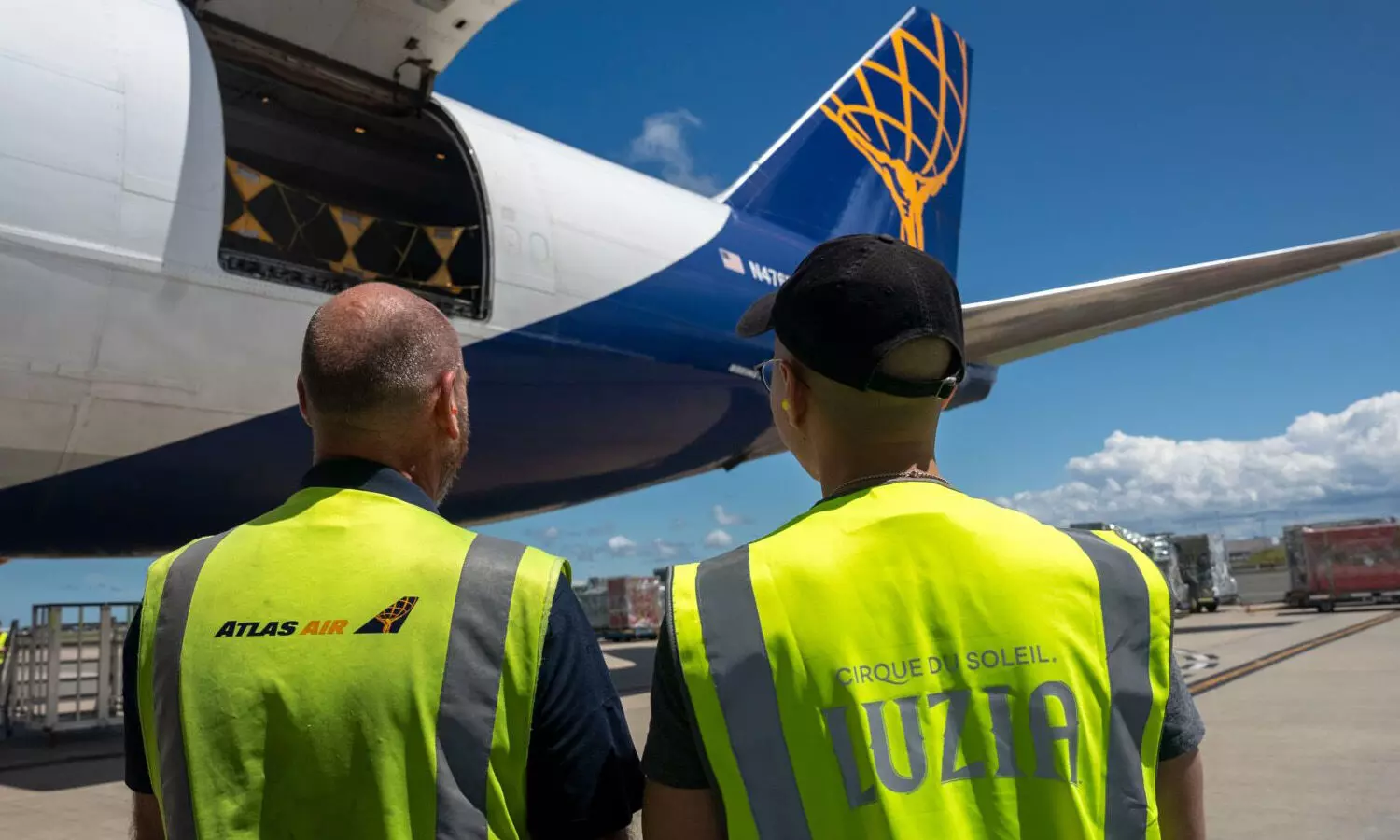
The applause that greets a stadium concert, the roar following a decisive goal on a giant screen, or the moment a curtain rises on a touring production are all visible expressions of an industry built on precision and timing. Yet long before audiences gather, a vast series of operations unfolds behind the scenes.
Across continents, logistics specialists are moving stages, lighting systems, broadcast equipment, scaffolding, power units and digital infrastructure in an intricate sequence that transforms empty venues into temporary entertainment cities.
The scale of this hidden industry is growing rapidly. According to a study by Mordor Intelligence, the global event logistics market was valued at $75.16 billion in 2025 and is projected to reach $103.89 billion by 2031, expanding at a compound annual growth rate of 5.55%. The sector is expected to grow from $79.33 billion in 2026 after the disruption caused by the COVID-19 pandemic.
The steady return of mega events is driving growth, alongside the increasing adoption of hybrid formats and a growing preference among organisers to outsource complex logistics operations to specialised providers. The demand for cross-border freight services has intensified as touring productions, global music festivals and international sporting tournaments expand their geographic footprint.
Technological advancements are also shaping the sector. Internet of Things-enabled tracking systems are improving shipment visibility, while artificial intelligence-driven planning tools are helping organisers optimise routing and scheduling. Infrastructure modernisation across the world is also influencing freight corridors used for event logistics.
Together, these factors are reinforcing the resilience of a sector that must constantly adapt to volatile freight markets, labour shortages and increasingly ambitious production demands. Yet despite its scale, event logistics remains largely invisible to audiences.
From Cirque du Soleil shows to global festivals like UNTOLD Festival and large fan gatherings surrounding tournaments such as the FIFA World Cup, the creation of modern entertainment experiences depends on supply chains capable of mobilising vast quantities of infrastructure with remarkable speed. For logistics professionals, the real show begins long before the first ticket is scanned.
The complexity of these operations becomes clearer when looking at global touring events and sporting championships. In motorsport, the Formula One championship requires the movement of more than 1,000 tonnes of freight for every race weekend, including race cars, spare parts, broadcast equipment and hospitality units. As the sport's official logistics partner, DHL coordinates a carefully synchronised mix of air freight, ocean freight and road transport to move equipment between circuits across multiple continents throughout the season.
Similarly, global tournaments rely on complex logistics networks to prepare venues and broadcast infrastructure in advance of competition. During preparations for the ICC Men's T20 World Cup 2026, DP World coordinated international shipments of match equipment and broadcast systems across India and Sri Lanka, managing cargo flows from logistics hubs in Singapore, Australia, the United Kingdom, the United States and the United Arab Emirates.
At the same time, technology providers are improving supply chain visibility for such operations. Unilode Aviation Solutions, for instance, has introduced new digital tracking systems designed to monitor the movement of cargo containers across global aviation networks, helping logistics providers reduce equipment losses and improve asset visibility during complex international operations.
Air cargo also plays a critical role in supporting specialised events that involve the movement of live animals and rare exhibition cargo. For the Longines Hong Kong International Horse Show, Cathay Cargo transported around 60 elite showjumping horses from Liège in Belgium to Hong Kong aboard a Boeing 747 freighter, with the animals travelling in purpose-built stalls on the aircraft's main deck and accompanied by professional grooms during the roughly 12-hour intercontinental flight.
Airlines also handle unusual exhibition cargo that supports museums and cultural events. In another example, Etihad Cargo transported dinosaur fossils destined for the Natural History Museum Abu Dhabi, requiring specialised packaging and careful handling to protect the fragile prehistoric remains during their journey to the UAE for public display.
Logistics: Backbone of global events
Behind every major event lies a carefully engineered logistics framework that begins planning years in advance. Touring productions, in particular, require highly structured freight schedules that connect cities and continents through a combination of road, sea and air transport.
At Cirque du Soleil, logistics teams typically plan tours almost two years ahead of the first performance. During that period, equipment movements between continents are mapped, and contingency buffers are built into the schedule.
As Duncan Fisher, Chief Show Operations Officer at Cirque du Soleil, explains: "Even though we plan tours approximately two years in advance, we are doing that without the knowledge of exact shipping schedules for that time. However, from past experience, we know approximately how long it takes to go from one continent to another, and we can build in some appropriate contingency time, ranging from three to ten days."Once shipping routes are confirmed, these buffers may be adjusted depending on congestion risks, port schedules and vessel availability. The logistics team also works closely with brokers and port authorities to minimise the likelihood of delays.
"We and our brokers and agents are very proactive about dealing with the ports and customs authorities. That way, we are normally able to address any potential delays before the vessel docks," Fisher says.Even with careful planning, unexpected disruptions can occur. When that happens, escalation procedures are activated immediately.
"Internal escalation from the logistics team to senior management begins as soon as they believe there is a chance that the equipment will not make it to the show site on the scheduled day. There will still be a couple of contingency days to work with, but at that time, management would start planning with the show team to send more resources for the set up, to be able to condense the load in time to still make the premiere," Fisher explains.
In an industry where premieres are planned months in advance, and tickets are sold long before the first truck arrives, such contingency planning is essential.
Touring logistics and operational resilience
The logistical complexity of touring productions became especially evident during the global shutdown of live entertainment in 2020 due to the pandemic. For companies operating multiple shows around the world, the sudden halt required a massive coordinated response.
At the time, Cirque du Soleil had productions performing on five continents. When the decision was made to close everything down, the response had to be immediate.
"In just ten days, we managed to get about 600 truckloads of equipment into warehouses around the world and 1,500 people flown home," Fisher recalls.
The operation required close coordination between touring crews, logistics providers and central management teams. In Europe, equipment from shows operating in Spain, Russia, Scotland and France was transported to a central storage facility in Amsterdam managed by logistics partner SAAN.
"Each show team worked closely with the management team at SAAN to coordinate the dismantling and warehousing of their shows. Once that was done, the centralised team at Cirque HQ took over the relationship to plan the staggered relaunch of the shows in the UK and Europe," Fisher says.
The success of the operation strengthened the relationship between the production company and its logistics partner.
"Because of the amazing job SAAN did in helping us pack everything away, they received a multi-year contract to help us relaunch and return to normal operations," Fisher notes. Similar collaborations took place in other regions with long-term logistics partners such as Rock-it Cargo.
For Fisher, the experience also reinforced the values that guide the sector at its best."Nobody in show business wants to miss a premiere and the teams will always do whatever they can to be set up on time. That being said, the show must go on, only as long as we can do it safely," he says.
Building temporary cities for festivals
While touring productions move existing infrastructure between venues, music festivals require an entirely different approach. Instead of transporting a ready-made production, festivals must construct the entire environment from scratch within a limited timeframe. This process involves assembling stages, installing lighting towers, building technical compounds and preparing extensive power and broadcast infrastructure.
Large-scale music festivals demonstrate the growing logistical complexity of modern live events. One such example is the UNTOLD Festival, where stage construction, technical infrastructure and freight coordination must come together within extremely tight timelines, and where main stage structures can weigh up to 500 tonnes once lighting rigs, video screens and structural supports are installed.
According to Radu Rus, Chief Technical and Production Officer at UNTOLD Group, the construction timeline must follow a strict sequence.
"When planning a festival production, the two major constraints we face are time and money," Radu explains. "If we have more time, we can operate with fewer resources. If the schedule becomes compressed, costs increase because additional shifts and crews are required."
Construction teams typically work double shifts of eight to ten hours per day, while a third shift remains available for emergencies. The build itself unfolds through several stages, beginning with ground preparation and followed by the installation of structural frameworks.
"First, we prepare the ground, then we unload equipment and begin constructing the substructure," Radu says. "After that, we assemble scaffolding and ballast systems. Only once those are complete can we start installing the decorative and technical elements."
Once the physical infrastructure is in place, programming teams begin testing lighting, sound and video systems with performing artists.
Logistics inside active venues
Festival logistics become even more complex when infrastructure must be installed inside operational venues. One such example is the staging of major events within Dubai Parks and Resorts. Unlike remote festival sites, the venue operates as a functioning entertainment destination with daily visitor traffic.
Production teams had to coordinate the arrival of more than 380 trucks carrying stage infrastructure, lighting systems and technical equipment from multiple logistics hubs and suppliers without disrupting normal operations.
"At Dubai Parks and Resorts, we were building inside a live ecosystem," Radu explains. "To avoid disruption, we organised the construction so that crews worked during the day in closed areas, while deliveries were scheduled overnight."
All vehicles entering the site were pre-registered and assigned specific delivery windows. This allowed organisers to maintain traffic flow and prevent congestion within the venue. Even unexpected incidents required rapid coordination. In one instance, an unregistered crane arriving at the venue required an emergency meeting before it could be deployed on site, illustrating the level of operational discipline required when managing logistics inside live environments.
"Over the past three years, we have introduced cloud-based management platforms that allow teams to track, plan and collaborate within the same system," Radu says.
Sustainability and the future of event logistics
As global events continue to grow, sustainability has become an increasingly important consideration for organisers and host cities. Temporary structures and modular infrastructure are being used to minimise environmental impact and allow venues to be dismantled more efficiently after events conclude.
One widely cited example is Stadium 974, constructed using modular shipping container components for the FIFA World Cup Qatar 2022. However, Lauren Terrien, Head of Fan Festivals at FIFA, believes the concept of legacy has evolved significantly.
"Stadium 974 represented a powerful statement around modularity and symbolic sustainability. However, legacy today is no longer defined solely by physical demountability. Increasingly, it is measured by regulatory harmony, community continuity, and post-event integration," she explains.
For upcoming tournaments such as the FIFA World Cup 2026, legacy planning begins long before construction. City authorities, emergency services and local stakeholders are involved early in the planning process to ensure event infrastructure aligns with local regulations and urban planning frameworks. Overlay systems are designed to be reversible, and demobilisation plans are developed alongside construction schedules.
At the same time, new digital tools are transforming how events are managed. Cloud-based work management platforms allow organisers, suppliers and logistics teams to collaborate in real time while tracking deliveries and coordinating construction tasks. For event logistics professionals, these technologies offer greater operational visibility and improved risk management.
And when the lights finally go up, and the audience cheers, few realise that the greatest performance may have already taken place behind the curtain.

"I bring stories to life from the heart of the air cargo, logistics, and aviation supply chain industries. As a News Correspondent at Stat Publishing Group, my focus is on delivering in-depth coverage, industry trends, and expert insights that drive conversations and shape perspectives. With a background in visual communication, photography, and content creation and storytelling, ensuring every report provides value to industry professionals.


