
DHL Express invests EUR55 million in new facility near Stockholm Arlanda Airport
The facility, being developed in partnership with Slättö through its logistics and light industrial platform, Evolv, is planned to become operational in 2028.
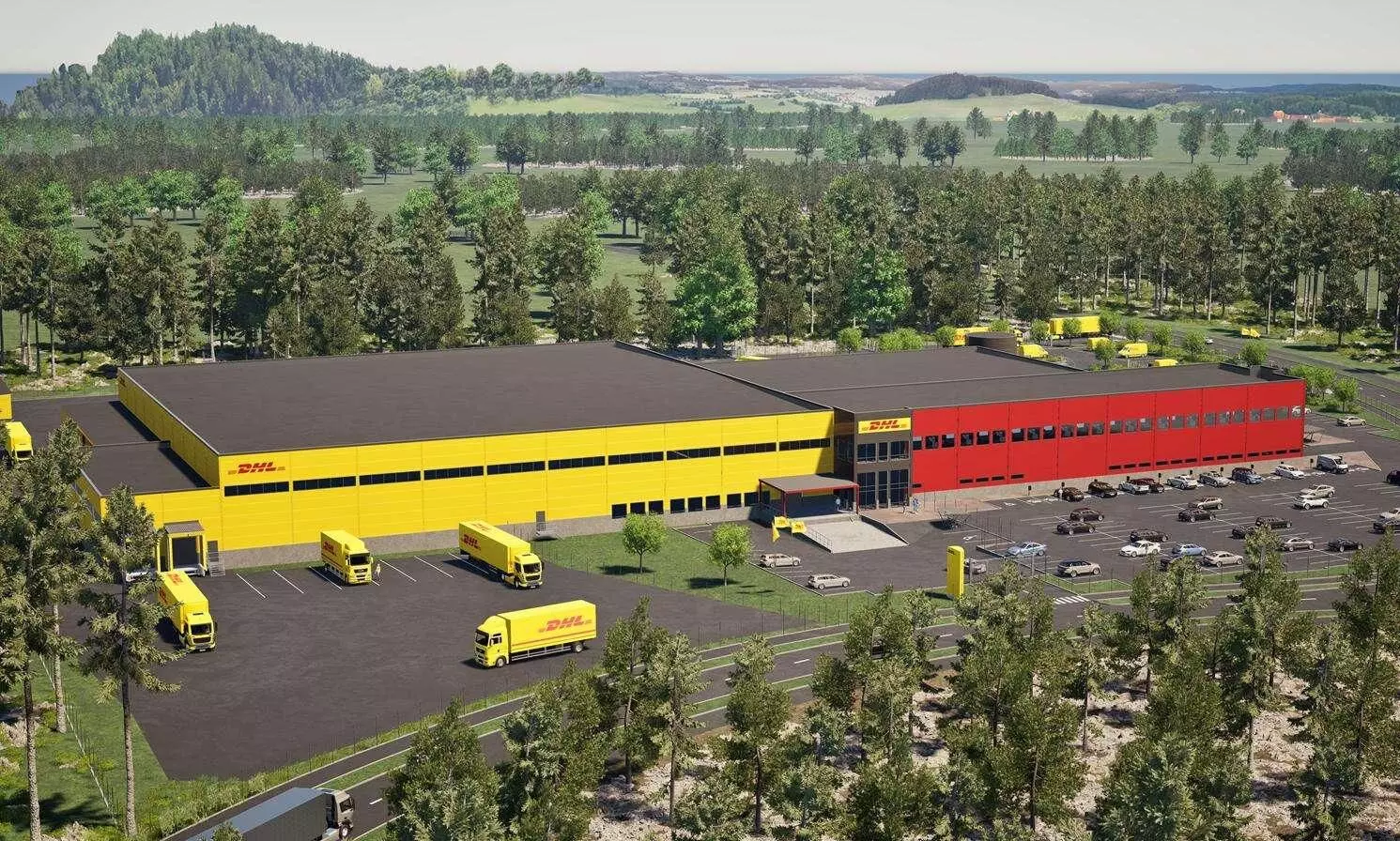
DHL Express has begun construction of a new DHL Express gateway facility in Arlanda Stad, close to Stockholm Arlanda Airport. The facility, which is being developed in partnership with Slättö, through its logistics and light industrial platform Evolv, a Nordic developer and owner of logistics and light industrial real estate, represents a total investment of more than EUR55 million and is planned to become operational in 2028.
With its strategic location in Arlanda Stad, close to Stockholm Arlanda Airport and key road connections, the new gateway will strengthen links between the Swedish market and the DHL Express international network, covering about 220 countries and territories worldwide. The investment will provide DHL Express with additional capacity to meet future export and import demand and continue supporting Swedish businesses with reliable international express services.
"Global trade is evolving rather than slowing down. We're seeing companies diversify supply chains, expand into new markets and place greater emphasis on resilience and speed. For Swedish exporters, this creates opportunities across established trade corridors as well as newer growth markets. At the same time, sectors such as industrial technology, life sciences, advanced manufacturing and e-commerce increasingly rely on fast and reliable international logistics. With higher uncertainty and volatility in global supply chains, customers are also turning to international express networks as a secure, reliable end-to-end option for their heavier weight shipments. This investment ensures we have the capacity and connectivity to support our customers as these global trade patterns continue to evolve," said Gareth Biggs, Managing Director, DHL Express Sweden.
Supporting Sweden's export-driven economy
Sweden is one of Europe's most export-oriented economies, with strong international demand for products and services from sectors such as industrial manufacturing, technology, life sciences, automotive, renewable energy and e-commerce. As companies adapt to changing supply chains and geopolitical uncertainty, reliable access to international markets remains critical. The new DHL Express gateway will strengthen the company's ability to connect Swedish businesses with customers, suppliers and growth opportunities around the world.
Capacity for future growth
The purpose-built gateway is designed to provide DHL Express with the capacity and flexibility to meet future operational needs. Developed together with Slättö, the 14,000-square-meter facility has been tailored to support DHL's long-term operational requirements while creating room for future growth. With increased sorting capacity and modern infrastructure, the gateway will support efficient shipment flows and the continued development of DHL Express operations in Sweden.
"The new gateway will be 14,000 square meters, with an automated sorting system capable of handling up to 6,000 shipments per hour and 60 direct-loading positions. The facility will also support our use of electric delivery vans and provide our employees with a modern and functional working environment designed around the needs of our operation," said Thommy Hall, VP Network Operations, DHL Express Sweden.
Part of broader Nordic-Baltic investment strategy
The new Arlanda gateway forms part of continued investment by DHL Express in its Nordic and Baltic network. Recent investments include DHL Express Finland's new EUR100 million gateway facility at Helsinki-Vantaa Airport and DHL Express Estonia's new EUR24 million gateway at Tallinn Airport, bringing total recent gateway investments across the region to approximately EUR180 million. Together with the Arlanda investment, these projects strengthen regional connectivity, increase network capacity and support growing trade flows between Northern Europe and global markets.