


CEVA delivers 29-tonne fractured Eiffel artwork to Burning Man
CEVA Logistics orchestrated transatlantic multimodal transport for Philippe Maindron's 29-tonne fractured Eiffel Tower sculpture destined for Burning Man.
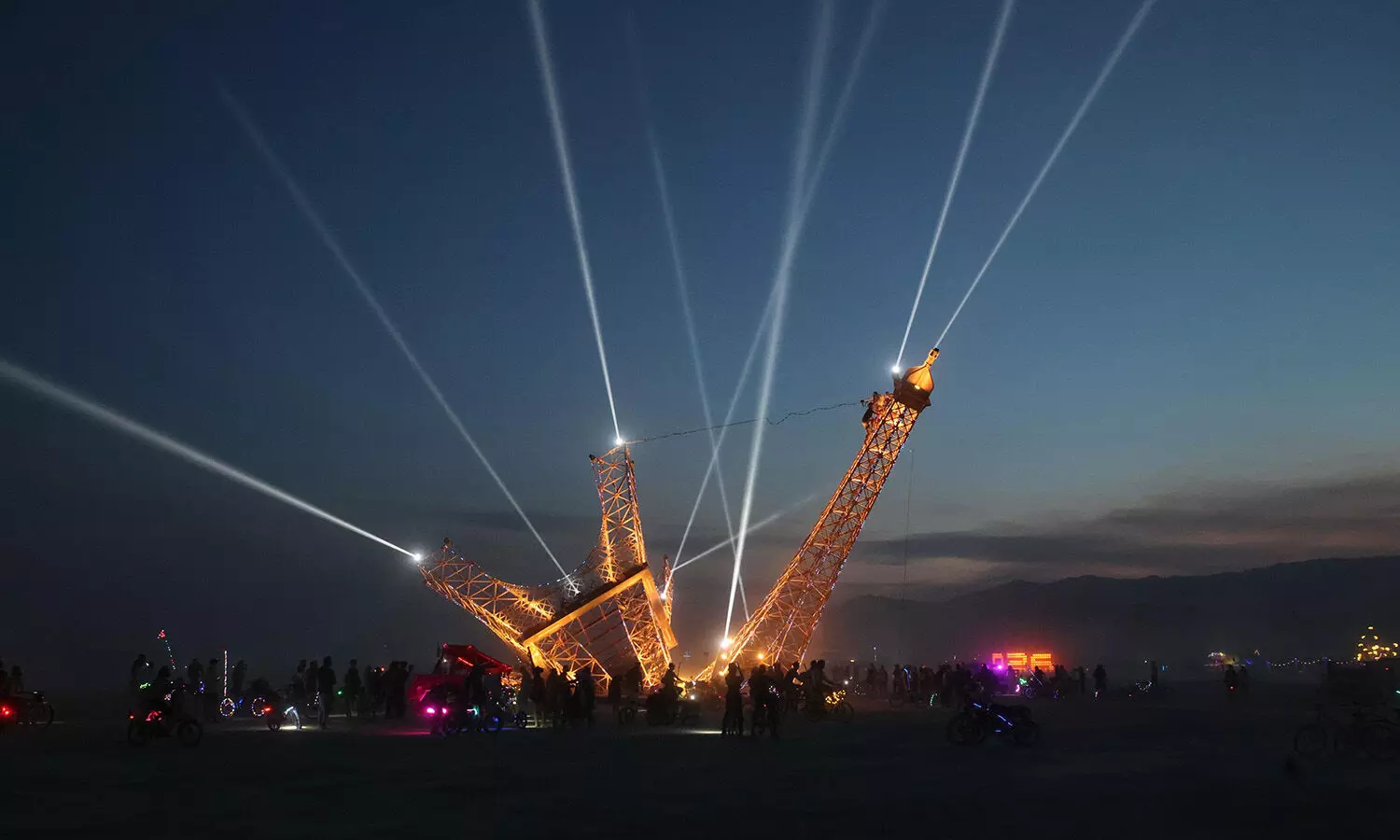
Eiffela Broken Dream- ©Jean-Marie Poirier
The global project logistics and heavy-lift freight sector routinely manages extraordinary oversized cargoes, yet transporting a monumental, 29-tonne fractured steel replica of the Eiffel Tower across oceans and desert highways demands exceptional operational precision. CEVA Logistics recently demonstrated its multimodal project logistics capabilities by orchestrating the complex transatlantic shipment of Eiffela Broken Dream, a monumental art installation created by French artist Philippe Maindron. Destined for its high-profile debut at Burning Man, the world-renowned arts and culture gathering held in Nevada's Black Rock Desert, the 30-metre-long, 15-metre-high structure required seamless supply chain coordination spanning inland road haulage, transatlantic ocean freight, and highly specialised customs brokerage across two continents.
Created in Rochetrejoux, within the Vendée region of western France, Eiffela Broken Dream represents a complex engineering and structural challenge. Constructed entirely from 29 tonnes of industrial steel, the artwork depicts a towering replica of the iconic Eiffel Tower fractured into two distinct structural segments. Designed by Maindron to explore the poignant tension between collapse and hope, the lower section represents the scattered remnants of a lost civilisation, while the upper section soars towards the sky as a bold symbol of resilience and human renewal. At Burning Man, the installation transitions from a static steel sculpture into an active performance space: a high-wire cable stretches across the open desert air between the two fractured peaks, allowing a tightrope walker to traverse the gap high above the playa. Although Maindron engineered the entire sculpture specifically to be dismantled, shipped, and reassembled, the sheer volume of numbered structural components mandated an experienced international logistics partner to oversee every stage of its global transit.
Eiffela Broken Dream Container
Executing the transatlantic voyage required meticulous supply chain planning long before the first piece of cargo was loaded. All components of the colossal artwork were carefully prepared, catalogued, and packed into four dedicated shipping containers at the manufacturing workshop in Vendée. To accommodate the oversized, awkwardly shaped structural steel elements, CEVA utilised two open-top containers, while two standard dry containers were packed with additional handling tools, rigging equipment, and auxiliary assembly machinery. On May 6 and 7, the initial containers departed Rochetrejoux by road freight, bound for the Port of Le Havre. Following port handling, marshalling, and container vessel stowage, the ocean liner departed Le Havre on May 14 to begin the ocean transit across the Atlantic Ocean.
The container vessel called at the Port of Oakland, California, where the four containers were safely discharged on June 25 and 26. CEVA subsequently arranged the initial domestic road leg, moving the containerised cargo from the port facility to a secure staging location in Reno, Nevada, arriving on June 30 and July 1. Reno provided a critical logistics staging ground for the project cargo until late August, allowing the artist's installation team to execute a vital preparatory phase. Between arrival in early July and departure on August 25, Maindron’s technical crew accessed the storage site to pre-assemble approximately one-quarter of the massive steel artwork. Pre-assembling 25% of the structure in a controlled urban environment proved vital to reducing technical risks and labour hours once on-site in the extreme, hostile environment of the Nevada desert.
Managing cross-border regulatory compliance and port operations for a non-standard, fractured 29-tonne steel artwork presented unique customs brokerage challenges. The complex import-export operations were prepared and coordinated by CEVA’s specialised Customs teams in France, led by the La Roche-sur-Yon agency in Vendée, the home region where the artwork was originally fabricated. CEVA supported Maindron Production throughout the classification process, advising on appropriate Harmonized System (HS) codes and structuring the optimal customs entry status. Because the handling equipment, tools, and assembly gear were slated to return to France following the event, CEVA registered those items under temporary import status. Conversely, the steel artwork itself was entered under definitive import status, as Maindron plans to auction the installation in the United States after the festival concludes. Continuous alignment between CEVA’s French and American customs units ensured that all import documentation was cleared smoothly prior to port arrival in Oakland.
Eiffela Broken Dream- ©Jean-Marie Poirier
Following the storage and pre-assembly phase in Reno, the project transitioned into its final-mile delivery leg on August 25. The final transport segment from Reno into the Black Rock Desert was coordinated and operated by Burning Man’s dedicated event logistics provider rather than CEVA. To transport the partially pre-assembled structure and remaining components across the desert route into Black Rock City, the festival’s logistics team deployed heavy-duty flatbed trucks. This final-mile operation required precise management of local highway permits, axle weight distribution, and desert environmental restrictions to safely navigate the delicate playa surface. Upon delivery to the designated site on the playa, on-site assembly teams faced a strict 72-hour operational window to erect the remaining three-quarters of the 29-tonne fractured tower amidst unpredictable desert winds and dust storms. Photography documenting this final-mile desert transport leg was captured by photographer Abel Arnou.
Eiffela Broken Dream-Last mile - crédit photo ©Abel Arnou
Reflecting on the complex freight movement, Jesús Rogelio Garza, Head of Ground and Rail - North America at CEVA Logistics, highlighted that handling high-value art installations demands the same operational rigour and supply chain discipline applied to global industrial projects. "This is not standard freight; it is a 29-ton work of art with a fixed delivery window and the need to arrive in pristine condition," Garza noted, emphasising the seamless collaboration required across ocean, road, and customs teams. The successful movement of Eiffela Broken Dream adds to CEVA Logistics’ and its parent company, CMA CGM Group, proven track record of transporting culturally significant artefacts and delicate breakbulk cargo. The group previously managed the transatlantic shipping of a nine-foot bronze Statue of Liberty, cast from Auguste Bartholdi’s 1878 original plaster, from France to Washington, D.C. Through detailed multimodal planning, cross-border expertise, and dedicated project management, CEVA ensured that Maindron’s artistic vision reached the Nevada desert on schedule, demonstrating the vital role of specialised logistics in bringing global art to life.

"I bring stories to life from the heart of the air cargo, logistics, and aviation supply chain industries. As a News Correspondent at Stat Publishing Group, my focus is on delivering in-depth coverage, industry trends, and expert insights that drive conversations and shape perspectives. With a background in visual communication, photography, and content creation and storytelling, ensuring every report provides value to industry professionals.


