


How Archer’s F1 deal rewrites the experience economy
Formula 1 and Archer Aviation are exploring circuit air taxi networks, signaling how electric flight will reshape the global experience economy.
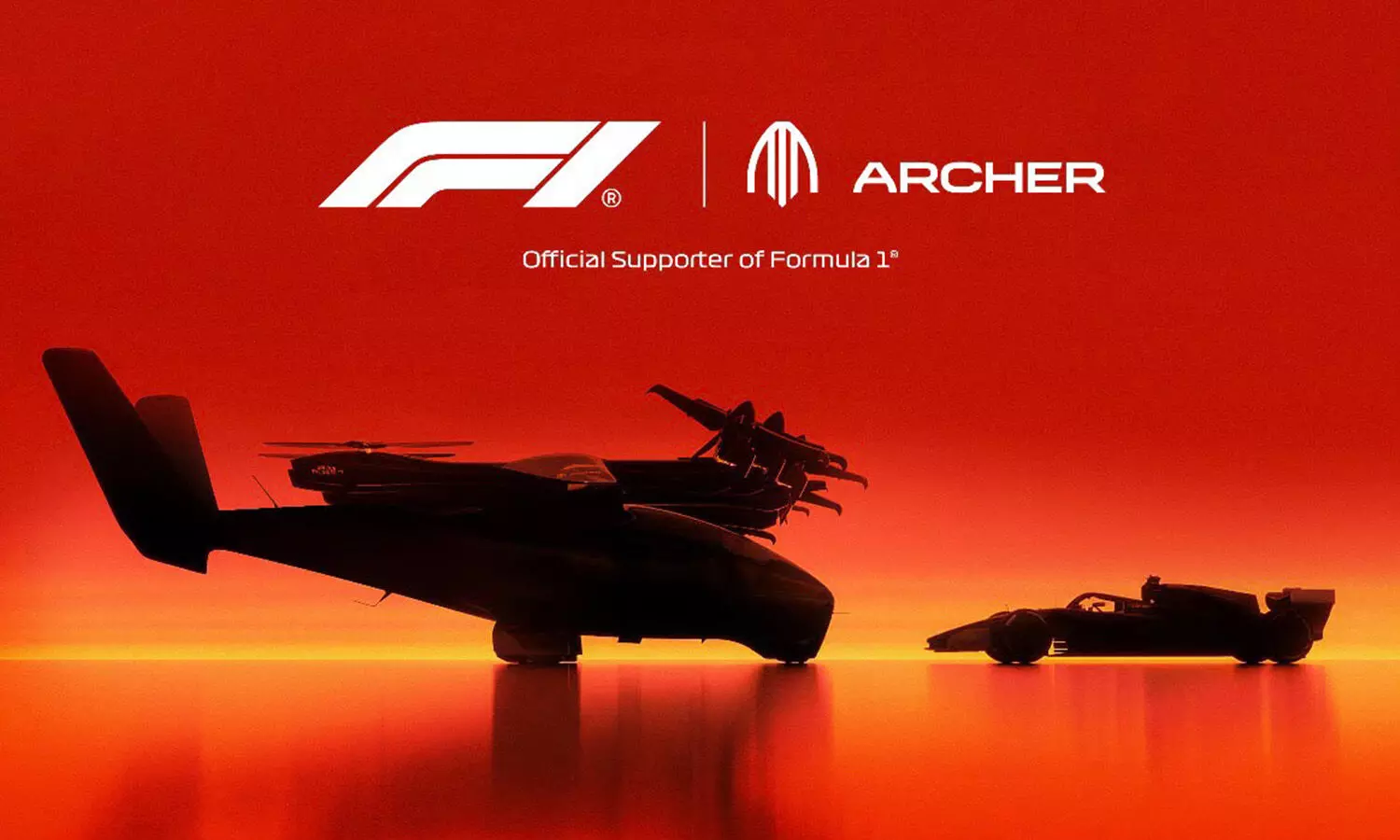
Image source: Formula1
For the past decade, the global experience economy has operated on a clear formula: build bigger spectacles, attract international travelers, and turn live events into multi-day cultural destinations. Yet as demand for live sports, music festivals, and global summits has surged, the industry has run into a physical ceiling on the ground.
Roads, city centers, and legacy transit networks simply were not built to absorb hundreds of thousands of visitors converging on a single venue at the exact same hour. Until now, the logistics of arrival and departure have remained the weakest link in an otherwise curated industry.
Archer Aviation’s multi-year partnership with Formula 1, announced on November 12, 2026, signals the start of a much broader wave. Under the agreement, Archer will have a presence at select Grands Prix events across the US, Middle East, Asia, and Europe that align with the key commercial markets where the company plans to operate. More importantly, the two organizations plan to explore integrating electric vertical take-off and landing (eVTOL) air taxi services directly into Grand Prix weekends, flying VIPs and fans to and from circuits in minutes aboard Archer’s all-electric Midnight aircraft.
In the modern experience economy, promoters are constantly looking for ways to expand value beyond the arena floor and capture spending across the entire guest journey. Traditionally, getting to a venue has been an unmonetized headache outsourced to congested highways and slow ground transfers.
Archer and Formula 1 are exploring a model that turns transit itself into a core part of the event product. The partnership will evaluate dedicated air taxi drop-off and pick-up locations directly at circuits alongside the inclusion of air taxi services within Formula 1’s hospitality and ticketing offerings.
As Archer’s commercial air taxi operations come online in F1 markets, fans will have the option to bypass road traffic between major airports, business hubs, and key city destinations on their way to and from race weekends. Designed specifically for urban air mobility, the Midnight aircraft replaces long commutes with quiet, all-electric flights capable of rapid back-to-back trips with zero operating emissions.
“Innovation is at the heart of Formula 1, and Archer shares our passion for pushing boundaries and exploring what is possible,” said Emily Prazer, Chief Commercial Officer of Formula 1. “This collaboration is an exciting opportunity to work together to explore how new ideas and technologies can continue to evolve and elevate the experience we create for our fans at our events.”
What gives this shift commercial momentum is how closely Archer’s infrastructure roadmap mirrors the global calendar of major live events. In the United States, Archer’s planned air taxi networks in Miami and Texas align directly with existing Formula 1 race locations where the company has already unveiled infrastructure plans. Internationally, Archer’s commercial rollout across the Middle East, Asia, and Europe lays the groundwork for future aerial corridors in additional host cities.
To build familiarity ahead of commercial passenger service, Midnight was displayed to fans at the United States Grand Prix in Austin as an Official Supporter of F1, with upcoming appearances scheduled at the Las Vegas Grand Prix and Abu Dhabi Grand Prix later this year.
For Archer, stepping onto the Formula 1 stage places future air mobility in front of an audience primed to embrace high-performance travel.
“With 830 million fans worldwide, Formula 1 gives us a global audience of prospective passengers who are as obsessed with high-performance vehicles as we are,” said Adam Goldstein, founder and CEO of Archer. “Motorsport and aerospace share the same engineering DNA, which made this a natural partnership. We look forward to working with Formula 1 to explore new technologies and how innovation on the ground and in the sky could come together to create a truly unique experience for fans at the track.”
From event corridors to commercial cargo with Halo
The significance of Archer’s Formula 1 rollout extends well beyond VIP hospitality. The airport-to-venue corridors, vertiport operations, and commercial aviation supply chains built for passenger air taxis lay the exact operational groundwork for Archer’s broader vertical lift ambitions, including heavy autonomous freight.
Unveiled in July 2026 at the Farnborough International Airshow alongside defense partner Anduril Industries, Halo is the commercial twin to the dual-use Thunder autonomous aircraft. While Midnight is an all-electric, piloted four-passenger air taxi engineered for short urban hops of up to 100 miles, Halo is built on a clean-sheet, unmanned architecture designed to move heavy modular payloads over long distances without requiring a conventional runway.
Powered by a series hybrid-electric propulsion system where an onboard generator drives dual tiltrotors, Halo reaches top speeds of 320 mph (278 knots) with a range of up to 800 nautical miles and an operating ceiling of 18,000 feet. Its dual tiltrotors vary rotor RPM across flight regimes to cut fuel burn during cruise while keeping acoustic levels low enough for suburban and noise-sensitive environments.
Crucially for freight forwarders and logistics operators, Halo is engineered around multimodal deployment and high daily utilization. Removing the onboard pilot lowers operating costs, eliminates crew exposure on hazardous routes, and allows airframes to fly more missions per day. Even the airframe itself is sized to fit inside a standard shipping container, allowing operators to move the aircraft rapidly across global networks by air, road, rail, or sea.
Archer has already secured Japan’s Marubeni Aerospace Corporation as its first strategic launch customer for Halo, targeting commercial logistics missions where traditional fixed-wing aircraft and helicopters face severe cost or infrastructure limits. Those use cases span middle-mile freight between regional hubs and ports, offshore energy supply, maritime logistics, and time-critical humanitarian or medical cargo flown directly from freight hubs to hospitals in a single flight.
Because Halo shares Archer’s core rotor dynamics, battery architecture, powertrain engineering, and commercial supply chains with Midnight, the Formula 1 partnership carries direct weight for cargo observers. Validating rapid-turnaround vertical lift operations, low-altitude airspace integration, and airport airside links across global event capitals accelerates the exact infrastructure and regulatory ecosystem that autonomous VTOL freighters will rely on to scale.The real disruption of the Archer and Formula 1 partnership is not simply that fans will reach the paddock faster. It is that the boundaries of how live experiences are packaged, priced, and accessed are moving into the sky.

"I bring stories to life from the heart of the air cargo, logistics, and aviation supply chain industries. As a News Correspondent at Stat Publishing Group, my focus is on delivering in-depth coverage, industry trends, and expert insights that drive conversations and shape perspectives. With a background in visual communication, photography, and content creation and storytelling, ensuring every report provides value to industry professionals.


