


Boeing 777F backlog at 36 after two October deliveries
Boeing has 36 777 freighters left to deliver after two October handovers, taking its factory-built freighter backlog, including 767-300Fs, to 43.
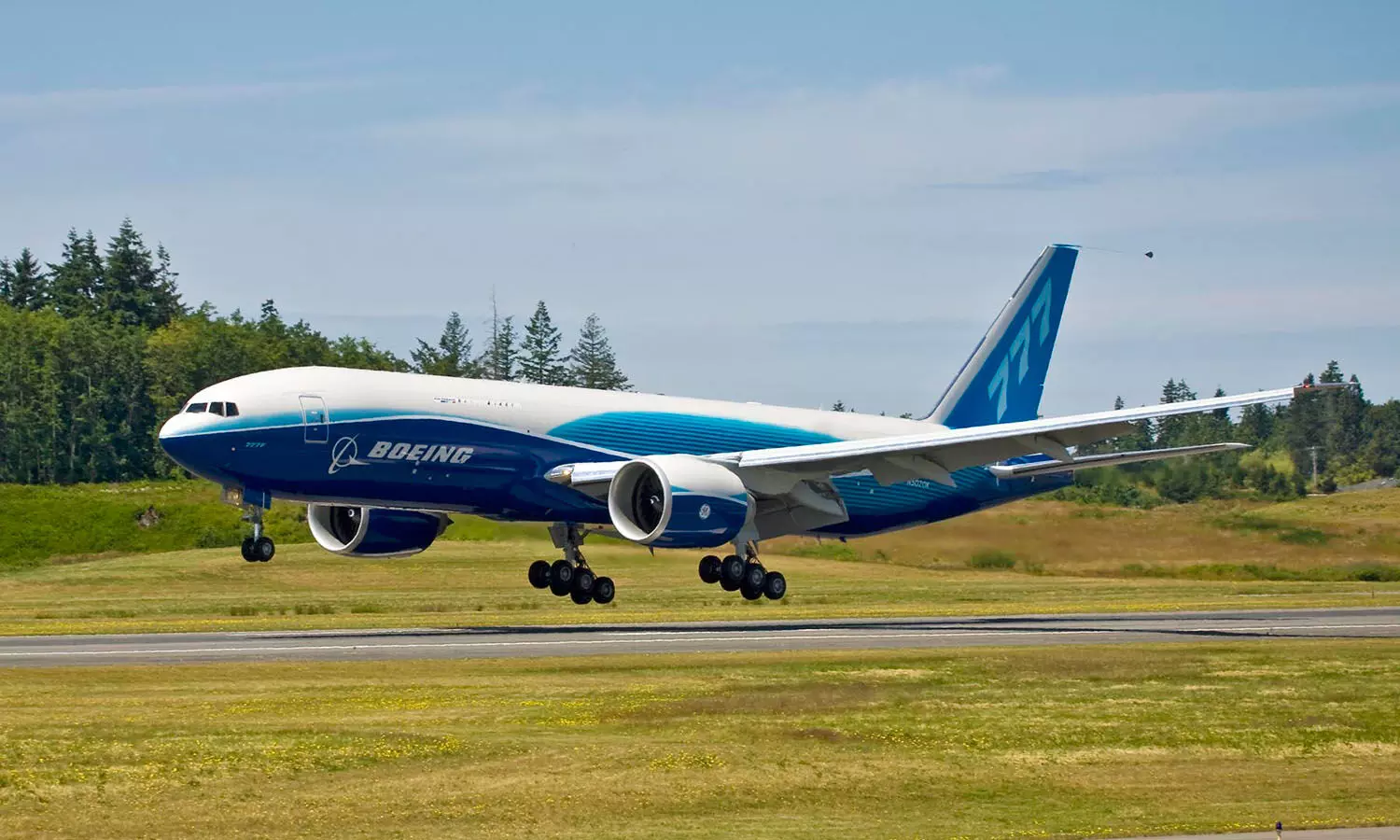
Boeing had 36 unfilled orders for the 777 Freighter (777F) as of 31 October 2026, according to the manufacturer’s official orders and deliveries data. FedEx has the largest number of aircraft still to be delivered of any named customer, with seven in the backlog. Nine are listed against unidentified customer(s). Six remain listed against Volga-Dnepr UK Limited, the UK subsidiary of the Russian cargo carrier, which is insolvent and in administration.
In October, Boeing delivered two 777Fs. One went to Saudia. The other went to CES Leasing Corporation, which has leased it to China Cargo Airlines. With that delivery, China Cargo Airlines now operates 21 777 freighters, and it is expected to add two more production 777Fs through leases.
Boeing also delivered two 767-300Fs to UPS in October. The parcel giant still has seven more 767-300Fs on order. Together with the 777F orders, that gives Boeing a factory-built freighter backlog of 43 aircraft.
Boeing has delivered 35 freighters so far in 2026: 22 777Fs and 13 767-300Fs. In all of 2025 it delivered 50 freighters, 35 of them 777Fs. With two months of the year left, Boeing’s total freighter deliveries for 2026 have only just matched the number of 777Fs it delivered last year.
The 777F is the world’s largest twin-engine freighter. Boeing launched the programme in May 2005, and the aircraft entered service in 2009. Air France took the first delivery. Emirates, FedEx, China Southern and a few leasing companies also took aircraft that year, and Boeing delivered 15 in total. It has now delivered 334.
The 777F faces a hard deadline. From 2028, emissions rules based on the International Civil Aviation Organization’s (ICAO) CO2 standard will bar newly built aircraft that miss the limits. The GE90-powered 777F misses them.
Its successor, the 777-8F, meets the new standard but is running late. Its entry into service is now targeted for 2029, and some customers already expect it to slip to 2030. The wider 777X programme is also behind schedule. The passenger 777-9, first due in early 2020, is now planned to enter service in 2027.
To bridge the gap, Boeing asked for an exemption in December 2025. In September 2026, the US Federal Aviation Administration (FAA) granted it, allowing 35 more 777Fs to be certified through 2030.
Darren Hulst, vice president of Commercial Marketing at Boeing, said the company kept its request deliberately modest. “One, we didn’t want to over ask in terms of the number of aeroplanes that we could do,” he said. Hulst was speaking at a media briefing on Boeing’s 2026 World Air Cargo Forecast during The International Air Cargo Association (TIACA) Air Cargo Forum in Miami.
The bigger reason, Hulst said, is that Boeing is already moving its production lines to the next generation. “We’re also in the process of cutting over our production to 777X, the 777-9 and ultimately the 777-8 freighter. So, if we did more, we would probably be disrupting our ability to actually produce the next generation aeroplanes.”

Editor at STAT Publishing Group since 2013, I lead a small team of reporters in chasing stories about cargo flows from A to Z—by air, sea, road, and rail. If it moves, we track it. Got a compelling lead? Reach me at reji@statpublishinggroup.com (cargo only, please)


