


When cargo takes the autonomous route
As technology reshapes the middle and last mile, seamless connectivity and human expertise will remain critical to delivering cargo faster and more efficiently.
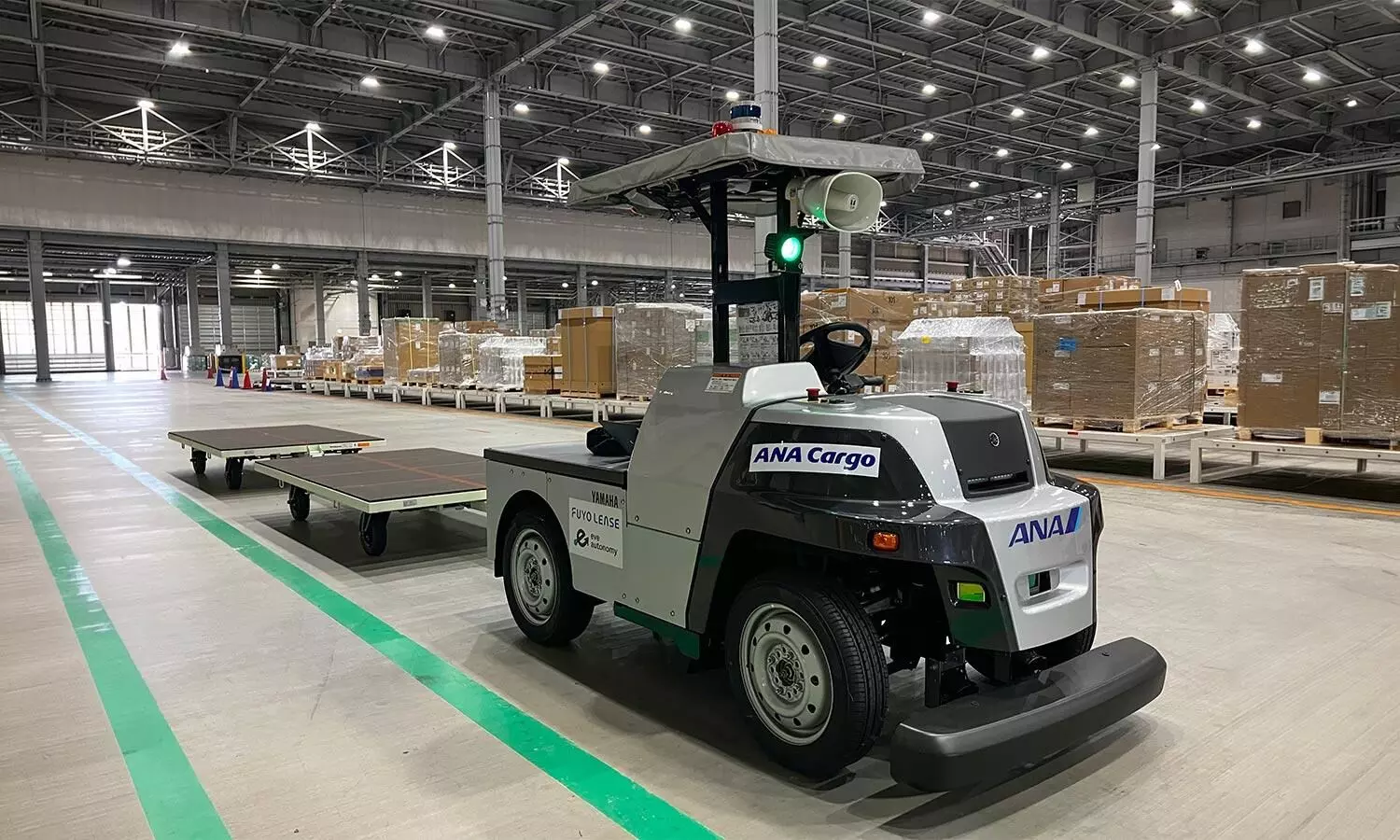
Level 4 autonomous cargo transport
Air cargo is primarily chosen for the rapid movement of goods. Still, an aircraft's or carrier's speed alone does not determine whether a shipment reaches its final destination on time. A significant part of the responsibility lies with the middle-mile and last-mile stages, where challenges such as high delivery costs, traffic congestion, limited delivery capacity, failed deliveries, and inefficient connectivity can create delays.
The growing push towards autonomous cargo movement aims to enable smoother and more efficient middle-mile and last-mile deliveries. However, the last-mile segment of air cargo shipments continues to face several challenges. According to Total Cargo Expertise (TCE), traffic congestion, limited delivery capacity, customs procedures, and poor coordination among different service providers are among the key factors causing delays.
“If we can improve the handover between the airline, handler, forwarder and final-mile or trucking provider, we can remove a lot of unnecessary waiting time.”Sarah Scheibe, TCE
“The key is to look at the whole cargo journey, not just the airport-to-airport or RFS operation. This is also where the Total Cargo Management (TCM) approach is relevant, by looking at the different stages of the cargo operation as one integrated process. If we can improve the handover between the airline, handler, forwarder, and final-mile or trucking provider, we can remove a lot of unnecessary waiting time,” shared Sarah Scheibe, Managing Director, TCE. It comprises a team of fully certified professionals with extensive expertise across all aspects of cargo operations and airline safety management.
But are these the only challenges cargo faces before reaching its final destination, or is there more to the journey? The multiple handoffs between different logistics stakeholders can further add to delays and complexity, “particularly when information is held in separate systems or needs to be transferred between different parties,” said Cathay Cargo.
“In Hong Kong, for example, there have been discussions around platforms such as Trade Single Window (TSW) and Port Community Systems (PCS), which could help improve coordination, transparency and information sharing across the logistics ecosystem.”
Aircraft on Ground (AOG) is highlighted as one of the key last-mile delivery challenges faced by airlines apart from consistent handling, according to Magma Aviation. “If an aircraft develops a technical issue, there may be hundreds of thousands of dollars’ worth of time-sensitive cargo on board that needs to reach its destination quickly. Given the high cost of air freight, resolving the disruption as fast as possible is critical,” said Peter Kerins, CEO, Magma Aviation. He added that the challenge becomes even greater when an aircraft is stranded in a remote location, such as central Africa, where sourcing and transporting spare parts can be difficult.
“It’s about moving forward alongside technology and learning to adapt as it continues to transform the way we work.”Peter Kerins, Magma Aviation
Technology is increasingly stepping in to make these stages faster, more efficient, and better connected. ANA Cargo introduced Level 4 autonomous cargo transport at Narita Airport earlier this year. “The primary objective is to address labor shortages and achieve ‘smart operations.’ ANA is working to build a "Smart Cargo Model" aimed at radically streamlining operations. The additional capacity generated through automation will make it possible to concentrate human resources on specialised cargo that requires extremely delicate handling, such as pharmaceuticals and semiconductor manufacturing equipment,” said Jumpei Kikushima, Global Service Planning, ANA Cargo.
Simultaneously, DoorDash, a technology and logistics company that ensures door-to-door delivery, launched its own drone platform, ‘DoorDash Air ’, in July 2026. The programme is built on their Autonomous Delivery Platform, which is the software layer that routes each order to the most efficient delivery mode, whether that's a Dasher, Dot, drone, AV, or sidewalk robot across our third-party partners.
“Our growing multimodal network supports more high-value, complex deliveries across all delivery types, and more order types need more order solutions. Dashers can handle deliveries like complex apartment buildings and late-night alcohol deliveries requiring ID checks, while Dot may be better suited for a small order on a quiet residential street. Drones help further fill the gaps with smaller orders, mid-range in distance, and time-sensitive, like a coffee order or a missing grocery ingredient for a recipe,” said DoorDash.
However, Kerins believes drones and autonomous delivery options are positively fitting in the air cargo industry.
“Automation will be key to reducing transit times, particularly in physical cargo handling. Ground handlers will need to continue investing in technologies that can accelerate processes. We are already seeing trials of automated cargo dimension-capture solutions to speed up cargo acceptance, as well as robotic build-up systems. These innovations have the potential to significantly reduce handling times in the future,” according to Cathay Cargo.
If the right information is available before the cargo arrives, teams can prepare much earlier, indicated Scheibe of TCE. While drones and humanoid robots hold significant potential for the future, particularly drones, they are not yet a major part of our current operations or those of most of our suppliers, she said. At present, the more immediate opportunities lie in improving data integration, automating existing processes and enhancing real-time visibility across the supply chain.
However, automation's success relies heavily on accurate shipment data and reliable identification. Freight forwarders therefore play a critical role in ensuring that shipment records and labels are complete and accurate, as automated systems can only perform effectively when supported by dependable underlying data.
According to the carrier, Customs authorities will also be key to this transformation. In a future ONE Record environment, customs agencies could access the required shipment information directly through a shared data ecosystem, potentially simplifying and accelerating clearance procedures. More broadly, greater adoption of industry-standard messaging and data exchange protocols across the supply chain will be essential to enable seamless connectivity between airlines, ground handlers, freight forwarders, customs authorities and last-mile providers.
“For first-mile and last-mile automation to be truly effective, it is essential to automate and accelerate the connections at intermediate hubs like airports"Jumpei Kikushima, ANA Cargo.
Kikushima said, “For first-mile and last-mile automation to be truly effective, it is essential to automate and accelerate the connections at intermediate hubs like airports. Moving forward, we aim to fulfill our role within this evolving ecosystem by combining automated cargo acceptance and transport technologies with the specialised, human-led handling required for special cargo.” She underlined that, most importantly, rather than a single company attempting to cover the entire supply chain, we believe that individual operators must be integrated through automation technologies and a shared data platform. Ultimately, we believe it is this connectivity that will complete a truly 'end-to-end autonomous logistics ecosystem.
While the logistics industry increasingly recognises the benefits of advanced technologies, their rapid adoption has also raised concerns about the future of human labour. Hyundai Motor’s labour union in South Korea staged its first full-scale strike in a decade on August 21 after wage negotiations stalled. The union is seeking higher wages, an increase in the retirement age and stronger job protections amid growing concerns over the impact of artificial intelligence and automation on employment.
These concerns come as Hyundai has announced plans to deploy Atlas humanoid robots, developed by its subsidiary Boston Dynamics, at its manufacturing plants in the United States, highlighting the growing debate over how automation could reshape the future workforce.
“It’s going to happen whether through AI, advanced technology, robotics or whatever comes next. Rather than resisting it, we need to embrace the change and figure out where we fit into this evolving landscape. It’s about moving forward alongside technology and learning to adapt as it continues to transform the way we work,” said Kerins.
He added that the world is constantly becoming more efficient, and progress is difficult to stop. We are already seeing this transformation with AI, and robotics is likely to follow the same path. Automation can reduce the risk of human error and improve efficiency, while robots and AI do not face limitations such as illness, lateness, or the need for breaks.
“We want drone delivery to work for any merchant, anywhere. We're building the full stack to make that possible from the ground infrastructure to the drone itself, and the handoff systems that make it work together seamlessly.”Harrison Shih, DoorDash Air.
Simultaneously, DoorDash is expanding into new categories to meet delivery requirements, highlighting the need for a more flexible and multimodal approach to fulfilment. “Dashers remain essential to the network, handling the vast majority of our millions of daily deliveries, including orders autonomy can't handle, like navigating up apartment buildings and fulfilling large orders. DoorDash’s core business is growing 20%+ year-over-year from more than 10 billion total deliveries. We’re adding entirely new categories to the platform: electronics, groceries, cosmetics, etc. The demand for delivery capacity is growing faster than any single modality can serve it.”
As automation, AI and drones transform cargo movement, seamless data sharing and collaboration will be key to reducing delays and delivering a truly end-to-end experience.

Shefali is a correspondent with over six years of experience in the media industry. She has worked with leading news platforms, including BW Businessworld and India Today, before joining the Taiwan-based EAT News portal, where she covered diverse beats in geopolitics and international relations alongside human interest stories. Six of her stories were put forward for nomination at the SOPA Awards 2022 across categories such as human rights, women's issues, environmental reporting, and the Scoop Award. Outside of work, she enjoys dancing, travelling, and balancing fitness with food.


