
The balance behind every departure
How AGOS Aviation's Global Centralised Load Control keeps aircraft safe, compliant and on schedule.
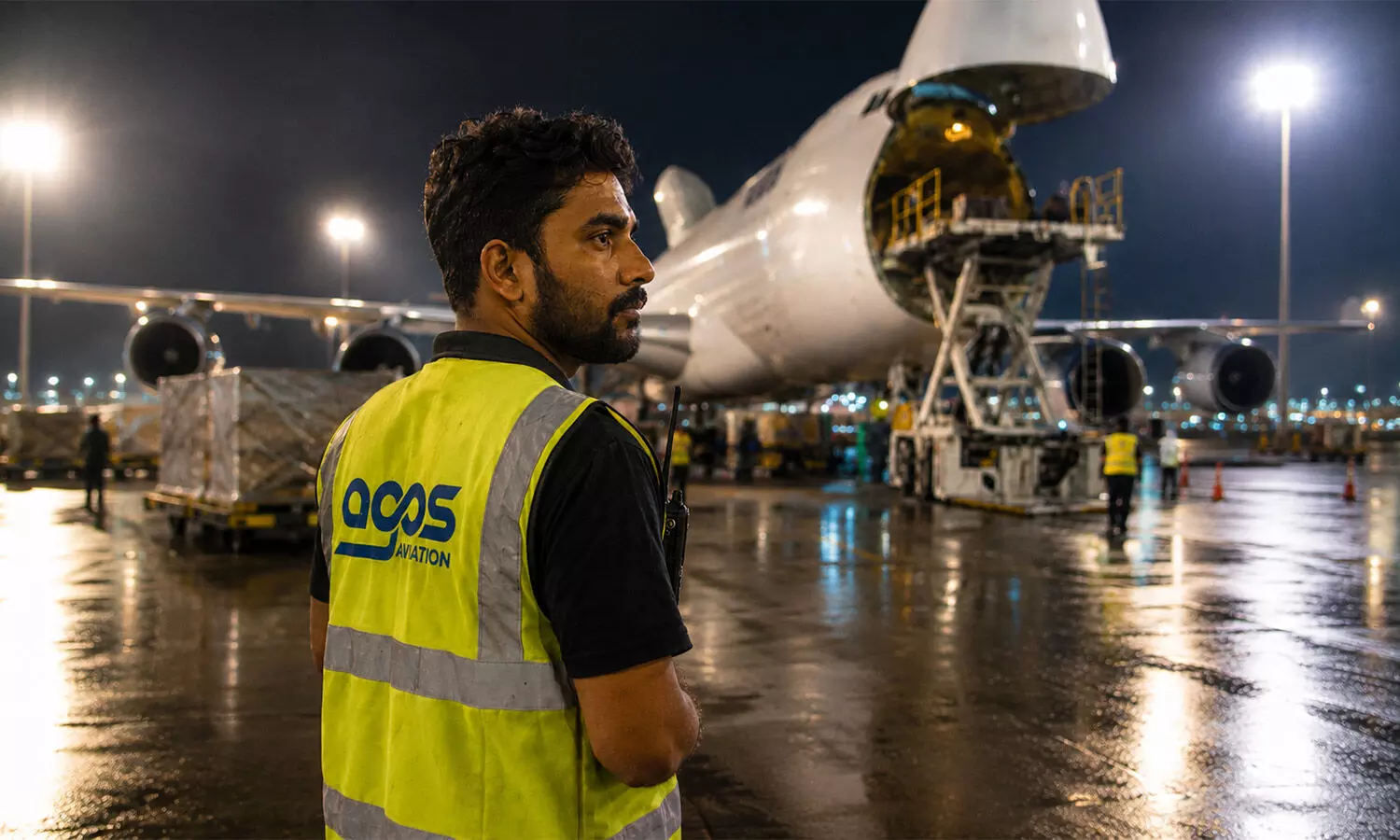
With four decades of Loadmaster experience behind it, AGOS Aviation brings a rare combination of hands-on aircraft knowledge and centralised discipline to one of the most critical functions in airline operations.
Every flight begins with a calculation. Before the doors close and the aircraft pushes back, someone must determine exactly how the load on board is distributed, whether the aircraft sits within its structural and Centre of Gravity limits, and whether the final loadsheet is accurate, compliant and ready for the crew. Airlines cannot afford to get it wrong.
This is load control, and it is an area in which AGOS Aviation has a distinct advantage. The company began its journey as a Loadmaster organisation nearly 40 years ago, supervising loading on the ramp and managing weight and balance in the real world. Its Global Centralised Load Control (GCLC) service is a natural extension of that heritage.
As the company puts it: who better than a Loadmaster company to provide Load Control services?
From the ramp to the control room
Load control has traditionally been managed at individual stations, often by ground handlers with varying levels of training, oversight and consistency. For an airline operating across multiple countries, this creates a familiar problem. Standards vary, errors are hard to trace, and every new destination means building load control capability from scratch.
Centralisation addresses this. Under the AGOS model, a dedicated team of certified load controllers and specialists handles load planning and loadsheet production from a unified hub. Local stations continue to manage the physical loading; the planning, verification and documentation are managed centrally, to a single standard, across the airline's entire network.
The result is a streamlined, network-wide approach: fewer ground handling errors, faster turnarounds and a consistent, auditable process wherever the aircraft operates.
Safety first, without compromise
For AGOS, load control is fundamentally a safety function before it is a cost function. Every load plan is built around the specific limitations of the aircraft: structural limits, compartment and floor loading, Centre of Gravity envelopes and the particular characteristics of different aircraft types.
The company's load controllers & Load Controllers have worked across a wide range of aircraft types , and that experience informs how plans are constructed. Weight distribution is optimised not only for compliance but for practical outcomes: minimising ground damage, supporting fuel efficiency through optimal trim and ensuring ground teams can execute the plan cleanly.
A load controller who has never stood on the ramp sees a set of numbers. A Loadmaster sees the aircraft.
Built for disruption
Airline operations rarely run to plan. Weather, technical delays and last-minute cargo change all place pressure on load control, precisely when accuracy matters most.
The AGOS Centralised Operations Hub is designed for exactly these moments. A unified system supports consistency in normal operations and structured recovery protocols when things go wrong. Training is standardised, so no single individual or station becomes a point of failure.
Continuity is engineered in. Built-in recovery mechanisms keep GCLC services running uninterrupted through operational challenges, and because the hub operates around the clock across time zones, an airline's overnight departure in one region is handled with the same attention as its morning wave in another.
A model that adapts to the airline
Rather than a one-size-fits-all product, AGOS builds each GCLC solution around the airline's operational needs and fleet structure. A cargo operator, an ACMI provider and a passenger carrier entering new markets each have different requirements and the company tailors its approach accordingly.
Its global operational reach, developed through engagements with carriers including Atlas Air, Emirates SkyCargo, ASL Airlines, Silk Way West Airlines, CMA CGM Air Cargo, Air Belgium, National Airlines and Magma Aviation, means experience across major international airports and regulatory environments is already in place. Whether an airline is based in Europe, the Middle East, Asia or the Americas, the loadsheet standard is the same, and so is the team producing it.
The commercial logic is equally clear. Building an in-house centralised load control function demands significant investment in infrastructure, systems and training. AGOS removes that requirement. Through a shared service model, load control resources are pooled across partner airlines, delivering economies of scale that no single carrier could achieve alone. This can help reduce capital expenditure while maintaining consistent service standards.
And because the model is scalable, it grows with the airline. Seasonal peaks, new routes and fleet additions are absorbed without the airline re-planning its manpower; when volumes fall, so does the cost.
All AGOS services are fully insured, protecting partners' operational and financial interests.
The AGOS difference
Many providers offer load control. Few offer it with 40 years of Loadmaster legacy behind every plan, certified specialists who understand the aircraft as well as the spreadsheet or software being used, and a model that scales with the airline while lowering its overheads.
The loadsheet may be the least visible document in an airline's operation. Getting it right, every time, is what keeps the visible parts moving.
For AGOS Aviation, that is simply the job it has been doing for four decades.