
Measurement to intelligence: How CIND transforms air cargo acceptance
Walk through any modern cargo terminal, and you'll see an industry investing heavily in digitalisation, automation and artificial intelligence. Yet one of air cargo's most critical processes still depends on something surprisingly old-fashioned: manual measurements.
Dimensions are recorded by hand. Freight characteristics are assessed visually. Data is entered into multiple systems. And once inaccuracies enter the process, they often travel through the entire supply chain.
The result is an industry where aircraft can be planned using estimated dimensions, warehouse teams work with incomplete information, and billing disputes arise from data that was never fully verified in the first place.
For years, the conversation around air cargo efficiency has focused on capacity, infrastructure and technology. Increasingly, however, leading cargo operators are discovering that the real bottleneck lies elsewhere: the quality of the data itself.
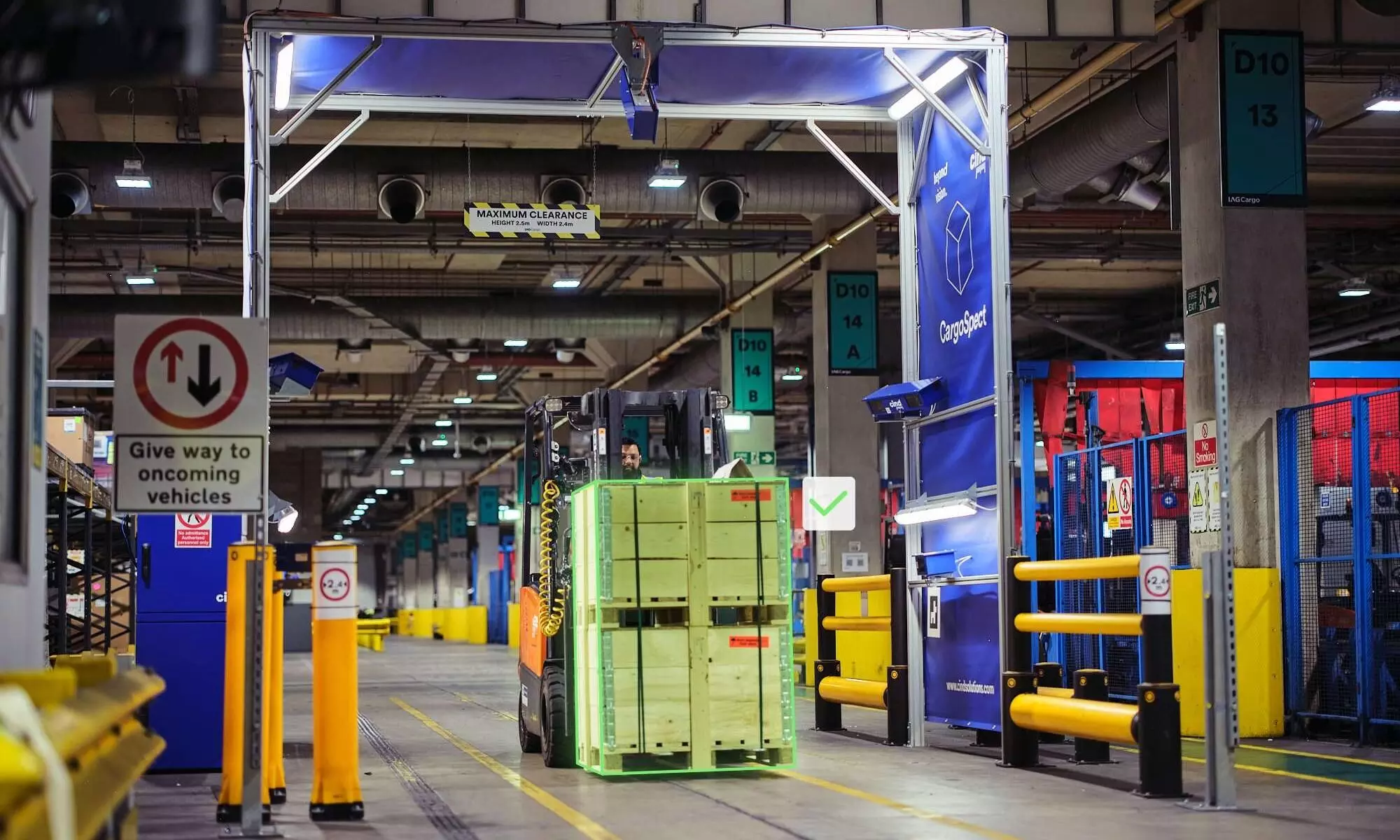
That shift in thinking is driving interest in companies such as Sweden-based CIND, whose AI-powered computer vision solutions help airlines, handlers and logistics providers automatically capture freight information at the point of acceptance.
Instead of treating dimensioning as a standalone task, CIND approaches it as the beginning of a much larger data journey. As cargo moves through the warehouse, the company's systems automatically generate accurate dimensional and contour information while creating a digital record that can be shared across operational platforms in real time.
Why some of the world's largest cargo organisations, including DHL, IAG Cargo and WFS, have adopted CIND's solutions within their operations. Their deployments have helped validate not only the technology itself but also the business case behind automated freight data capture.
Reliable freight data allows cargo operators to plan aircraft capacity with greater confidence, reduce wasted space, improve billing accuracy and eliminate many of the manual checks that slow operations. What was once a measurement process becomes a source of operational intelligence.
The value of that intelligence becomes increasingly important as the industry looks toward greater automation. Artificial intelligence can optimise planning and support decision-making, but only when the underlying data is trustworthy. In many cargo operations, that remains the missing piece.
This is where operational experience matters. Technology alone is not enough. Systems must perform consistently in busy cargo environments where speed, reliability and accuracy are equally important.
Every shipment processed contributes to a growing pool of verified operational data, creating opportunities for deeper insights into cargo characteristics, handling requirements and capacity utilisation. Over time, this transforms dimensioning from a compliance exercise into a strategic asset.
As air cargo continues its digital evolution, the industry's competitive advantage may no longer come from simply moving freight faster. It may come from knowing more about that freight than ever before.
In a sector built on precision, trusted data is becoming the foundation for smarter operations. And for a growing number of cargo leaders, that journey starts the moment a shipment enters the warehouse.
Learn more at cindsolutions.com
The article was originally published in the June 2026 issue of The STAT Trade Times.