How DLS is making reverse logistics central to tech supply chains
Shorter device lifecycles, rising returns and demand for refurbished electronics are pushing tech firms to recover value through repair, resale and reuse.
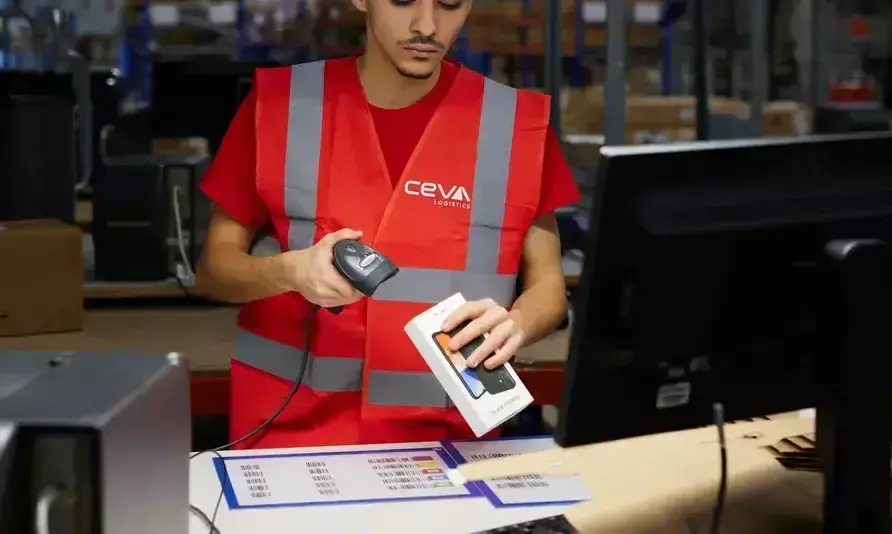
The technology supply chain is quietly undergoing a major change. For years, the focus was simple: manufacture a device, transport it, deliver it to the customer and move on to the next shipment. Once a smartphone, laptop or enterprise device reached its destination, the logistics journey was largely considered complete. Today, however, that approach is beginning to change as technology companies rethink what happens after a product is sold.
Rising return volumes, shorter product cycles and growing pressure to reduce waste are pushing reverse logistics and refurbishment into the centre of technology supply chains. Increasingly, companies are realising that the real value of a device does not end with its first delivery. Instead, products can be repaired, refurbished, resold, redeployed or recycled, creating new revenue opportunities while helping companies meet sustainability goals. This shift is also changing the role of logistics providers, who are now expected to manage not just delivery, but the total life of a device.
The move towards this model is happening at a time when consumer expectations are also evolving. The global circular economy in electronics is projected to reach a market valuation of $4.5 trillion by 2030, according to Statista’s Global Circular Economy Outlook Q4 2025. At the same time, a 2026 PwC Global Consumer Insights Survey found that 73% of Gen Z and Millennial consumers are willing to pay more for electronics supported by a certified refurbishment guarantee or a guaranteed buy-back programme. Simply put, sustainability and commercial value are becoming closely linked.
To understand why reverse logistics is becoming increasingly important, it helps to first look at what has changed inside technology supply chains. Product lifecycles have become shorter as consumers upgrade devices more frequently and businesses replace technology faster. This creates growing volumes of returns through warranty claims, repairs, trade-ins, buy-back schemes and end-of-life recovery programmes. Managing these flows has become just as important as shipping new products to market.
Traditionally, supply chains focused heavily on forward logistics. The goal was speed, efficiency and ensuring products reached customers quickly. Reverse logistics, which includes repairs, refurbishment, returns and recycling, often operated separately with limited visibility. In many cases, returned products moved through disconnected systems, multiple vendors and fragmented repair networks, making it difficult for businesses to understand where products were, what condition they were in and whether value could still be recovered.
This is where the idea of Device Lifecycle Solutions, or DLS, enters the conversation. According to Alicia Voto, Global EVP of Technology at CEVA Logistics, DLS is designed to manage the entire journey of a device rather than just its first movement. Instead of viewing logistics as transport alone, the model connects forward logistics such as configuration and fulfilment with in-life services including repair, refurbishment, recommerce and recycling. “It’s about managing the ‘total life’ of a product, not just its first delivery,” Voto says.
The importance of this approach becomes clearer when looking at the problems technology companies face. Gerard de Boer, Director of Device Lifecycle Solutions at CEVA Logistics, says fragmented supply chains, poor visibility and the complexity of reverse flows are among the biggest challenges. Returned products arrive in different conditions, often requiring testing, repair, refurbishment or secure data handling before they can re-enter the market. Unlike traditional outbound shipments, reverse logistics involves unpredictability and technical complexity. “Most companies struggle with fragmented supply chains, limited visibility and the sheer complexity of managing reverse flows,” de Boer says.
To address this, CEVA’s DLS model combines logistics, technical services and reverse flows into a single operating structure. The goal is to provide real-time visibility and better control over products as they move through their lifecycle. According to de Boer, this helps businesses reduce inventory risks, improve service levels and recover value from returned devices that may otherwise be lost. “With real-time visibility, we help customers reduce inventory risk, improve service levels and, most importantly, capture value from returned devices that would otherwise be lost,” he says.
Voto argues that what differentiates this approach is the focus on “full orchestration”. Rather than simply transporting products, CEVA aims to manage the technical integrity of devices throughout their lifecycle. This includes certified repair services, secure refurbishment and access to the broader multimodal transport capabilities of the CMA CGM Group. The objective is end-to-end control, particularly at a time when companies are searching for logistics partners capable of managing both forward and reverse supply chain requirements with equal efficiency.
The growing emphasis on refurbishment also reflects a wider sustainability push within the technology industry. Circularity, once discussed mainly as a corporate responsibility goal, is increasingly becoming a business priority. Instead of disposing of returned devices, companies are looking to extend product life through refurbishment and recommerce. A smartphone returned through a buy-back programme, for example, may be repaired, certified and resold, while enterprise devices may be refreshed and redeployed rather than replaced.
However, refurbishment at scale depends heavily on visibility and trust. Consumers buying refurbished products increasingly expect guarantees around quality and reliability, while businesses require confidence that repaired or redeployed devices meet data privacy and regulatory requirements. This has made technology and innovation central to reverse logistics operations.
De Boer explains that advanced orchestration platforms and serial-level traceability are helping companies track individual devices throughout their lifecycle. In practical terms, this allows businesses to monitor where products are, assess their condition, improve turnaround times and maximise asset recovery value. Testing capabilities and secure data-handling systems are also becoming essential, particularly as privacy standards tighten globally.
For technology companies, this shift is changing how supply chains are measured. Success is no longer based only on how quickly products move from factory to customer. Increasingly, businesses are asking how efficiently returned devices can be repaired, refreshed, recirculated and recovered. Speed-to-market remains important, but it is now being balanced with sustainability, cost recovery and operational efficiency.
According to Voto, shortened product cycles mean the reverse side of the supply chain is becoming just as important as the forward side. Companies are increasingly looking for partners capable of handling both with equal precision. Device lifecycle management, she argues, is moving beyond operational necessity and becoming a strategic growth driver. “Device lifecycle management is no longer just an operational task. It is a strategic growth driver,” Voto says.
Looking ahead, de Boer believes Device Lifecycle Solutions will increasingly become the standard operating model for the technology sector. As sustainability expectations continue to grow, the ability to repair, refresh and recirculate products smoothly could become a defining feature of successful technology brands. “The ability to seamlessly repair, refresh and recirculate devices will be the hallmark of a successful technology brand,” he says. For logistics providers, this signals an important change. The future may depend not only on delivering devices efficiently, but also on how effectively they are returned, renewed and brought back into the supply chain once again.