


Global disruptions demand a new supply chain playbook
DHL’s Oscar dae Bok urges pharma leaders to design supply chains for resilience, not efficiency, as global disruptions intensify.
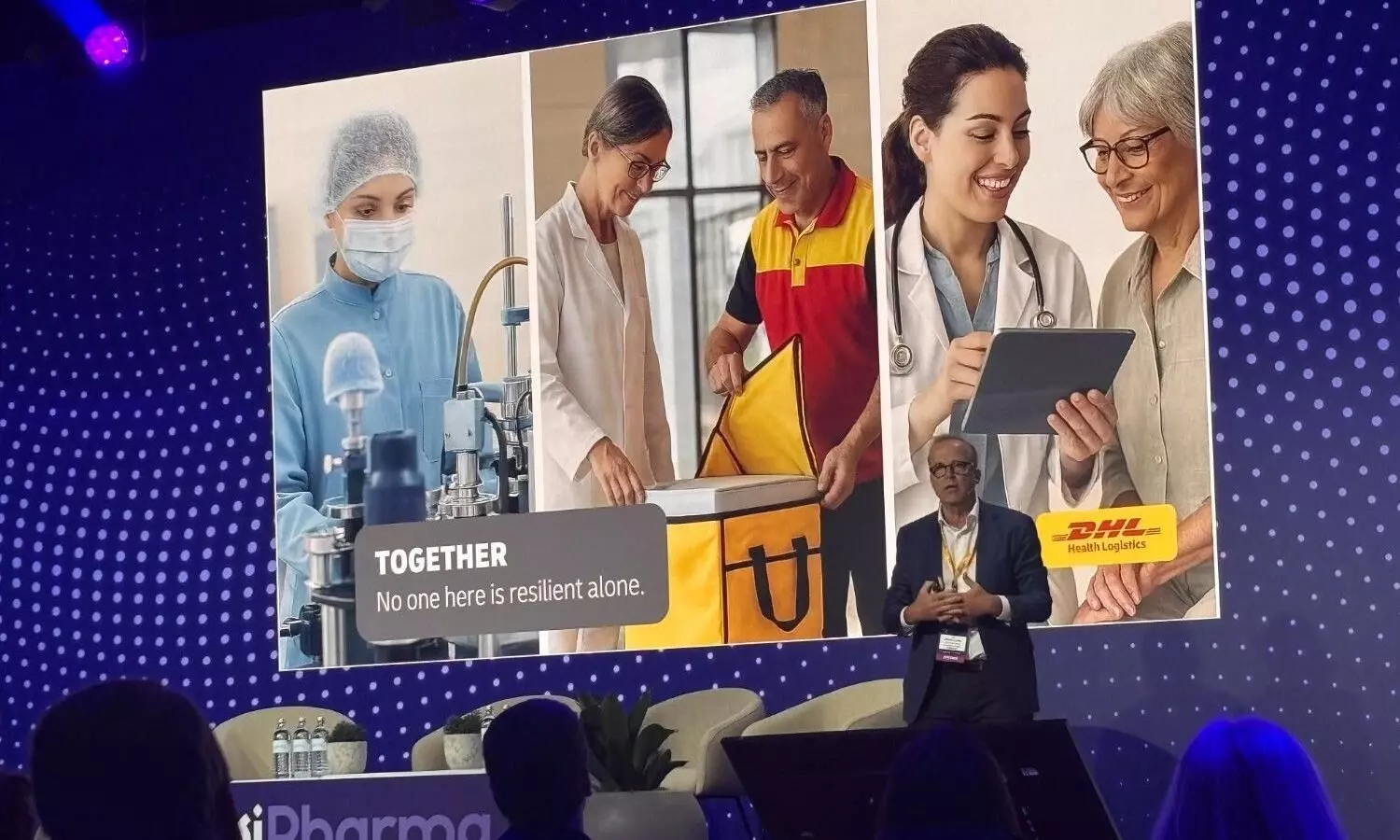
At the opening plenary of the 26th edition of LogiPharma in Vienna, Oscar de Bok, CEO of DHL Global Forwarding, Freight, delivered a stark message to the global healthcare and pharmaceutical logistics community: resilience, not efficiency, must define the next era of supply chain design. Speaking on the theme “Risk Management: How to hedge against future disruptions and mitigate volatility in an unpredictable world with stronger, more resilient supply chains", de Bok warned that the stakes in healthcare logistics are uniquely high.
“At the end of the supply chain isn’t a store… it’s in the end a patient,” he said, stressing that a delayed shipment can mean “a delayed treatment", making resilience “even more relevant” in healthcare than in any other sector.
De Bok highlighted how the shift toward patient‑specific medicines and high‑value, low‑volume therapies has intensified the need for temperature‑controlled precision. Even minor deviations can have “an enormous impact… on months of development of treatment", he noted.
To address this, DHL will launch a new “airfreight corridor” next month, an end‑to‑end, fully DHL‑managed, multi‑temperature‑controlled network designed to improve certainty, quality, and cost efficiency. “We actually control that process fully so that not only the quality… improves, but at the same time it also has a cost‑benefit,” he said.
Reflecting on recent geopolitical disruptions, including the Middle East crisis, de Bok said the industry must abandon the illusion of stability. “Covid didn’t create new risks, it exposed the ones we ignored,” he said, adding that “disruptions are the new normal for world‑class supply chains.”
He argued that companies have become good at reacting to crises, but that is no longer enough. “It’s about being prepared for the unexpected in scenarios so that our teams on the ground can respond fast,” he said.
The recent Middle East disruptions, he explained, required immediate action to “unlock Bahrain", reroute flows, and create new connections. He cited a striking example: the Formula One race in Australia could only proceed because DHL managed to extract key parts “with one of the last flights", demonstrating how global supply chains ripple far beyond the immediate region.
A recurring theme in de Bok’s speech was the importance of empowering local teams. “The most resilient decisions in the end are made on the ground,” he said, recalling lessons from the Covid‑19 era. Centralised control slows response times; instead, frontline teams must be trained, equipped, and authorised to act quickly.
He described how DHL anticipated port disruptions during the Middle East crisis by deploying 500 trucks in advance. “It’s things about reading signals early on… and then later on it actually did happen,” he said.
While AI and data analytics play a growing role, de Bok emphasised that technology cannot replace human judgement. AI can “facilitate lots of the fast and simple decision‑making", he said, but experienced people must still “take the right calls… at the right moment".
Despite the industry’s focus on digitalisation, de Bok reminded the audience that logistics remains a physical business. “We always need to have a backup plan for the physical flow if the screens turn black,” he warned, underscoring the need for cyber‑resilience and manual fallback processes.
He also stressed the importance of collaboration across the supply chain. “A supply chain is called a chain for a reason… none of us stands alone in this,” he said, urging companies to prepare jointly for disruptions, including cyber incidents affecting partners.
De Bok concluded by highlighting DHL’s long‑term investments in people, training, assets, and data. The upcoming airfreight corridor, he said, is just one example of how DHL is building “completely resilient” networks that reduce dependency on external partners and even allow customers to cut packaging by up to 60%.
"Resilience", he said, “is built over years, not in a boardroom, but on the ground.”
Editor at STAT Publishing Group since 2013, I lead a small team of reporters in chasing stories about cargo flows from A to Z—by air, sea, road, and rail. If it moves, we track it. Got a compelling lead? Reach me at reji@statpublishinggroup.com (cargo only, please)


