
Cathay backs Peking University study on scaling SAF in China
Cathay welcomes a Peking University study outlining policies to scale sustainable aviation fuel adoption in the Chinese Mainland.
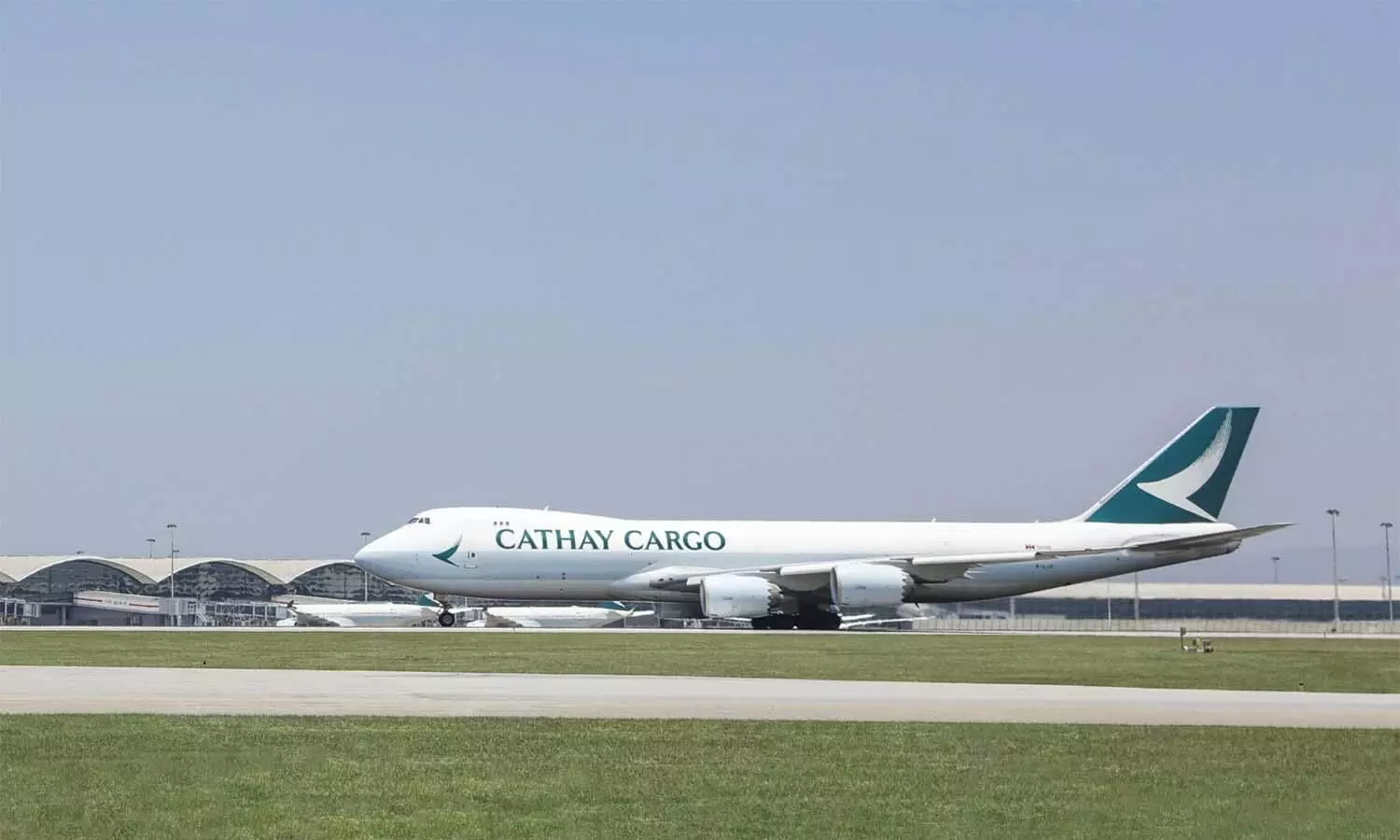
Cathay has welcomed the findings and recommendations of a study by Peking University, saying that faster development of sustainable aviation fuel (SAF) in the Chinese Mainland will support the global aviation industry.
The airline welcomed the release of *Igniting the SAF Market: Policy Pathways for Scaling Sustainable Aviation Fuel in China*, published by Peking University’s National School of Development in late 2025. Cathay said the study provides practical analysis and recommendations to help scale SAF adoption in the Chinese Mainland by addressing both supply and demand through market-based measures.
The study reviews the challenges and growth potential for SAF in the Chinese Mainland, drawing comparisons with global best practices and China’s solar photovoltaic industry. It highlights China’s advantages in feedstock and manufacturing and examines long-term cost trends across different production pathways. The study notes that the Power-to-Liquid pathway, which produces electro-sustainable aviation fuel, has the strongest potential for long-term cost reduction and could reach price parity with conventional jet fuel, including China’s projected 2030 carbon price, once cumulative output reaches 1.6 million tonnes, with appropriate policy support.
It also recommends a combined approach to developing the national SAF industry, including policy integration, stimulating market demand, expanding international market access and setting up procurement mechanisms to ensure stable supply and demand.
Cathay General Manager Sustainability Grace Cheung said the development of a domestic SAF industry in the Chinese Mainland would support national carbon targets and improve the availability and affordability of SAF for global airlines. She added that the study highlights the potential for SAF to achieve long-term cost parity with conventional jet fuel, provided there is sufficient support for new technologies, large-scale production and policies that encourage SAF deployment on both the supply and demand sides.
Cathay said it has supported SAF development in the Chinese Mainland for many years and was among the early airlines to uplift Chinese-made SAF at Hong Kong International Airport, Amsterdam Schiphol and London Heathrow.
The airline added that SAF remains central to aviation’s decarbonisation efforts and can reduce carbon emissions by around 80% on a lifecycle basis compared with conventional jet fuel, based on the SAF procured by the Cathay Group in 2024.