
CargoPoint: Powering the new China–Europe corridor via Uzbekistan
CargoPoint is where logistics expertise meets the demand for alternative routes for China-Europe trade
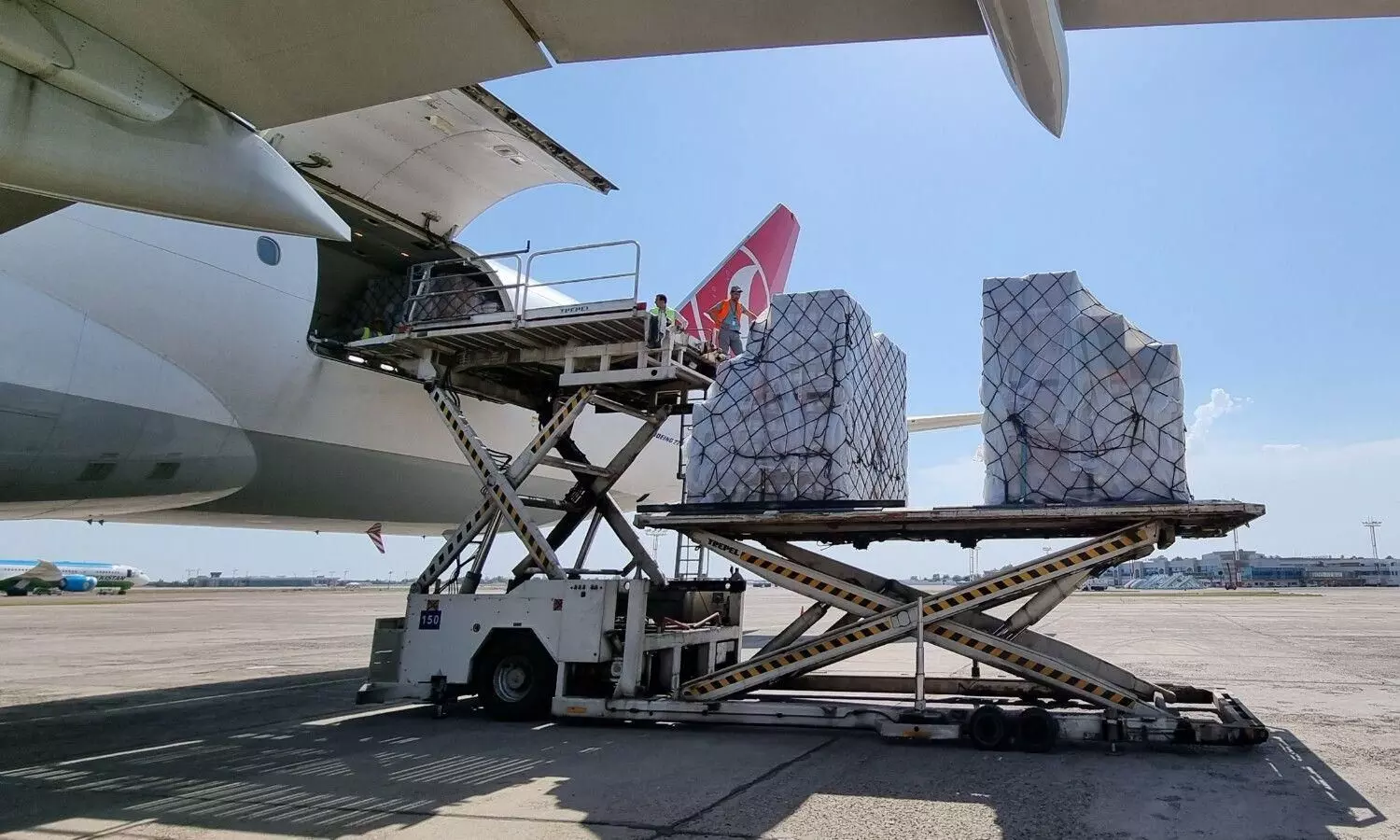
The global supply chain is undergoing a structural transformation. Driven by capacity constraints and cost volatility, shippers are abandoning traditional logistics models in favour of more agile alternatives. At the heart of this shift lies Central Asia, where Tashkent in Uzbekistan has emerged as a premier strategic hub. CargoPoint, the freight forwarder headquartered in Tashkent, Uzbekistan, does not simply operate within this corridor; it is the architect of this alternative route enabling seamless Eurasian trade.
Back in October 2023, CargoPoint pioneered this route, rigorously testing the corridor’s viability, along with its strategic partner Turkish Cargo. This successful start served as the definitive proof of concept, demonstrating that a Tashkent-centred model could outperform traditional gateways, such as the Suez Canal maritime route, the Northern Rail Corridor through Russia, the traditional multimodal lane via Dubai or the congested direct China-EU air route.
The success of CargoPoint’s initiative did not go unnoticed. The Truck+Air multimodal solution gained traction among supply chain industry titans such as DHL Global Forwarding and CEVA Logistics, further validating the route as the new benchmark for trans-Eurasian freight movements. Today, what began as a CargoPoint initiative at its Tashkent Airport hub has become a vital artery for global trade.
“From day one, we made it clear that this was not an experiment—it was an industry-ready corridor,” says Mirzali Mirusmonov, Business Development Director at CargoPoint. “We invested relentlessly in end-to-end excellence: proactive customer service that anticipates bottlenecks before they occur; continuous engagement with customs authorities to streamline documentation and clearance; operational alignment with ground handling agents to ensure flawless handovers; and real partnership with airlines to guarantee capacity and reliability. That commitment made CargoPoint a trusted partner for major global players. It’s not luck that DHL and CEVA turned to us—it's because we delivered certainty in a market where certainty is rare.”
China-Europe trade corridor
Trade between China and the European Union continued to strengthen in 2025, with bilateral volumes increasing by around 5% year on year, reaching approximately US$750 billion between January and November 2025, up 5.4% compared with the same period in 2024, according to figures published on 4 January 2025 by China’s General Administration of Customs (GAC). Despite ongoing geopolitical and market pressures, China remains a net exporter to the EU, with shipments largely driven by machinery, electrical equipment and industrial goods, reinforcing the structural depth of the corridor.
This sustained growth highlights not only the rising intensity of China-Europe trade but also the growing requirement for reliable, well-positioned transit hubs capable of absorbing and redistributing increasing cargo flows. In this context, CargoPoint has emerged as a key player, leveraging Central Asia’s strategic location and expanding logistics infrastructure to strengthen connectivity between China and European markets.
Infrastructure evolution: The rise of the Tashkent hub
The momentum behind Uzbekistan’s logistics sector is formidable. In 2025, the nation's airports handled a total of 98,137 tonnes of cargo and mail, representing a 12% increase over 2024. This growth trajectory is anchored by the newly modernised Tashkent Cargo Terminal, which possesses a throughput capacity of 120,000 tonnes per year, solidifying its status as a critical logistics node for international transit.
However, the most significant signal of Uzbekistan’s regional dominance is the development of a new greenfield international airport. Spanning 1,310 hectares just outside the capital city of Tashkent, this massive facility is engineered for the future. Upon completion, it will possess the capacity to handle 20 million passengers and 129,000 tonnes of cargo annually, with the ability to manage 30 takeoff and landing operations per hour and simultaneously service 62 aircraft. This strategic positioning transforms Tashkent from merely a stopover point into a central, high-capacity pivot for China-Europe trade.
Air+Air and Truck+Air solution via Tashkent airport
CargoPoint’s China-Europe logistics solution via the Tashkent gateway is gaining global traction. Through Truck + Air and Air + Air products, the company offers flexible routing from any Chinese origin, including high-growth inland provinces and established coastal hubs. The cargo is then consolidated and forwarded to Western and Central Europe using air freight. This provides a balanced, high-speed alternative to congested maritime routes and overstretched rail lines, allowing shippers to optimise costs without sacrificing speed, safety, or supply chain visibility.
As Bahtiyar Nomozbaev, CEO of CargoPoint, puts it, "In a logistics landscape which is anything but predictable, CargoPoint engineers supply chain certainty and predictability through alternative transit products. Our Air+Air and Truck+Air multimodal solutions running through Tashkent Airport offer a clear logistical advantage to businesses shipping between China and Europe."
Leading the way through the Middle Corridor
This alternative freight corridor running through Tashkent, Uzbekistan, provides a significant competitive edge for Chinese exporters and European importers. Looking ahead, the convergence of China’s "inland-first" export strategy and the EU’s demand for diversified supply chains will likely solidify the Middle Corridor as a permanent logistics fixture. For Tashkent, the shift from a transit point to a high-capacity regional hub suggests a future defined by value-added services and increased frequency from global carriers.
“CargoPoint is committed to leading this sector, offering smart, reliable, and future-proof logistics solutions that connect China and Europe,” says Bahtiyor Rashidov, Director for Business Development at CargoPoint. “This structural shift promises a more resilient Eurasian trade ecosystem, where CargoPoint continues to bridge the gap between East and West through reliable and scalable logistics frameworks.”