


Beyond the schedule: The rise of cargo charters
Cargo charters are becoming increasingly vital as airlines and logistics providers embrace flexible capacity to overcome disruptions, handle urgent shipments, and adapt to shifting trade patterns.
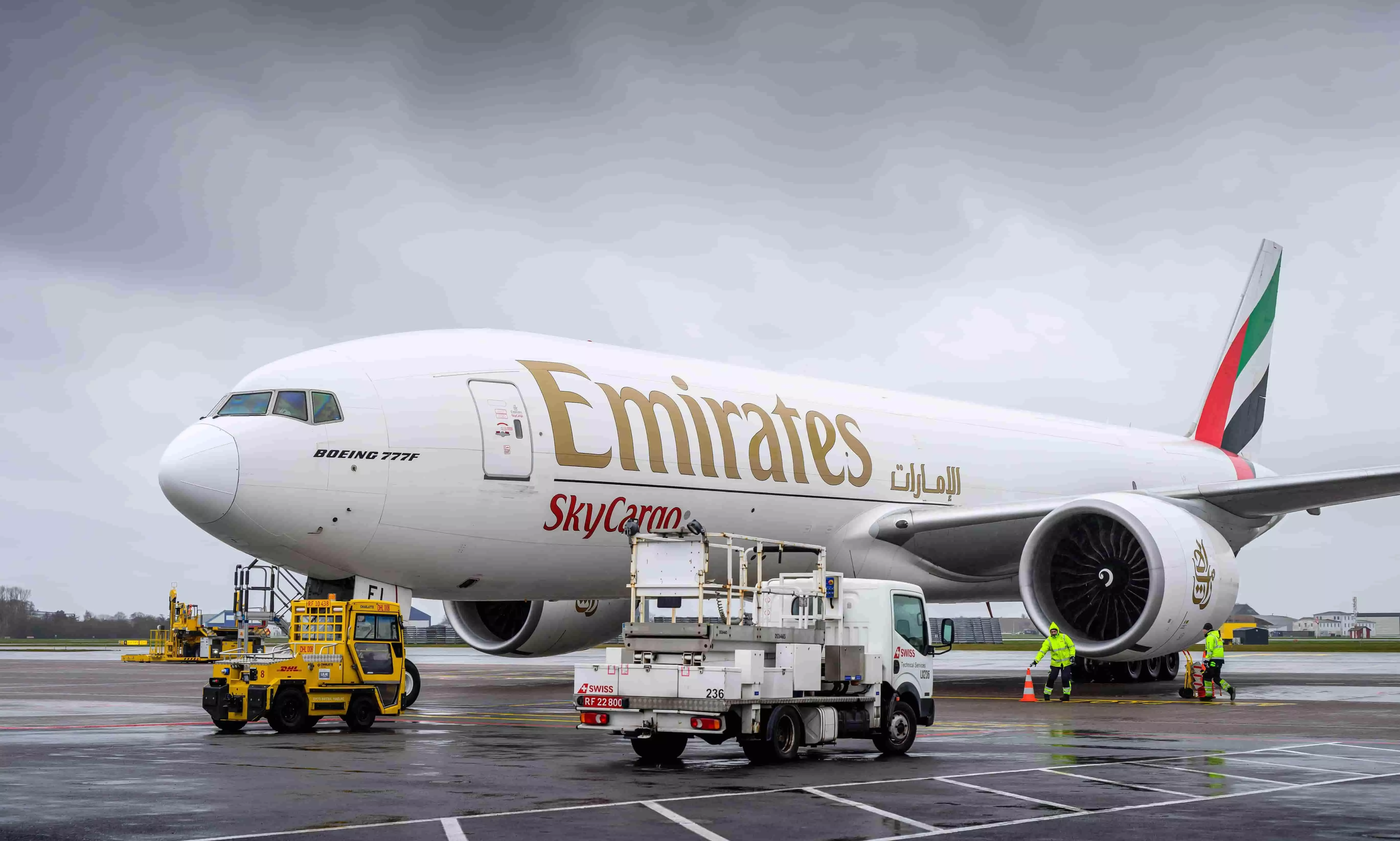
Demand for charter flights has increased steadily, with the aviation industry witnessing a notable rise in charter services following the pandemic, as disruptions to conventional cargo operations drove greater demand for flexible air freight capacity.
“We have seen a significant increase in the demand for air cargo charter capacity. At the start of the decade, the Covid pandemic was a reminder for the industry on the importance of charters for the urgent movement of goods,” said Nadeem Sultan, Senior Vice President Cargo Planning & Freighters, Emirates SkyCargo.
IATA statistics project that total non-scheduled freight stood at 14 million tonnes in 2023, down 9.1% from 15.4 million tonnes in 2022. Despite the decline, the volume remained 6.1% above the pre-pandemic level of 10.5 million tonnes recorded in 2019.
The share of non-scheduled services in overall freight operations has grown significantly, rising from 15% in 2019 to around 20% in 2023. This represents an average annual growth rate of about 5%, underscoring the increasing role of non-scheduled services in meeting air cargo demand.
“For Emirates SkyCargo, overall charter demand continues to grow, with more than 800 charter flights operated in addition to scheduled services during the first half of 2026.”Nadeem Sultan, Emirates SkyCargo
According to Sultan, as the impact of the pandemic has eased, demand for urgent charters carrying medical and related cargo has declined. He added that “For Emirates SkyCargo, overall charter demand continues to grow, with more than 800 charter flights operated in addition to scheduled services during the first half of 2026.” These flights supported a range of sectors and initiatives, including technology product launches and the movement of AI-related servers.
He highlighted several key cargo segments driving Emirates SkyCargo’s charter operations, including oil and gas, aerospace, pharmaceuticals and humanitarian goods, automotive parts, high-tech and AI components, electronics, e-commerce, and public sector and government shipments.
Peter Kerins, CEO at Magma Aviation, shared e-commerce as one of the significant segments of the industry contributing dominantly to cargo operations. “E-commerce definitely plays a big part in the past couple of years for us in the charter market and particularly seasonal as well.”
Alongside, supply chain disruptions and production delays continue to be one of the key factors driving demand for air cargo capacity. “Supply chain disruption and production delays remain the main drivers. Both create volume that has to move outside published schedules,” said Jayesh Ratada, Head of Strategic Accounts & Revenue Management at MSC Air Cargo.
At the same time, two trends that were once considered occasional are increasingly becoming the norm: urgent, last-minute shipping requirements and shorter lead times between production and point of sale, said the cargo airline.
However, Ratada said that their approach to cargo charter operations has evolved significantly in recent years. The carrier initially operated using ACMI capacity before securing its own European AOC and taking delivery of its first wholly owned Boeing 777-200 Freighter at Milan Malpensa in October 2024. In 2026, it added two more aircraft, Bellatrix in January and Castor in March, growing its fleet from five to seven 777-200Fs and boosting long-haul capacity by around 40% within three months.
“E-commerce definitely plays a big part in the past couple of years for us in the charter market and particularly seasonal as well.”Peter Kerins, Magma Aviation
Meanwhile, Magma Aviation currently operates 747-400 Boeing Converted Freighters as part of its widebody cargo fleet and has plans to expand, but in the right way. According to Kerins, delays to Boeing’s yet-to-be-certified 777X are keeping older 777-300ERs in airline fleets for longer than originally planned, limiting the pool of aircraft available for passenger-to-freighter conversions and causing an absorbent demand and pricing on the lease of the aircraft.
Simultaneously, Emirates SkyCargo expanded its fleet to meet the growing demand, as since March 2026, they have taken delivery of six Boeing 777-F production freighters and one Boeing 777-300ER Special Freighter, which was converted from a passenger aircraft. “We are scheduled to receive four more production Boeing 777-F freighters and one more converted freighter by the end of the year, taking our fleet to 23 freighters,” shared Sultan.
Charter cargo services are expected to remain a key component of global supply chains, as businesses increasingly seek greater flexibility and agility in a complex operating environment. Geopolitical tensions, shifting trade patterns, regional conflicts and persistent network disruptions have heightened the need for adaptable transportation solutions that can respond quickly to changing market conditions.
“A key advantage is DHL Group's access to its own airline network through DHL Aviation, combined with strong partnerships across the commercial airline market. This gives us greater control over capacity and routing options.”Henk Venema, DHL Global Forwarding
“By providing access to tailored capacity and alternative routing options, charter services help businesses manage risk, maintain continuity, and respond effectively to unexpected challenges. As supply chains become more dynamic, demand for flexible logistics solutions is expected to grow,” said Henk Venema, Global Head of Air Freight at DHL Global Forwarding.
He added that, in a fast-changing world characterised by increasing uncertainty and disruption, charter services will play a crucial role in helping businesses maintain continuity and respond quickly to evolving market conditions.
Charter operations have played a critical role in maintaining cargo connectivity amid the Middle East conflict. As scheduled flight services faced significant disruptions, charter flights stepped in to provide alternative capacity and support the continued movement of essential cargo. “Charter solutions enabled DHL Global Forwarding and our customers to continue moving critical shipments, maintain supply chain continuity, and respond quickly to rapidly changing market conditions. This flexibility also supported volume growth during a period when many customers faced substantial transportation challenges,” said Venema.
The movement of emergency and aid supplies since the pandemic did not significantly sustain charter flight services for Magma Aviation. “It wasn’t a huge part of the business, probably 1 or 2%. We don’t operate in conflict zones,” said Kerins. However, he noted that the Group does have a dedicated humanitarian division and has quietly managed this segment for the past 18 months.
Apart from emergency aid supplies, DHL described the relevance of charter flights in handling high-value, oversized, and time-sensitive shipments. According to Venema, they provide direct control over schedules, aircraft configuration, and handling processes, which can be essential when standard air freight options do not meet operational requirements.
“For oversized cargo, charters may be the only practical transport solution. For urgent shipments, they help minimise transit times and reduce the risk of delays associated with fixed airline schedules. They are also frequently used to support business continuity when production lines, infrastructure projects, healthcare supply chains, or critical technology deployments depend on immediate delivery,” he added.
“Supply chain disruption and production delays remain the main drivers. Both create volume that has to move outside published schedules.”Jayesh Ratada, MSC Air Cargo
Just like a conflict crisis impacts the movement of scheduled flights during cargo operations, the underdeveloped airports and inadequate infrastructure make the conditions more challenging for the aircraft to land.
Kerins noted that Magma Aviation receives numerous charter requests to remote and challenging destinations across Africa, where limited airport infrastructure can create operational difficulties for the carrier.
Operating a charter flight differs significantly from running a scheduled service, with various aspects involving distinct operational challenges. Kerins described the charter process as highly “transactional,” noting that scheduled operations typically have handling contracts and other arrangements already in place. For charter flights, however, operators must start from scratch, securing ground handling, assessing requirements, arranging credit facilities and completing KYC checks before the flight can operate.
Citing the Boeing 747 as an example, Kerins said that not all airports have the necessary handling infrastructure for the aircraft. Even when a 747 can land at an airport, the absence of suitable ground-handling facilities may prevent cargo from being unloaded, effectively limiting the aircraft’s ability to operate with its full payload of more than 100 tonnes.
The key question is whether demand for charter flight services will continue to grow over the coming years.
‘Charter is used as a solution when there’s an unforeseen or urgent requirement to move cargo rapidly by air or where the nature of the cargo is unique and specialised and requires a charter solution,” said Sultan. Scheduled air cargo capacity to various markets has recovered, and customers can access that capacity for normal requirements for transporting goods, according to him.
Meanwhile, Venema of DHL highlighted the strong partnership between DHL Aviation and commercial airlines, which supports greater connectivity and flexibility across the company’s air cargo operations. “A key advantage is DHL Group's access to its own airline network through DHL Aviation, combined with strong partnerships across the commercial airline market. This gives us greater control over capacity and routing options, allowing us to respond quickly to changing market conditions and customer needs.”
As trade flows become more complex and time-sensitive, charter operations are expected to remain indispensable for airlines and logistics providers, offering the flexibility to bridge capacity gaps and transport urgent, specialised cargo.

Shefali is a correspondent with over six years of experience in the media industry. She has worked with leading news platforms, including BW Businessworld and India Today, before joining the Taiwan-based EAT News portal, where she covered diverse beats in geopolitics and international relations alongside human interest stories. Six of her stories were put forward for nomination at the SOPA Awards 2022 across categories such as human rights, women's issues, environmental reporting, and the Scoop Award. Outside of work, she enjoys dancing, travelling, and balancing fitness with food.


