
Asok Kumar named Expolanka Group CEO; continues as Morrison CEO
Asok Kumar will now oversee SG Holdings’ entire global forwarding portfolio as the Japanese conglomerate accelerates its Global Logistics Business segment restructuring strategy
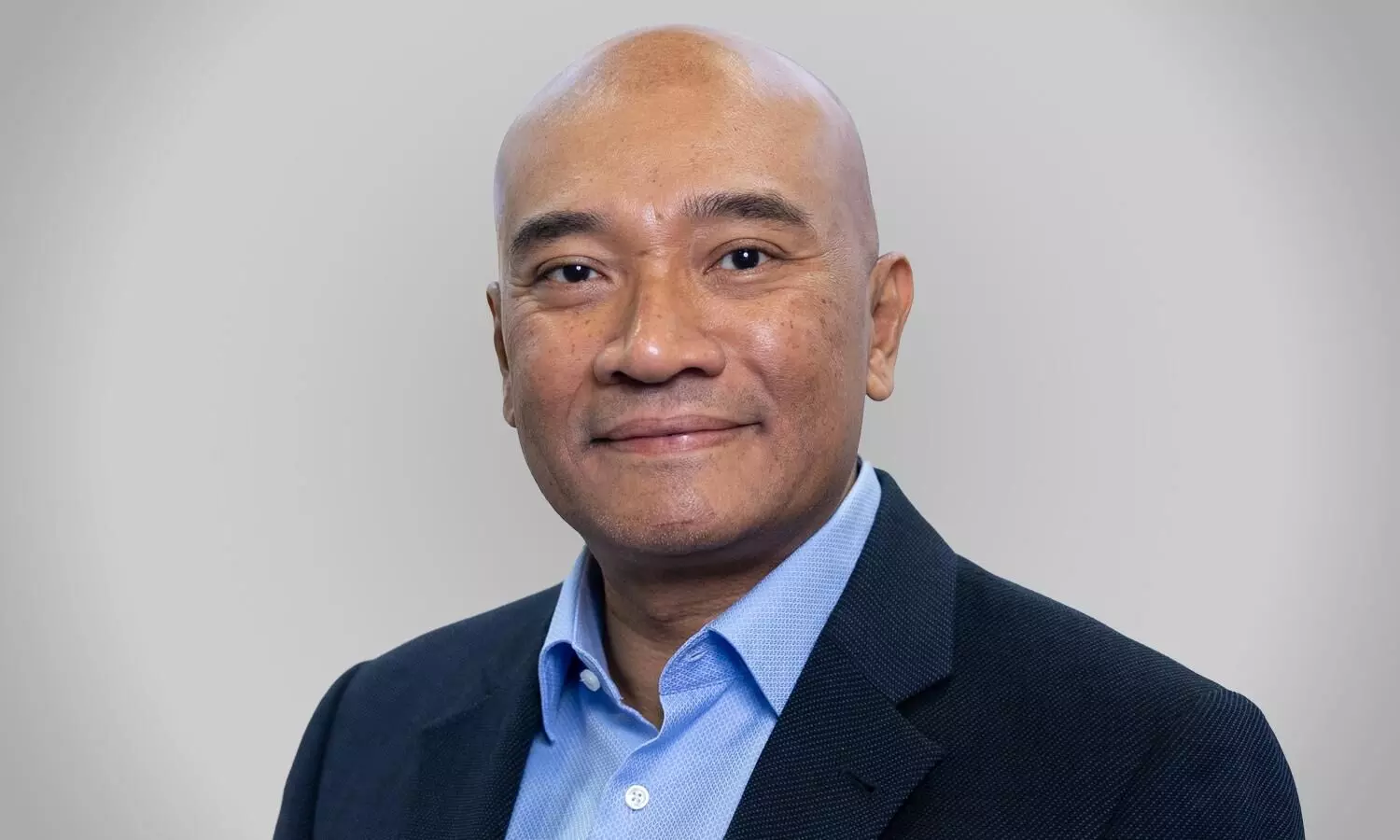
Asok Kumar, Group CEO, Expolanka Group
Asok Kumar has been appointed Group Chief Executive Officer of Expolanka Group, while simultaneously retaining his position as Global CEO of Morrison Express. Expolanka Group is a Sri Lankan conglomerate comprised of the freight forwarding arm represented by EFL Global, and leisure and other sectors represented by Expolanka Holdings Limited.
The appointment places Kumar at the apex of SG Holdings’ global forwarding network, with both Mushtaq Ahamed, CEO of Expolanka Holdings, and Rooso Ramachandran, the newly appointed CEO of EFL Global, reporting directly to him.
The move signals the Japanese conglomerate's intent to move faster on integration than originally planned.
A freight veteran with global credentials
Kumar brings over two decades of senior leadership experience across international freight forwarding and supply chain management. He most recently served as Executive Vice President and Head of Global Air Freight at DB Schenker, where he led the air cargo business across 14 countries and managed more than 2,000 employees, operating out of Frankfurt, Germany.
His career began with Singapore Airlines in passenger operations before he transitioned into cargo, eventually rising to Regional Cargo Manager for Europe, overseeing key operations in London and Frankfurt and leading the UK, Ireland and Scandinavia cluster. He subsequently moved into freight forwarding, joining BAX Global as Managing Director in Thailand, followed by a stint at Exel, later acquired by DHL. Following DB Schenker's acquisition of BAX Global in 2006, Kumar became Head of Sales for Asia Pacific, before ascending through a series of global leadership roles including Head of Airfreight in the Americas and ultimately Global Head of Air Freight.
During the Covid-19 pandemic, Kumar was at the centre of the air cargo industry's response, leading charter programmes, managing capacity shortages, and introducing systems to enhance shipment visibility and planning, while simultaneously deepening airline partnerships and long-term procurement capabilities. He joined Morrison Express in August 2025.
Leadership transition at EFL Global
Kumar’s elevation coincides with a significant leadership change at EFL Global, with Senthilnathan Shanmugam, stepping down as CEO. He led the company through its transformation from a regional freight forwarder into a global supply chain operator with a presence in over 34 countries. Rooso Ramachandran, who succeeded him as CEO of EFL Global will report to Kumar in the new group structure.
Rooso Ramachandran, CEO, EFL Global and Mushtaq Ahamed, CEO, Expolanka Holdings
The Expolanka Group structure and its origins
Expolanka Group traces its origins to 1982 when Hanif Yusoof founded Expo Lanka Freight from a small Colombo office with a five-member team. Over the following decades the business evolved into one of Sri Lanka’s largest diversified conglomerates under Expolanka Holdings. The company was listed on
the Colombo Stock Exchange in 2011, and its freight forwarding arm was rebranded as EFL Global in 2012. In 2014, SG Holdings acquired a majority stake in Expolanka Holdings, formally integrating the business into its global logistics network.
Morrison Express, founded in Taiwan in 1972 and brought into the SG Holdings fold in 2025, completes the group's global forwarding portfolio. Together, EFL Global and Morrison Express operate under the Global Logistics Business segment of SG Holdings, alongside the domestic logistics segment covering warehouse management and 3PL services.
The Mid-Term Management Plan: ambition, shortfall and acceleration
The leadership restructuring is a direct expression of SG Holdings’ Mid-Term Management Plan, a strategic framework designed to generate synergies across its global logistics companies, improve profitability, and build a business structure resilient to market volatility.
SG Holdings has outlined a structured three-pronged strategy to enhance performance in its Global Logistics Business portfolio, with full earnings impact expected to build progressively through FY2026-27.
The plan targets two core problems: weak profitability at EFL and insufficient synergy delivery. On the restructuring front, three initiatives are being pursued simultaneously. First, a cost structure reform at EFL, focusing on reducing fixed costs across organisational structure, personnel expenses and travel. Second, an optimisation of resource allocation at Expolanka through a leaner organisational framework. Third, an alignment of operating structures between EFL and Morrison, involving joint sales activities, information sharing, and rationalisation of sales functions and operational bases, particularly across East Asia.
On synergies, the group is targeting USD 12 million in combined effects by FY2026-27, driven by joint procurement (USD 9 million), commercial pipeline collaboration and strengthened sales activities (USD 2 million), and operational base optimisation (USD 1 million). Governance is also being tightened, with SG Holdings Global expanding its oversight functions to strengthen segment-wide profitability and management across the entire Global Logistics Business portfolio.
Notably, the original two-year independent management policy for Morrison, a condition set at the time of its consolidation into the group, is being abandoned ahead of schedule. Mutual understanding between the two organisations, developed through post-merger integration efforts since June 2025, has created the conditions for faster structural alignment. SG Holdings expects this accelerated integration to deliver meaningful profitability improvements across the Global Logistics Business segment, with a performance recovery targeted by FY2027.
FY2025-26 financial performance: A tale of two companies
The financial results for the year ended 31 March 2026 underline the divergence between the two entities. Expolanka posted operating revenue of ¥174.4 billion, but faced severe pressure on unit economics; air freight selling prices fell to 86% of prior-year levels, while ocean freight prices dropped sharply to 72%, even as air volumes declined to 134,000 tonnes and ocean volumes held at 176,000 TEUs.
Morrison delivered a more resilient showing, recording operating revenue of ¥137.4 billion. Air cargo volumes surged to 191,000 tonnes, up 12.8% year-on-year, while ocean volumes remained broadly flat at 88,000 TEUs. Morrison's intra-Asia focus insulated it from the Middle Eastern carrier capacity constraints that weighed on EFL, and its disciplined cost management supported the consolidated operating profit for the segment.
With Kumar now at the helm of Expolanka Group, SG Holdings will leverage on unified leadership, structural reform, and Morrison’s operational playbook to improve Expolanka's trajectory and ensure its global logistics ambitions remain on course.

Editor at STAT Publishing Group since 2013, I lead a small team of reporters in chasing stories about cargo flows from A to Z—by air, sea, road, and rail. If it moves, we track it. Got a compelling lead? Reach me at reji@statpublishinggroup.com (cargo only, please)