
Air cargo finds new paths amid Middle East closures
Global air cargo networks adapt to Middle East airspace closures, rerouting through alternative hubs and longer paths, impacting cost, time, and trade.
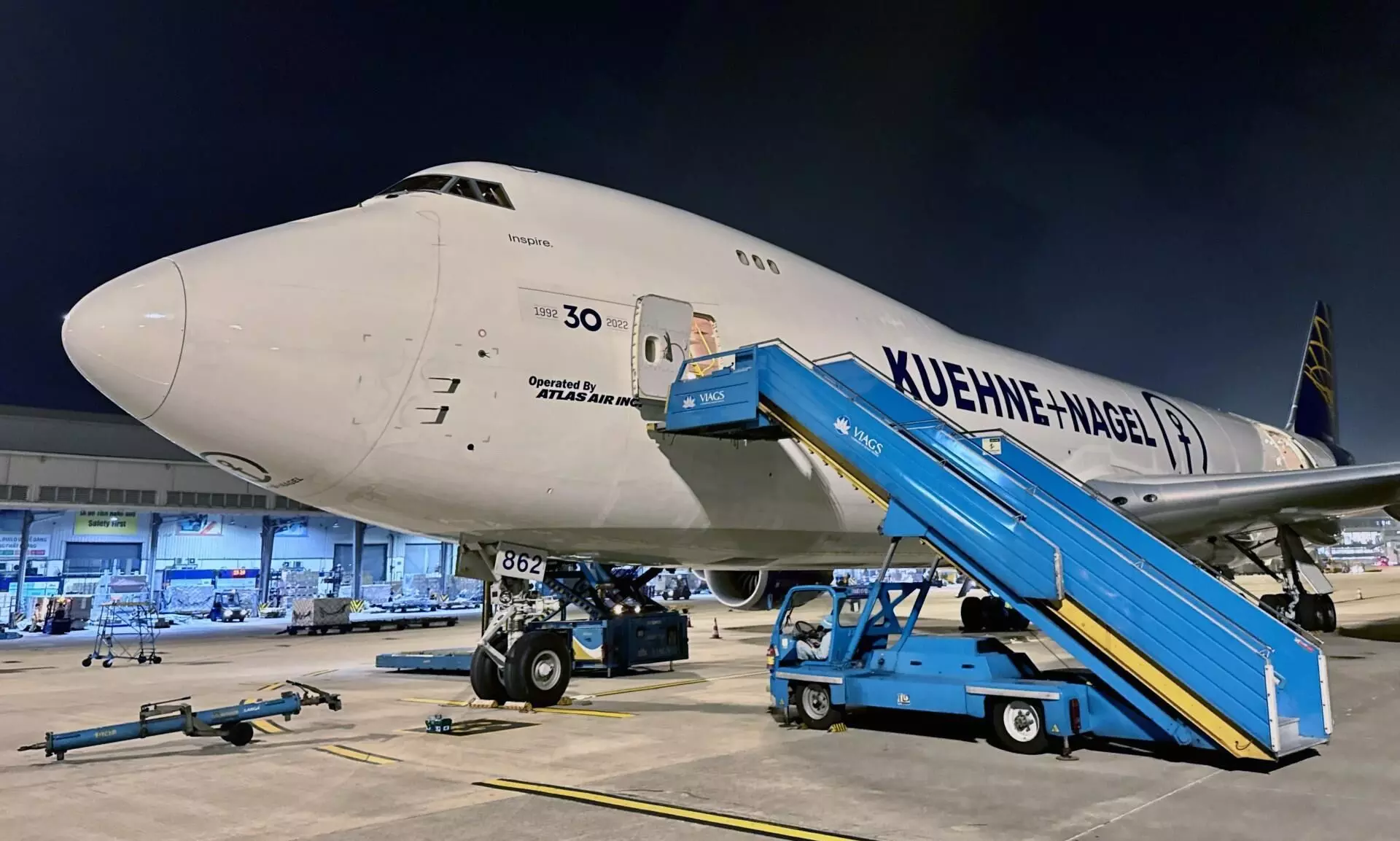
Air cargo between Asia and Europe is no longer moving along its fastest and most efficient path. What was once a direct and well-established route through the Middle East is now becoming longer, more complex and increasingly costly, as airlines are forced to avoid disrupted airspace and rethink how cargo moves across continents.
For years, the system worked in a predictable way. Cargo would move from Asia, pass through major hubs in the Middle East, and then continue to Europe. These hubs acted as central connectors, allowing airlines to optimise routes, reduce flying time and keep costs under control. This structure supported fast deliveries and stable pricing across global trade lanes.
That structure is now under pressure.
Disruptions across parts of the Middle East have restricted key airspace corridors, forcing airlines to avoid certain routes altogether. As a result, cargo is no longer following the shortest path. Instead, it is being rerouted, often taking longer or indirect routes to reach the same destination.
Rerouting adds complexity to operations
Bachi Spiga, Vice President Network Operations at DHL Express MENA, said the situation has added complexity across global air cargo networks, particularly on Asia–Europe lanes.
“Some shipments are being rerouted away from affected airspace and traditional transit points,” he said.
This means airlines are now redesigning routes in real time. Instead of relying on established hubs, they are using alternative gateways such as Riyadh and Muscat, supported by additional trucking where needed. In parallel, carriers are adding new flights, including to cities such as Bengaluru and Delhi, to keep cargo moving.
These changes may keep supply chains running, but they come at a cost. Longer routes mean aircraft are flying greater distances, consuming more fuel and spending more time in transit. This directly impacts both delivery timelines and operating costs.
Longer routes mean delays and shifting priorities
At the booking level, the shift is even more visible. ABDA Group, a global General Sales Agent (GSA) that helps airlines manage cargo bookings, operations, and connections on routes they do not operate directly, is playing a key role in navigating these disruptions. Burak Omeroglu, Chief Business Development Officer at ABDA, said avoiding the Middle East has become unavoidable for many stakeholders.
“Many historical routes from Asia have shifted towards a longer route due to airspace closures,” he said.
According to Omeroglu, Eastern Africa is now emerging as an alternative connection point between Asia and Europe, while some airlines are using nearby airports when they cannot operate from their primary hubs. These adjustments are pushing cargo onto longer and less direct paths, increasing both transit times and operational complexity.
The impact is already being felt across the supply chain. Transit times have increased, and backlogs are forming at certain hubs as cargo is redirected. Schedules are less stable, making planning more difficult for logistics providers and their customers.
Omeroglu said customers are adapting to these conditions, even as challenges grow.
“Available space in certain lanes is the most critical priority at the moment and customers are ready to absorb rate increases and tolerate delays,” he said.
This highlights a key shift in the market. Where speed and cost were once the primary concerns, availability of capacity has now become the deciding factor.
Fuel costs and capacity drive pricing pressure
At a broader level, the disruption is also affecting pricing dynamics. Judah Levine, Head of Research at Freightos, said the initial impact came from a drop in capacity as major Middle Eastern carriers reduced operations.
“We saw rates increase quite sharply initially… and now they are starting to rise again as jet fuel prices increase,” he said.
Jet fuel prices have more than doubled over the past month, surging to $197 per barrel as of 20 March, according to the International Air Transport Association (IATA). Prices jumped nearly 60 per cent in early March alone and have continued to rise steadily, driven not just by crude oil costs but also by tight refining capacity and limited aviation fuel supply. Regional trends show Europe and Africa facing the highest prices exceeding $210 per barrel in some markets, while North America remains relatively lower. For airlines, fuel typically accounts for up to a third of operating costs, meaning these price spikes significantly raise expenses. Longer, indirect routes due to rerouting only add to this pressure, forcing carriers to pass some costs on through higher rates or fuel surcharges.
Capacity shifts and longer flight times add to pressure
The impact of rerouting is also visible in how airlines are managing capacity and flight operations across the Asia–Europe corridor.
Holger Ketz, SVP, Global Head Network and Carrier Management – Air Logistics at Kuehne+Nagel, said the disruption initially led to a sharp reduction in available capacity as flights were cancelled and airspace across parts of the Middle East remained restricted.
“Airspace continues to be closed or limited in multiple countries in the region,” he said, adding that while some recovery has been seen in markets such as the UAE and Qatar, Gulf capacity has only partially returned.
At the peak of the disruption, around 22% of global air cargo capacity was impacted. This has since improved, with the decline now limited to about 3% compared to the same period last year, as airlines gradually restore operations and adjust networks.
To compensate for reduced transit through the Middle East, carriers are increasingly adding direct capacity between Asia and Europe. Ketz said this includes services such as direct charter flights from Shanghai to Frankfurt, with Shanghai acting as a key consolidation point for regional cargo.
However, avoiding restricted airspace is still adding to operational challenges. “Journeys take longer and might involve refuelling stops, further extending travel time,” he said.
Even where flights are operating, transit times have increased by one to three hours on key routes. These longer flight paths also reduce payload capacity on aircraft, as additional fuel requirements limit how much cargo can be carried.
At the same time, around a quarter of major Gulf carriers’ fleets remain out of operation, leading to uneven capacity distribution across regions. Airlines are shifting capacity towards Asia–Europe routes to manage demand, but this is creating imbalances in the network.
Despite these challenges, Ketz noted that the situation is gradually stabilising as airspace reopens and capacity returns. However, he added that the outlook remains uncertain, and further recovery will depend on how conditions evolve in the region.
New hubs emerge as networks adjust
As air cargo reroutes away from the Middle East, alternative hubs are emerging to handle displaced volumes. One notable example is Velana International Airport (MLE) in the Maldives, the country’s main international gateway and a hub that has traditionally focused on tourism. Over the past decade, however, MLE has steadily developed its air cargo capabilities, investing in dedicated cargo facilities, freighter handling infrastructure, and operational efficiency to support regional and international trade. The airport now offers strong connectivity to Europe, Asia, and the Commonwealth of Independent States (CIS), making it an attractive alternative for airlines seeking less congested transit points. In March 2026, MLE handled 1,868 tonnes of transshipment cargo, a 58% increase compared to March 2025 demonstrating its ability to absorb rerouted shipments. Hussain Shafiu, Manager of Cargo Development at Velana, said,
“With its diversified network and strategic location, MLE offers a safe and efficient alternative for airlines seeking less congested transit points during these disruptions.”
Carriers are increasingly using such alternative airports to maintain cargo flow, highlighting how global networks are adapting to geopolitical challenges while smaller hubs like Velana play a larger role in sustaining international trade.
Why this matters for global trade
Taken together, these developments show how the global air cargo system is adjusting under pressure. Airlines are redesigning routes, forwarders are managing longer and less predictable shipments, and new transit points are emerging to support shifting flows.
What makes this situation particularly important is its impact on global trade. Air cargo plays a critical role in moving high-value and time-sensitive goods, from electronics to pharmaceuticals. When routes become longer and less reliable, it affects delivery timelines, increases costs for businesses, and adds uncertainty to supply chains. For now, much of this remains a response to current disruptions. But if these conditions continue, the changes could become more lasting. Longer routes may become standard, alternative hubs could gain importance, and the traditional reliance on Middle Eastern transit corridors may gradually weaken.
In simple terms, air cargo is no longer taking the shortest route between Asia and Europe. It is taking longer, indirect paths and that is making global trade slower, costlier and more complex.