


EFM’s precision powers the world’s biggest sports and event arenas
Global events look seamless, but behind every ceremony and championship runs a complex logistics race.
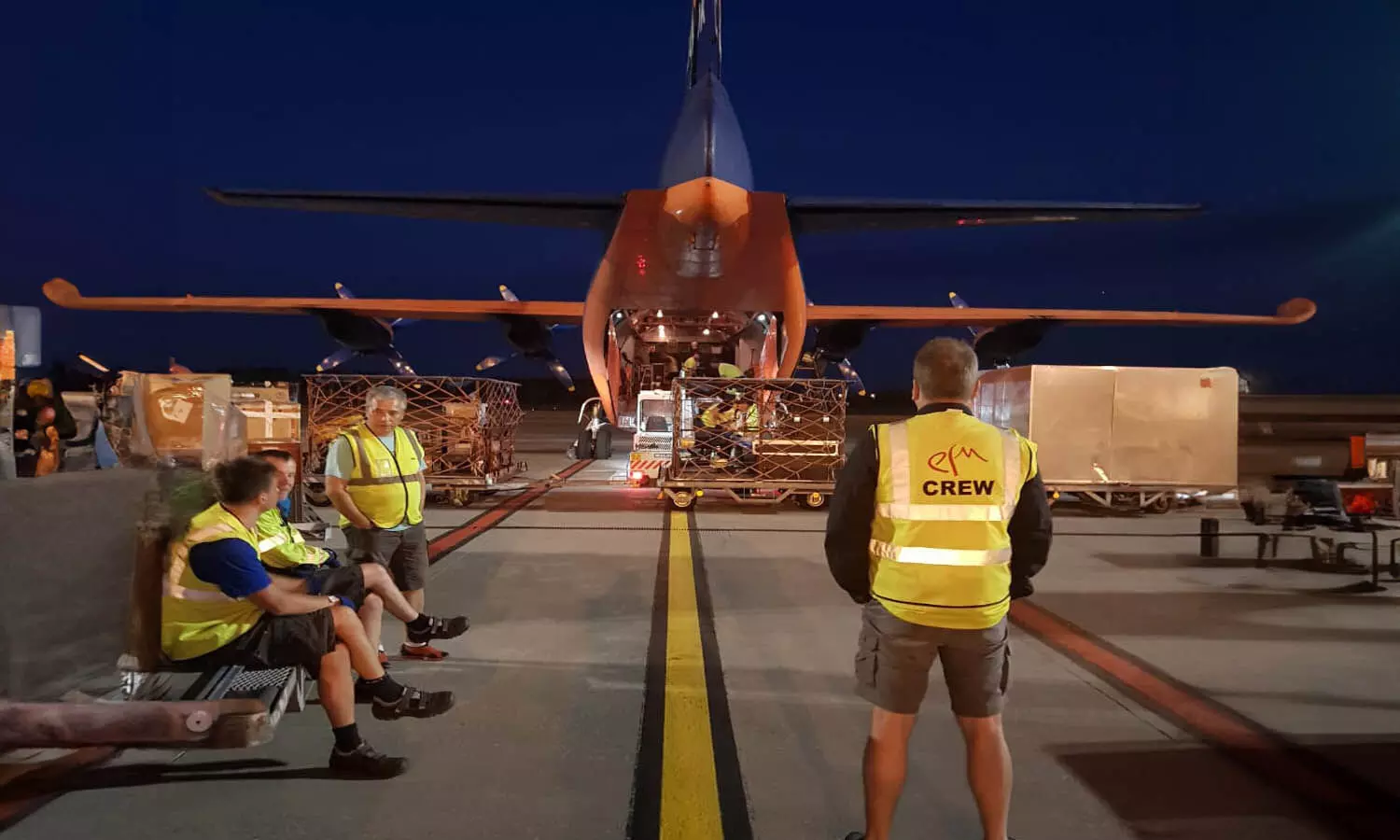
When millions tune in for a global sporting final or step into a sold-out stadium, the spectacle feels effortless. Athletes arrive on time, broadcast feeds are flawless, and venues operate like clockwork. What remains largely unseen is the logistical operation that begins months earlier, an invisible race against fixed deadlines, border formalities, and zero tolerance for error.
At the heart of major sporting spectacles lies a complex choreography of freight, people, and technology. Unlike traditional supply chains, event logistics is dictated not by flexible delivery windows but by immovable start times. A championship does not wait for delayed cargo, and a broadcast does not pause for missing equipment. World-class sports championships bring a distinct operational intensity compared to concerts or festivals. Sporting events rely heavily on precision timing systems, competition infrastructure, and broadcast technology that must be installed in strict sequences. Equipment arrives in waves, each dependent on the last. A single delay can have cascading effects across venue readiness, rehearsals, and live transmission.
From global football tournaments to elite athletics championships such as Oregon22, and even terrain-driven endurance productions like Desert Warrior, the logistical demands vary, but the expectations do not. Everything must be in place, fully tested, and operational well before the first whistle or opening ceremony. In these environments, logistics providers function less as transporters and more as operational partners. The work involves planning routes that account for customs bottlenecks, venue access restrictions, and limited installation windows. It also means preparing contingency plans for scenarios where there is no option to extend timelines.
One defining characteristic of event logistics is the prevalence of time-critical cargo. In many cases, the majority of shipments must arrive at precise moments to align with build schedules and technical rehearsals. Speed, however, cannot come at the expense of safety. High-profile events often involve the movement of luxury vehicles, broadcast hardware, medical equipment, and bespoke installations. These assets are frequently irreplaceable within the event timeframe. Damage, loss, or delay is not simply a financial issue; it can compromise the integrity of the event itself.
Managing this balance requires specialised handling protocols. Climate-controlled transport, enhanced security, and carefully sequenced routing are standard practice rather than exceptions. Some cargo, by virtue of its size or shape, demands creative engineering solutions to ensure safe transit and on-site deployment. As live events grow larger and more technologically complex, the logistics sector is also evolving. Cross-border movements have become more frequent, while regulatory requirements continue to tighten. Digitalisation is increasingly viewed as a tool to reduce friction rather than add complexity.
A recent example of this shift was the completion of the first full commercial Digital Carnet journey, involving the transport of hand-carried equipment between the UK and Brussels. The process combined both manual and digital ATA Carnet stamping at each customs checkpoint, demonstrating how technology can streamline documentation while maintaining regulatory compliance. Heathrow, currently the only UK airport equipped to process Digital Carnets, served as the departure point, highlighting how infrastructure readiness plays a role in logistics innovation.
Sustainability is another growing pressure point for event logistics. Large-scale sporting and entertainment productions carry an inherent environmental footprint, from international freight movements to temporary venue infrastructure. Organisers are increasingly asking how events can meet operational demands while reducing environmental impact. Marcel Meyer, Global Vice President Events at EFM Global, said EFM integrates sustainability into its event logistics through partnerships focused on carbon measurement, emissions reduction, and offsetting, while maintaining operational reliability for time-critical shipments.
The logistics sector’s role in sustainability extends beyond transport modes. Paperless documentation, waste management practices, and data-driven carbon accounting are becoming standard expectations rather than optional extras. While most event logistics projects operate out of public view, certain assignments highlight the level of precision involved. EFM Global’s transportation of the James Webb Space Telescope for NASA required the same operational principles applied in major sporting events, including strict deadlines and coordinated multi-modal planning, but at a far larger scale.
The telescope, assembled in California, had to be transported 5,800 miles to the launch site in Kourou, French Guiana. The operation involved a bespoke shipping container, a chartered cargo vessel, extensive port assessments, and multimodal coordination across land, sea, and air. The project also extended beyond freight, encompassing the coordination of accommodation for hundreds of personnel supporting the launch.
As global sporting and live events continue to scale in ambition, the logistics race behind them will only intensify. Success will depend not on visibility but on preparation, ensuring that when the spotlight turns on, everything is already exactly where it needs to be.

"I bring stories to life from the heart of the air cargo, logistics, and aviation supply chain industries. As a News Correspondent at Stat Publishing Group, my focus is on delivering in-depth coverage, industry trends, and expert insights that drive conversations and shape perspectives. With a background in visual communication, photography, and content creation and storytelling, ensuring every report provides value to industry professionals.


