
Tight margins and high stakes for the Ford Performance fleet
Moving 24 race cars worth €5mn to Le Mans meant navigating 3 cm clearances. Expert automotive precision ensured these machines reached the starting line safely.
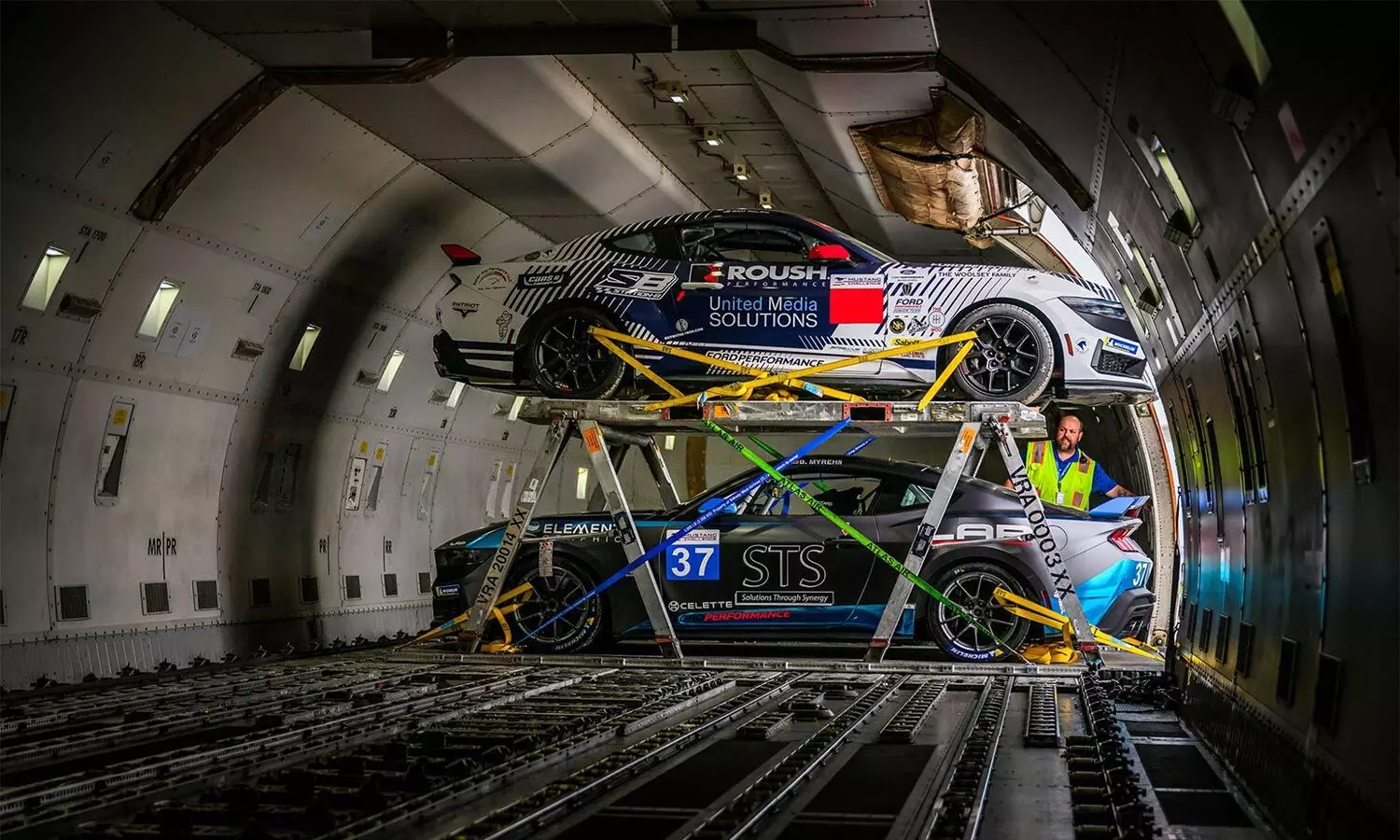
In the world of professional logistics, the conversation usually revolves around the big picture. We talk about global routes, massive vessels, and thousands of tons of cargo. But for the Ford Performance Le Mans project, the big picture was actually incredibly small. Specifically, it was three centimeters. When the task involves moving 24 world-class race cars with a combined value exceeding €5mn, the margin for error is typically measured in safety buffers and insurance policies. However, when those cars must be loaded into the belly of a chartered cargo plane, and later onto specialized vehicle transporters, the laws of physics and the constraints of engineering take over. Every inch of space becomes a high-stakes battlefield.
The tension began long before the engines roared in France. A racecar is a wide, low, and fragile piece of aerodynamic art. Unlike a standard passenger vehicle, these machines are equipped with protruding splitters, aggressive wide-body fenders, and delicate carbon-fiber components that cannot withstand the slightest impact. To maximise the efficiency of the charter flight, every square inch of the aircraft's hold had to be utilised, turning the cargo hold into a complex, high-stakes puzzle. Logistics specialists were faced with a daunting reality: once the cars were secured on their custom pallets, the gap between the top of the car and the ceiling of the aircraft was roughly the width of a matchbook. It is that universal feeling of dread when parallel parking in a spot that looks impossible. In this scenario, the cargo is worth millions, and the maneuver is performed inside the fuselage of a Boeing freighter.
The project required more than just steady hands; it required bespoke engineering and a level of focus that borders on the obsessive. The operation had to account for variables that standard logistics providers might overlook. Technical teams calculated the suspension compression to ensure the cars did not bounce during mid-air turbulence and strike the aircraft ceiling. They mapped out loading angles to the millimeter, ensuring the low-slung noses of the Ford fleet did not scrape the ramps during the transition from tarmac to trailer. Inside the specialised vehicle trucks used for the final leg of the journey, the lateral clearance was just as unforgiving as the overhead height.
As the cars were winched into place, the atmosphere was electric. The specialists involved did not just see a difficult job; they saw a challenge that defined the peak of automotive logistics expertise. They used laser-guided positioning and custom-built racking systems to ensure that the three-centimeter buffer remained constant throughout the thousands of miles of travel. Success in high-value logistics is often invisible. If the job is done perfectly, the world never knows the struggle it took to get there. But as those 24 cars rolled off the trailers in France, untouched and ready for the grueling 24 Hours of Le Mans, the victory was undeniable. It proved that while distance is a variable, precision is a constant. For Ford Performance, the race started long before the green flag dropped. It started in the cramped, quiet hold of a cargo plane, where a few centimeters made all the difference between a devastating setback and a legendary starting line.