


How automation is redefining the modern air cargo terminal
Once built to serve aircraft schedules, cargo terminals are emerging as strategic assets reshaping major air freight hubs.
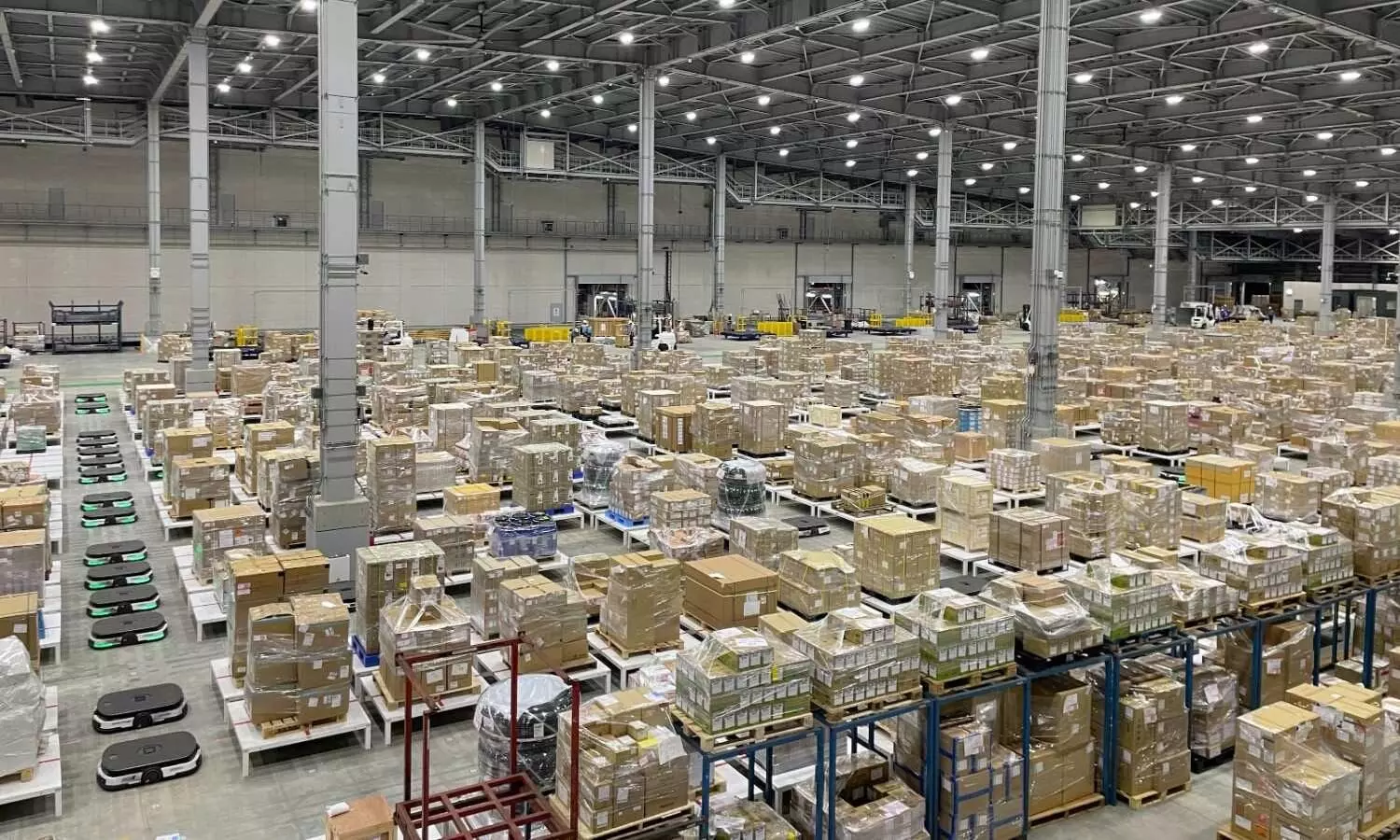
ANA Cargo Base+ at Narita International Airport
Cargo terminals are no longer peripheral facilities operating quietly behind passenger terminals. They are becoming decisive control points in global air freight networks, shaping reliability, speed, and operational resilience. As air cargo settles into a post-disruption phase marked by fluctuating demand and tighter service expectations, the focus has shifted from short-term capacity expansion to structural transformation. Automation is increasingly being embedded in how cargo terminals are designed, operated, and governed.
Across major hubs, this shift is unfolding simultaneously on the warehouse floor, within digital coordination layers, and at the level of physical infrastructure. Together, these changes are redefining what a modern air cargo terminal looks like and how it functions under pressure.
Inside the warehouse: Automation as an operating discipline
The most visible transformation is taking place inside cargo warehouses. Automated storage systems, automated guided vehicles, robotic assistance, and machine-led cargo movements are increasingly being introduced to replace repetitive manual handling.
The objective is not simply speed but predictability. Automated systems offer stable cycle times regardless of peak pressure, labour availability, or operational disruption.
At Tokyo Narita, ANA Cargo’s Base+ facility provides a clear illustration of how automation is reshaping internal cargo flows. According to Takayuki Ichikawa, Director, Narita Warehouse Operation Centre, ANA Cargo, the introduction of AGVs has fundamentally changed how routine tasks are handled.
“Before the introduction of AGVs, operations were primarily centred around manned forklifts. By assigning AGVs to handle routine tasks such as cargo transport and store management, we have not only reduced labour requirements but also shortened trilateral connecting time by minimising cargo search time,” Ichikawa said.
“By consolidating warehouses, cargo delivery to/from customers can be completed in a single warehouse. Trilateral connecting time was also reduced to 180 minutes. (Max 40% reduction),” he added.
Crucially, automation has not displaced specialised human roles. “People focus on operations requiring a high level of expertise, such as handling special cargo (e.g., semiconductor manufacturing equipment, large animals),” Ichikawa said, describing how AGVs support, rather than replace, skilled labour.
This pattern is increasingly common across advanced cargo terminals. Automation is taking over repeatable movement and storage tasks, while human teams concentrate on exceptions, oversight, and specialised handling.
“It’s important to be realistic – automation isn’t a silver bullet, and it will introduce new challenges alongside the benefits.”
Rob Powell, dnata
Digital coordination moves to the fore
As automation scales, its effectiveness increasingly depends on the quality of digital coordination behind it. Automated terminals generate vast volumes of data, but the real challenge lies in orchestrating that data across warehouse systems, airline platforms, vehicle fleets, and airport infrastructure.
At dnata’s Dubai operations, the integration of autonomous equipment has reinforced the importance of centralised control and human oversight. Robert Powell, VP of Technical Services and Global GSE Strategy at dnata, said automation has highlighted the limits of one-size-fits-all deployment models.
“What the trials have really shown is that there’s no one-size-fits-all approach to autonomy on the airside,” Powell said. “There are plenty of strong use cases, but the complexity increases quickly when you’re integrating new technology into existing infrastructure and live operational environments.”
Powell pointed to physical layout and operating conditions as critical variables. “Factors like journey length, ramp layouts, road networks and the built environment all play a big role – the more complex the setting, the harder the implementation,” he said.
Today, dnata’s autonomous tractor operations are overseen through a central operational control structure. “At the moment, autonomous tractor operations are overseen through our operational control centre, working closely with logistics and fleet allocators,” Powell said.
However, he emphasised that automation does not remove the need for human judgement. “What’s already clear is that human oversight will remain essential. Automation works best when it’s supported by people who can manage exceptions, respond to changing conditions and make operational decisions in real time,” he said.
Rather than eliminating complexity, automation is shifting where complexity is managed, from the warehouse floor to integrated digital control environments.
Retrofitting today, designing for tomorrow
As terminals deepen their reliance on automation, the constraints of existing infrastructure are becoming more apparent. Many cargo buildings were not designed with automated movement, power density, or data connectivity in mind. Retrofitting modern systems into these environments is possible but challenging.
Powell noted that this contrast is reshaping how operators view future airport developments. “Retrofitting autonomy into existing infrastructure can be challenging, but that also highlights the opportunity that comes with new airport developments,” he said.
“When you’re building from the ground up, you can start to design with future automation in mind. This includes things like dedicated autonomous lanes, the ability to run multiple missions in parallel, embedded charging infrastructure and more tightly integrated operations,” Powell added.
This thinking is influencing how dnata views its role in upcoming airport projects. “That’s exactly why the new Al Maktoum International development is such an important opportunity for dnata,” he said. “Our current multi-unit autonomous tractor deployment at DWC allows us to learn by doing, so we’re better prepared to implement and scale these technologies effectively in the new airport environment.”
Improving inter-warehouse transport efficiency is a priority for transit cargo.
Takayuki Ichikawa, ANA Cargo
Making existing buildings automation-ready
The same principle applies inside cargo buildings. At Narita’s Cargo Building 8, ANA Cargo treated the rollout of AGVs as an exercise in preparation rather than a simple technology switch. Ichikawa outlined the groundwork required before deployment, noting that the process started with a close look at whether the building itself was ready.
“We first carried out a structural assessment of Cargo Building 8, checking things like floor materials and column positioning to make sure the space could support AGV operations at scale,” Ichikawa said.
From there, attention shifted to connectivity inside the warehouse. “We then focused on building a robust communication environment, looking closely at signal coverage, transmission speed, and interference prevention, so that the AGVs could operate in real time without any lag,” he said.
Only after those foundations were in place did ANA Cargo move to the operational rollout. “In parallel, we worked through the logistical preparation and scheduling, using a reverse-scheduled setup ahead of the facility’s launch. That included applying navigation QR codes across the warehouse and coordinating the delivery of the AGVs and their transport racks,” Ichikawa added.
These preparatory steps underscore how automation success increasingly depends on infrastructure planning rather than equipment alone.
Bottlenecks automation can, and cannot, solve
While automation is often presented as a cure-all, operators are increasingly realistic about its limitations. Powell cautioned against viewing autonomy as a universal solution.
“It’s important to be realistic – automation isn’t a silver bullet, and it will introduce new challenges alongside the benefits,” he said.
Some constraints are structural. “Some of the bottlenecks we’re already seeing aren’t unique to autonomy, particularly around the availability of electrical power, whether at a grid level or at specific points within airport infrastructure,” Powell noted.
Where automation delivers clear value, he said, is in process optimisation. “Where automation can really make a difference is in improving planning, process flows and overall operational efficiency, especially in areas impacted by manpower constraints,” he said.
Ichikawa identified a different class of bottleneck at Narita. “Cargo transport between ANA and NCA warehouses,” he said, referring to facilities separated across the airport’s north and south zones.
“Improving the efficiency of inter-warehouse transport for transit cargo between NCA and ANA (in terms of labour and time) is now a priority area,” he added.
To address this, ANA Cargo is pursuing collaborative trials. “In addition to collaboration between dedicated personnel from the operations departments of both ANA and NCA, we are conducting a joint demonstration for automated inter-warehouse transport, involving the Narita International Airport Corporation Cargo Business Department,” Ichikawa said.
The objective is targeted automation rather than blanket deployment. “We will identify specific cargo categories for automation and continue to verify the impact on connection times between warehouses,” he added.
A structural shift in air cargo operations
What is unfolding across global cargo hubs is not a technology trend but a structural redefinition of terminal operations. Automation is moving from pilots to core systems. Digital coordination is becoming as critical as physical handling. Infrastructure decisions are being shaped by future requirements rather than immediate volumes.
The most effective cargo terminals are not those with the most machines, but those that integrate automation, data, and design into a coherent operating model. As air cargo becomes more complex and less predictable, terminals that can combine automated execution with intelligent coordination will define the industry’s next chapter.
The article was originally published in the Jan 2026 issue of The STAT Trade Times.

Crafting compelling stories and in-depth reports on air cargo, logistics, aviation, and supply chain sectors. Leveraging expertise in journalism, psychology, and English to create engaging content for industry professionals. Find me @ nikitha@statpublishinggroup.com


