
Gateway to fresh: How logistics hubs are evolving for cold chain logistics
The air cargo sector is transforming to eliminate operational blind spots, or black holes, on airport tarmacs and at customs docks where digital monitoring fails and temperatures can exceed 40°C.
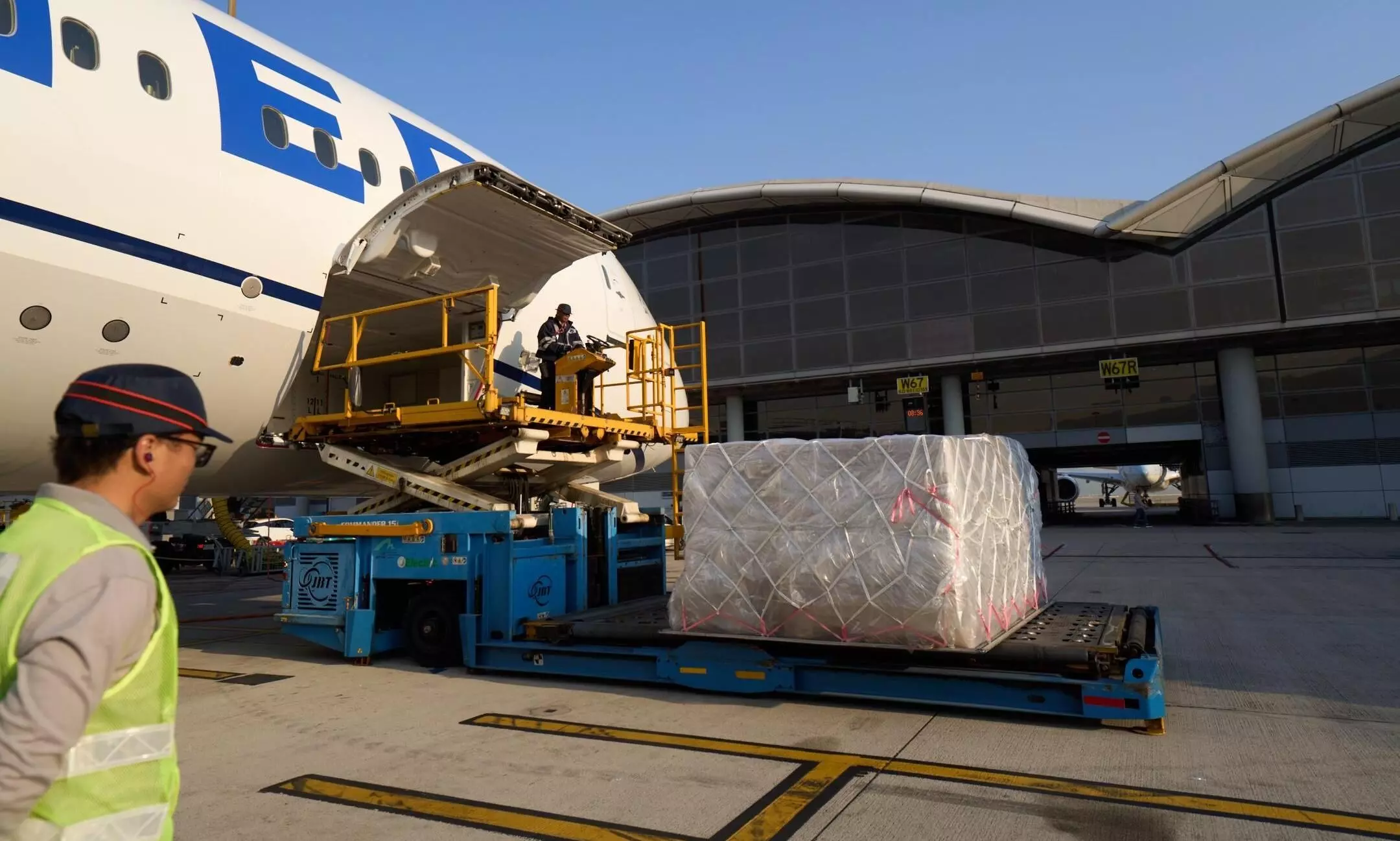
Air freighting perishable goods is logistics' toughest challenge, requiring speed to minimise spoilage and meet demand. Safe, timely delivery of environmentally sensitive shipments demands deep supply chain knowledge and constant innovation; aircraft speed means nothing if cargo hold conditions or ground transitions are compromised.
Modern cold chains suffer from black holes, operational blind spots where digital monitoring fails, causing critical temperature excursions. The airport tarmac is a key vulnerability, where delayed pallets can face dangerous temperatures (exceeding 40°C) without Wi-Fi or cellular monitoring.
Beyond the tarmac, customs clearance poses another risk. Goods held in bonded warehouses or on loading docks during bureaucratic delays fall outside the carrier's protective control, exponentially increasing the risk of temperature deviation.
United Cargo’s spokesperson said that they resolve cold-chain black holes through network optionality built into their operating model. This optionality includes multiple U.S. gateways, high-frequency schedules, and alternative routings, which collectively decrease reliance on any single transit point and maintain transit times during disruptions.
“End-to-end temperature integrity is reinforced through temperature-controlled storage and close coordination with ground handlers and partners to ensure compliance at every handoff,” said the spokesperson.
The spokesperson also added that proactive intervention is achieved through predefined contingency playbooks and cross-functional alignment among sales, operations, and hub teams. This strategy prevents minor gaps from escalating into product loss.
The air cargo sector faces multiple challenges contributing to perishable loss. These chief culprits include physical damage, often resulting from improper handling or inadequate packaging, which swiftly compromises the quality and market value of delicate goods.
The economic toll is massive, amounting to an estimated $940 billion in yearly losses. The Food and Agriculture Organisation (FAO) data in 2023 reveals that 17% of this waste occurs during the consumption phase, while a critical 14% is lost directly in distribution channels.
To address this issue, United Cargo leverages tracking shipment visibility, tracking, and integrated operational control centres.
“Cross-functional teams analyse routing data, handling timestamps, storage conditions, and network performance metrics to pinpoint deviations from required parameters. Insights from these investigations feed back into process refinements, strengthening compliance controls and improving resilience on future movements,” said the spokesperson.
The United Cargo spokesperson said that stricter standards have translated into more disciplined and standardised warehouse execution, including temperature monitoring protocols, documentation readiness checks, and structured inspection processes.
“Alignment between stations, hubs, and partners ensures consistent handling practices, minimising compliance gaps and reducing avoidable delays. These frameworks reinforce quality control for pharmaceuticals and perishables while accelerating decision-making and recovery at the hub level, embedding compliance into daily operations rather than treating it as an exceptional process,” the company’s spokesperson added.
While some carriers focus on process, DHL Group is fundamentally rewriting the infrastructure of health logistics. The company recently announced a €2 billion strategic investment to expand its owned airfreight cold chain network. A key pillar of this expansion is the reduction of reliance on third-party commercial airlines, which often treat cargo as a secondary priority to passengers.
A flagship example is the new dedicated Boeing 777 freighter service between Brussels (BRU) and Cincinnati (CVG). By connecting Europe’s premier life sciences ecosystem directly to the U.S. Midwest’s pharmaceutical manufacturing hub, DHL bypasses congested coastal gateways.
This owned-fleet model ensures that every touchpoint, from the 45,000 square meters of pharma-dedicated space at BRUcargo to the final delivery, adheres to strict good distribution practice (GDP) standards.
Oscar de Bok, CEO of DHL Global Forwarding, emphasised that the demand for transparent, reliable solutions is no longer an operational extra but a fundamental requirement for the industry.
To manage the costs of such high-tech infrastructure, the industry increasingly relies on tri-partite agreements between shippers, forwarders, and carriers, supported by specialised equipment like cool dollies and thermal covers for tarmac protection.
The necessity for such specialised capacity was recently highlighted by Air Charter Service (ACS). When peak harvest volumes overwhelmed regular passenger belly space in Peru, ACS deployed four Boeing 747-400 freighters to move over 400 tonnes of blueberries to New York in just two weeks.
This operation met a strict 24–36 hour delivery window, proving that high-speed, temperature-controlled charters are the only viable solution when seasonal demand spikes.
In India, the cold chain landscape is a study in contrasts. While Tier 1 cities like Mumbai and Delhi boast world-class facilities, a Tier Gap persists in the regions where much of the manufacturing occurs. Arloph John Vieira, Vice President of Supply Chain at Bajaj Healthcare, points out that manufacturing hubs in special economic zones (SEZs) are often far removed from major airports.
This geography forces companies into selective hub routing, where they must absorb higher ground transportation costs to reach distant airports with superior cold-chain capabilities. To mitigate risks during these long hauls, Vieira advocates for European-style tarmac protocols: using specialised refrigerated vehicles for direct aircraft loading, drastically reducing the time goods spend exposed to ambient temperatures.
Leading the charge in India is Bangalore International Airport (BLR), which has solidified its position as the nation’s top perishable exporter. In the 2025–2026 season, BLR managed record-breaking volumes, including 921 metric tonnes of mangoes and over 60 million rose stems for Valentine's peak.
However, BLR’s true innovation lies in its shift toward active, condition-based monitoring. According to Fletcher Samuel, Assistant General Manager of Cargo Business at BLR, the airport is leveraging IoT sensors and advanced data platforms to provide package-level visibility. This means stakeholders no longer just see where a shipment is; they see its internal health in real-time.
Emirates SkyCargo's Julian Sutch notes their Dubai hub can handle 9 million units of perishable goods weekly using advanced temperature-controlled programs. To meet global standards, the industry employs tri-partite agreements (between shippers, forwarders, and carriers) to optimise cost and cargo integrity, supported by specialised point-of-entry protections like thermal covers and cool dollies.
As the industry approaches 2030, the deficits of the past are being addressed through data utilisation, dedicated fleets, and specialised infrastructure. The formidable loss of $940 billion according to the figures from Food and Agriculture Organisation 2023, represents a significant challenge, but with the convergence of IoT technology and substantial capital investment, the global air cargo sector is finally reversing the trend in the struggle for temperature integrity.