


Boeing moves Artemis III core stage to Florida
The aerospace giant commences the nautical transfer of the Space Launch System core stage to expedite the 2027 lunar landing mission.
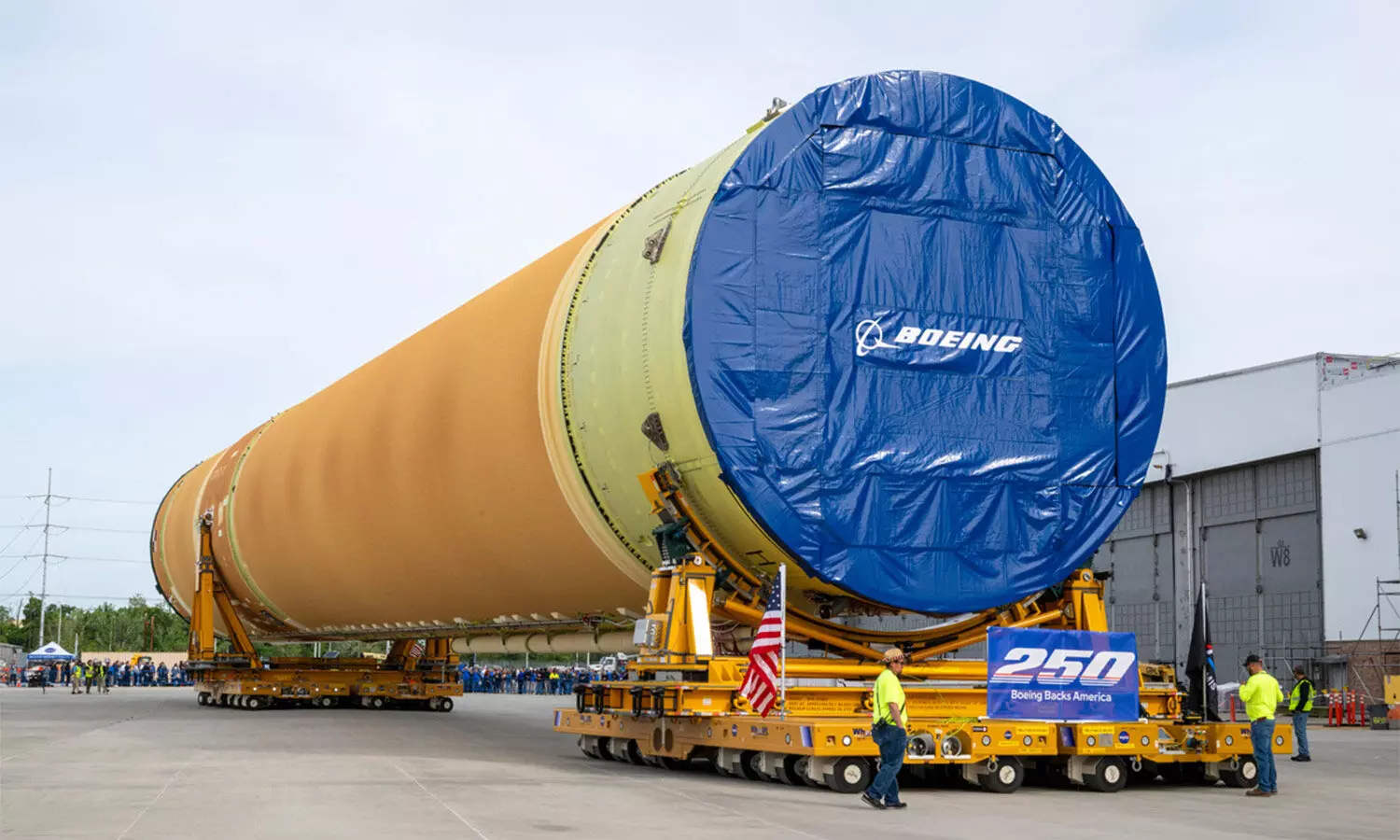
SLS core stage 3 top four-fifths reps Boeing blue on the way to NASA's Pegasus barge
The atmosphere at the Michoud Assembly Facility in New Orleans was remarkably vibrant this week as the workforce transitioned from celebrating the triumph of the Artemis II mission to executing the next phase of lunar exploration. Just ten days after the world watched the Artemis II crew safely conclude their journey around the Moon, Boeing and NASA successfully rolled out the primary hardware for the Artemis III mission. This is the rocket destined to return humans to the lunar surface for the first time in over fifty years.
This massive piece of engineering is the core stage of the Space Launch System, which is often described as the backbone of the rocket. Standing as a colossal orange pillar of aluminium and sophisticated electronics, it represents the largest single element of the vehicle. However, this particular rollout was historic for a different reason because it marked the first time that Boeing had shipped the top four-fifths of the stage before it was fully completed with its engines.
The decision to ship the hardware in this configuration is a strategic move designed to streamline the assembly process. Usually, the entire core stage is finished and outfitted with its four RS-25 engines in New Orleans before being sent to Florida. By opting to send the forward skirt, liquid oxygen tank, intertank, and liquid hydrogen tank as one unit now, Boeing is allowing teams at the Kennedy Space Centre to begin critical vertical integration work. While the Florida team prepares the main body, the complex engine section is being finished separately and will follow shortly after.
The physical move itself is a feat of precision logistics. The 212-foot-tall structure was carefully moved out of the factory doors on a specialised transporter. It travelled 1.4 miles to the docks, where it was loaded onto the Pegasus, a massive 310-foot-long barge specifically designed to carry these massive components.
“Moving the Top Four-Fifths shows how our production process improvements drive faster, more coordinated execution,” says Mike Cacheiro, vice president and program manager for Boeing’s Space Launch System program. “This milestone reflects countless hours of teamwork and a shared mission to push human exploration forward.”
The Pegasus barge is now beginning a 900-mile voyage through the Gulf of Mexico. It will travel around the coast of Florida and finally arrive at the Kennedy Space Centre. Once it arrives, the hardware will be moved into the iconic Vehicle Assembly Building. There, it will stand upright for the first time. This will allow technicians to begin the meticulous process of inspecting the thermal protection systems and preparing the internal plumbing for the eventual arrival of the engines.
The Artemis III mission, currently targeted for 2027, is arguably the most anticipated flight of the century so far. It will be the mission that carries the first woman and the first person of colour to the lunar South Pole. To achieve this, the Space Launch System rocket must perform flawlessly. It must provide more than 2 million pounds of thrust to push the Orion spacecraft out of Earth’s orbit.
As the barge pulls away from the Louisiana coast, it carries more than just metal and fuel tanks. It carries the momentum of a global effort to establish a permanent human presence on another world. For the engineers at Boeing and NASA, the sight of the Artemis III core stage on the move is a clear signal that the dream of walking on the Moon once again is no longer a distant goal. It is now a rapidly approaching reality that the world is watching with bated breath.

"I bring stories to life from the heart of the air cargo, logistics, and aviation supply chain industries. As a News Correspondent at Stat Publishing Group, my focus is on delivering in-depth coverage, industry trends, and expert insights that drive conversations and shape perspectives. With a background in visual communication, photography, and content creation and storytelling, ensuring every report provides value to industry professionals.


