
Rise of smart terminal: Inside the human-light revolution of 2026
Driven by a massive e-commerce surge and the urgent push for Net Zero, the air cargo sector of 2026 is a digital-first frontier.
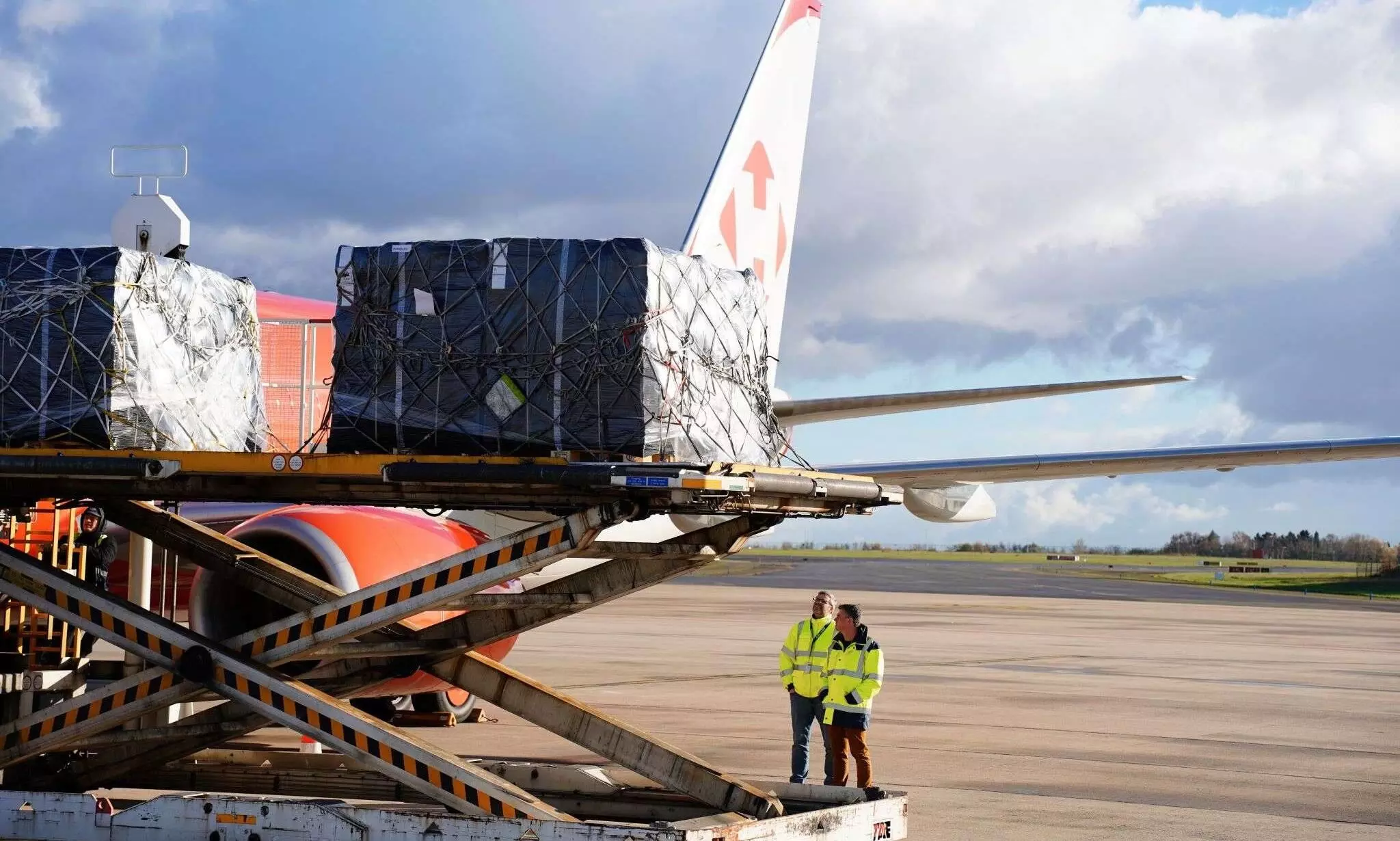
The global air cargo sector is currently undergoing a profound metamorphosis. Once characterised as a labor-intensive, documentation-heavy foundation of international commerce, the industry is rapidly divesting itself of its analog processes. In their stead, a highly interconnected, data-centric, and increasingly automated ecosystem is emerging, one that is redefining the movement of goods globally in an era of instant gratification and environmental urgency.
Driven by a staggering $8.1 trillion e-commerce boom and an industry-wide mandate for net-zero emissions, the aviation cargo landscape of 2026 transcends the mere physical movement of boxes. It has become a digital-first frontier where success is predicated not solely on fleet size, but on the capacity to optimally orchestrate the data those aircraft generate.
According to Airbus’ 2025 Cargo Global Market Forecast (GMF), the global skyline is projected to become considerably more crowded. The report anticipates that the worldwide dedicated freighter fleet will surge to 3,420 aircraft over the next two decades, representing a substantial 45% increase from current levels.
This influx of capacity does not signify a simple replication of existing assets. The GMF outlines a strategy of renewal and specialised growth. To satisfy the projected demand for cargo aviation, a total of 2,605 additional freighters will be necessitated between 2026 and 2030, according to the Airbus GMF.
This requirement is segmented into three primary categories: 1,120 small aircraft, which will be essential for maintaining regional agility; 855 mid-size widebodies; and 630 large widebodies, which are requisite for transcontinental heavy lifting operations.
Perhaps most indicative of the industry’s pivot toward circularity and efficiency is the origin of these aircraft. While 935 will be new constructions, the vast majority 1,670 aircraft will be passenger-to-freighter (P2F) conversions. This trend injects new operational life into existing airframes, enabling airlines to strategically redeploy assets into the high-margin cargo sector as passenger travel patterns stabilise.
While aircraft technology advances significantly, the industry has long identified a persistent bottleneck: the warehouse. This terrestrial hurdle has historically slowed transit, encumbered by manual sorting and paper manifests.
The air cargo terminal of the 2026–2030 period is resolving this through a radical transition toward smart terminals. These facilities are intentionally designed to be human-light, prioritising extreme throughput speed and the near-total elimination of processing errors.
"We perceive the evolution toward more automated, human-light cargo terminals not as a binary choice between efficiency and survival, but as a strategic imperative," stated Frédéric Brun, Head of Commercial Cargo & Logistics at Liege Airport (LGG) and Torsten Wefers, Vice President Sales & Marketing at LGG.
At CargoLand by LGG, the practical implementation of this vision is evident. By deploying AI-powered vision systems and autonomous mobile robots (AMRs), terminals are reporting a 70% reduction in errors. These robots execute palletisation and sorting with a level of precision that human crews are unable to replicate consistently over a 24-hour shift.
Brun noted that this initiative is not focused on replacing personnel, but on empowering them. By utilising tools such as digital twins, virtual replicas of the physical warehouse, operators can simulate workflows in real-time, proactively identifying potential bottlenecks before they manifest on the floor.
The infrastructure of tomorrow
The evolution extends beyond the confines of the warehouse and into the fundamental fuel and flight paths of the industry. The middle-mile drone has formally transitioned from a nascent technology to a logistical imperative.
New-generation cargo drones, developed by companies such as Dronamics (Bulgaria/UK), Elroy Air, and Sabrewing Aircraft Company, have moved beyond carrying light parcels. These autonomous aerial vehicles are now capable of transporting 200–500kg across hundreds of miles.
Aviation confronts a formidable path toward achieving Net Zero. Innovation in propulsion is bifurcating into solutions for short-haul (Electric/Hydrogen) and long-haul.
“Alternative propulsion for regional middle-mile cargo, specifically electric vertical take-off and landing (eVTOL) and hydrogen-propulsion aircraft, are progressing rapidly from prototype stages to certification,” said Brun.
According to IATA reports, Sustainable Aviation Fuel (SAF) is projected to constitute less than 1% of total fuel consumption in 2026, a reflection of the inefficacy of the current policy environment.
This deficiency is further compounded by the lack of harmonisation between CORSIA (Carbon Offsetting and Reduction Scheme for International Aviation) and various regional initiatives, which engenders fragmentation and curtails substantive emissions reductions.
Forward-thinking cargo hubs like LGG are proactively addressing the future gap in cargo aviation infrastructure by focusing on three key areas. Firstly, they are committing to complete electrification, transitioning all ground equipment to 100% electric operations.
Secondly, they are ensuring the immediate availability of SAF through the development of dedicated fuel infrastructure. Finally, these hubs are implementing cargo connect, a comprehensive digital ecosystem designed to facilitate the seamless sharing of critical data among airlines, handlers, and all logistics partners.
The brain of the operation
As the physical and digital infrastructure attains maturity, the commercial dimension of the business is also undergoing a revolution. For decades, the industry operated in silos, with sales (GSAs), operations, and tech infrequently communicating effectively.
Aerion, a commercial holding company, is challenging the current fragmented model of cargo aviation. It unites ECS Group, Global GSA Group, CargoTech, Healthc’Air, Mail & More, TCE, and Squair. Founded by the leaders of the ECS Group, Aerion signifies an evolution from simple airline representation toward full operational orchestration.
“For nearly three decades, we have been actively shaping the air cargo industry rather than simply adapting to it,” said Adrien Thominet, Founder and Chairman of Aerion. “First by establishing ECS Group, then by integrating Global GSA Group, we constructed an unparalleled network. Aerion is the mechanism that connects these components.”
Aerion centralises strategic intelligence by consolidating a range of specialised entities, each focusing on a distinct area of cargo aviation: CargoTech provides high-end digital capabilities for planning and optimisation; TCE offers expertise in safety, security, and quality operations; Squair delivers specialised back-office and claims support; Mail&More handles the high-velocity requirements of e-commerce and postal flows; and Healthc'Air manages the rigorous requirements of temperature-sensitive medical logistics.
In practice, Aerion functions as a strategic central intelligence unit. While each entity preserves its operational independence, they function under a consolidated commercial strategy aimed at achieving measurable, sustainable profit.
Perhaps the most significant paradigm shift highlighted by the emergence of Aerion is the industry's new relationship with data. Historically, possessing information conferred a competitive advantage. Today, data is ubiquitous; it has become a commodity.
The true disruption in 2026 resides not in access to data, but in the capability to exploit it judiciously. Industry standards such as IATA’s ONE Record have provided the requisite foundation for a cleaner, consistent methodology for information sharing. However, Aerion contends that this foundation merely represents the beginning.
"The substantive difference is no longer determined by ‘who possesses the data, but ‘who truly understands how to leverage it to drive profitability," the company added.
Aerion does not seek ownership of the data, but rather the orchestration of its utilisation, translating market signals into precise decisions concerning network planning, pricing, and customer segmentation. In this environment, technology serves as a decision accelerator.
The rise of the neutral hub
As the industry advances, the concept of the neutral hub is becoming increasingly appealing to traditional carriers. To maintain relevance in the face of tech-heavy integrators and agile startups, traditional airlines require operating environments that offer 24/7 flexibility unconstrained by passenger-driven schedules.
Torsten Wefers, Vice President of Sales & Marketing at LGG, observes that the objective is to ensure a seamless integration between air and ground logistics. By utilising hubs such as CargoLand, airlines can operate within an ecosystem where pricing, legal compliance, safety protocols, and sales execution are comprehensively aligned.
The air cargo industry of 2026 is no longer a supporting actor in global trade; it is the lead architect. By blending physical capacity with digital orchestration, the sector is finally moving at the speed of the modern world.