
Lufthansa Cargo posts 29% EBIT growth, returns to global top five
Strong Asian demand and capacity expansion helped lift margins and improve operational performance in 2025.
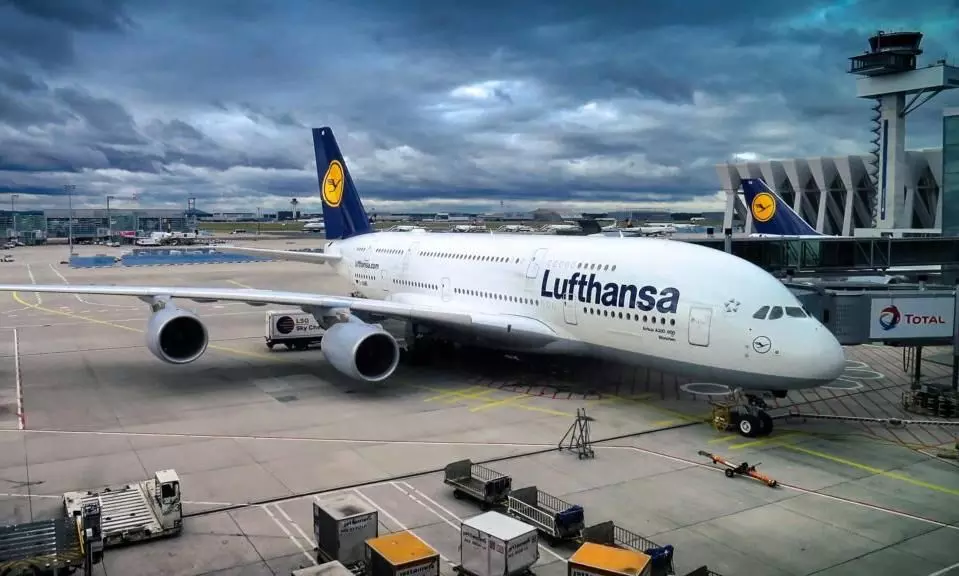
Lufthansa Cargo reported a significant improvement in its business performance in 2025, with adjusted EBIT rising 29 percent to €324 million ($382 million) compared with €251 million ($296 million) in the previous year.
Revenue increased four percent year-on-year to €3.4 billion ($4.01 billion) from €3.26 billion ($3.85 billion), while the adjusted EBIT margin improved by 1.8 percentage points to 9.5 percent. Available freight capacity also expanded during the year, reaching 14.45 billion freight tonne kilometres, up 5.4 percent from the previous year.
Sales grew seven percent year-on-year to 9.1 billion freight tonne kilometres. The average load factor improved to 63 percent from 61.9 percent, while delivery-on-time performance increased by five percentage points compared with 2024.
The company also returned to the top five global air freight providers ahead of schedule, a milestone linked to its BOLD MOVES corporate strategy. The strategy, introduced at the end of 2023, aims to re-establish the airline among the world’s top three cargo carriers by 2030 based on revenue freight kilometres. The company had originally targeted a top five position by the end of the 2026 financial year but achieved the goal by the end of 2025. During the same period, both employee engagement and customer satisfaction improved significantly.
In 2025, Lufthansa Cargo expanded its global offering and advanced several strategic initiatives. Since June 2025, the company has been marketing the cargo capacity of ITA Airways. Since the winter schedule, this has included almost the entire continental and intercontinental network of the Italian airline, except routes to and from the United States and Canada pending regulatory approval.
With Rome added as the fifth hub, Lufthansa Cargo said it is strengthening its presence in Southern Europe and expects to expand global belly hold capacity by around 20 percent in the long term. The carrier said it is currently the home carrier in five of Europe’s ten most important air freight markets, including Germany, Switzerland, Italy, Belgium and Austria.
Ashwin Bhat, CEO of Lufthansa Cargo, said the return to the top five global air freight providers in 2025 reflects the impact of the BOLD MOVES strategy and the work of its global team. He added that the company is continuing to improve quality, customer satisfaction and efficiency while expanding its network through partnerships with ITA Airways and Swiss WorldCargo.
Gregor Schleussner, CFO and CHRO of Lufthansa Cargo, said the company grew by 7.3 percent last year, more than double the overall market growth of 3.4 percent. He said the company also exceeded its margin target due to consistent cost management and strong operating profitability. Schleussner added that Lufthansa Cargo is investing €600 million ($708 million) in a new freight centre at its hub in Frankfurt.
The airline also expanded its network in 2025. New A321 freighter destinations included Katowice, Rome and Beirut, strengthening its presence in Europe and the Middle East. Freighter operations to Tel Aviv were resumed and increased to up to seven weekly flights.
In intercontinental operations, Lufthansa Cargo added freighter connections to Almaty and introduced a new route from Shanghai to Los Angeles via the Pacific. The carrier said it offers up to 50 weekly frequencies in Asia-Pacific and serves more than 30 destinations in North and South America.
Belly hold capacity was also expanded through new routes from Vienna to Los Angeles and from Munich to Orlando, as well as services to Windhoek and Calgary.
The company also reported progress in key industry sectors including pharma, automotive, aviation and semiconductors. Initiatives included joining Silicon Saxony, introducing new standards for vehicle transport and improving processes for the transport of aircraft engines.
In addition, Lufthansa Cargo said it advanced several digitalisation initiatives. A new online booking system has been introduced to speed up processes, while an improved tracking solution aims to increase transparency. The company is also using AI-powered tools, including automated email bookings and virtual reality training.
Looking ahead to 2026, Lufthansa Cargo said it will deepen its collaboration with Swiss WorldCargo to unlock additional synergies in commercial and operational areas. With a harmonised product and service portfolio, customers will gain access to a broader combined network. Zurich will become the sixth cargo hub in the European network, supporting further joint growth in the global air freight market.