
Japan trials humanoid robots to transform airport ground handling
Trial at Haneda aims to ease labour shortages and test robots in baggage handling and cleaning roles over two years
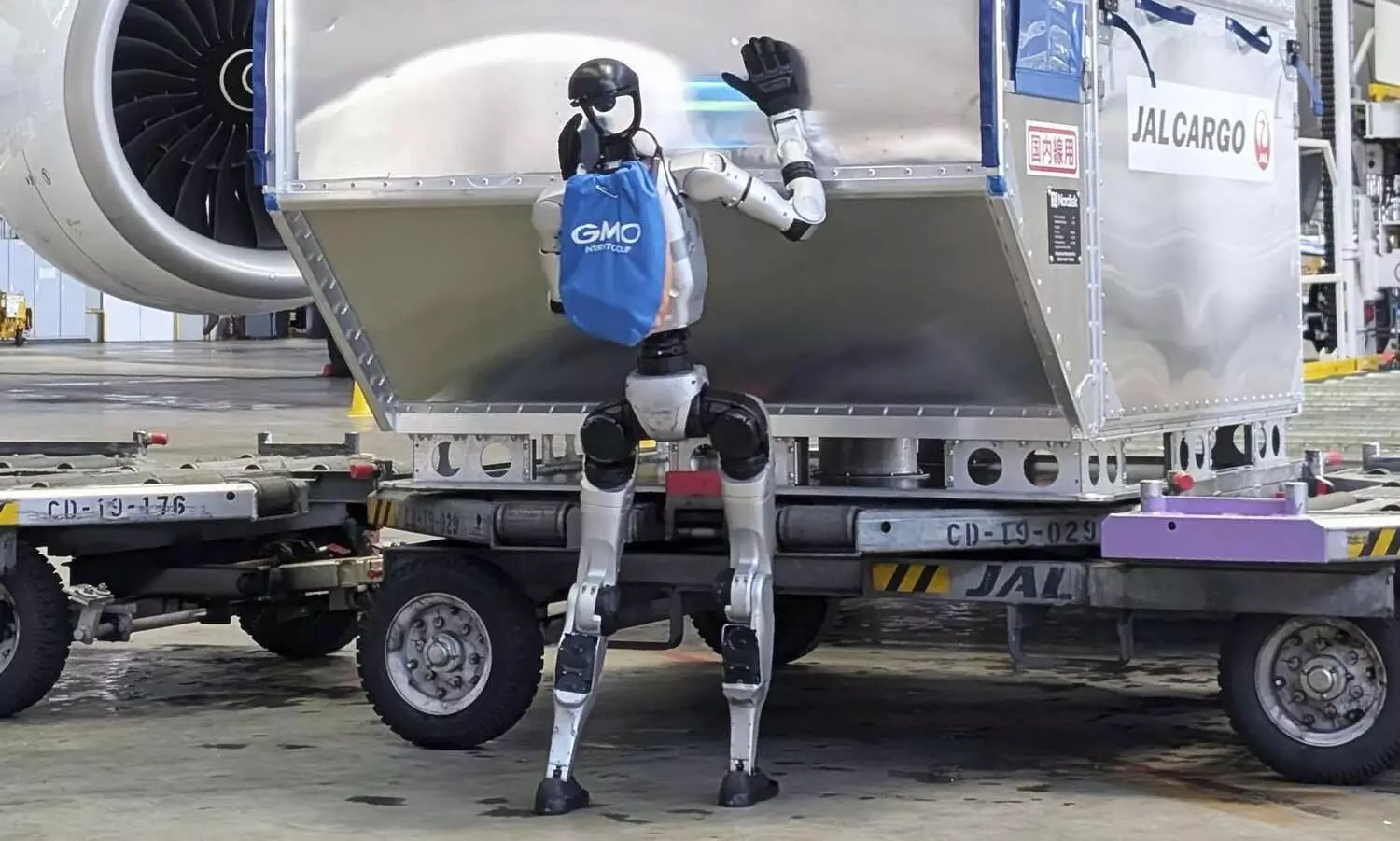
Japan’s first demonstration experiment to utilise humanoid robots in airport operations will begin in May 2026, led by JAL Ground Service (JGS) and GMO AI & Robotics Trading (GMO AIR). The initiative aims to improve efficiency and reduce labour dependency in ground handling operations at airports.
The project will be carried out at Haneda Airport and is planned to run from May 2026 to 2028. It will focus on using humanoid robots for tasks such as loading and unloading baggage and cargo, as well as cabin cleaning. The companies aim to create a sustainable operational structure by reducing workload and improving productivity through the use of robotics.
Ground handling operations currently rely heavily on manual labour and involve physically demanding tasks carried out in complex environments around aircraft. Existing automated systems and single-function robots have limited flexibility in adapting to these conditions. The introduction of humanoid robots, which are designed to move and operate in ways similar to humans, is expected to allow their use without major changes to airport infrastructure.
The demonstration will be conducted in phases. Initially, airport operations will be analysed to identify areas where humanoid robots can be used safely. This will be followed by repeated trials simulating real airport conditions to test their effectiveness in supporting human workers.
The initiative comes as the aviation industry faces a growing shortage of ground handling staff due to increasing inbound tourism and a declining working-age population. These roles require skilled personnel to ensure safety while also placing a significant physical burden on workers. The experiment aims to address these challenges by introducing robotics into routine operations.
JGS will contribute its operational expertise and experience from managing ground handling services at major domestic airports. It will define requirements, assess safety standards, and identify practical challenges for implementation. GMO AIR will provide the humanoid robots and develop their motion programmes, drawing on its experience in AI and robotics as well as its research and development activities.
Through this experiment, the companies aim to create an environment where humanoid robots can operate safely alongside human workers. The initiative is also expected to support broader efforts to address labour shortages in the aviation sector and promote more sustainable working conditions at airports.
The project aligns with the GMO Internet Group’s designation of 2026 as the “First Year of Humanoids” and represents a step towards wider adoption of AI and robotics across industries.