
Iran conflict disruption pushes up air cargo rates on key routes
Capacity tightens and fuel costs rise as conflict impacts global air freight markets.
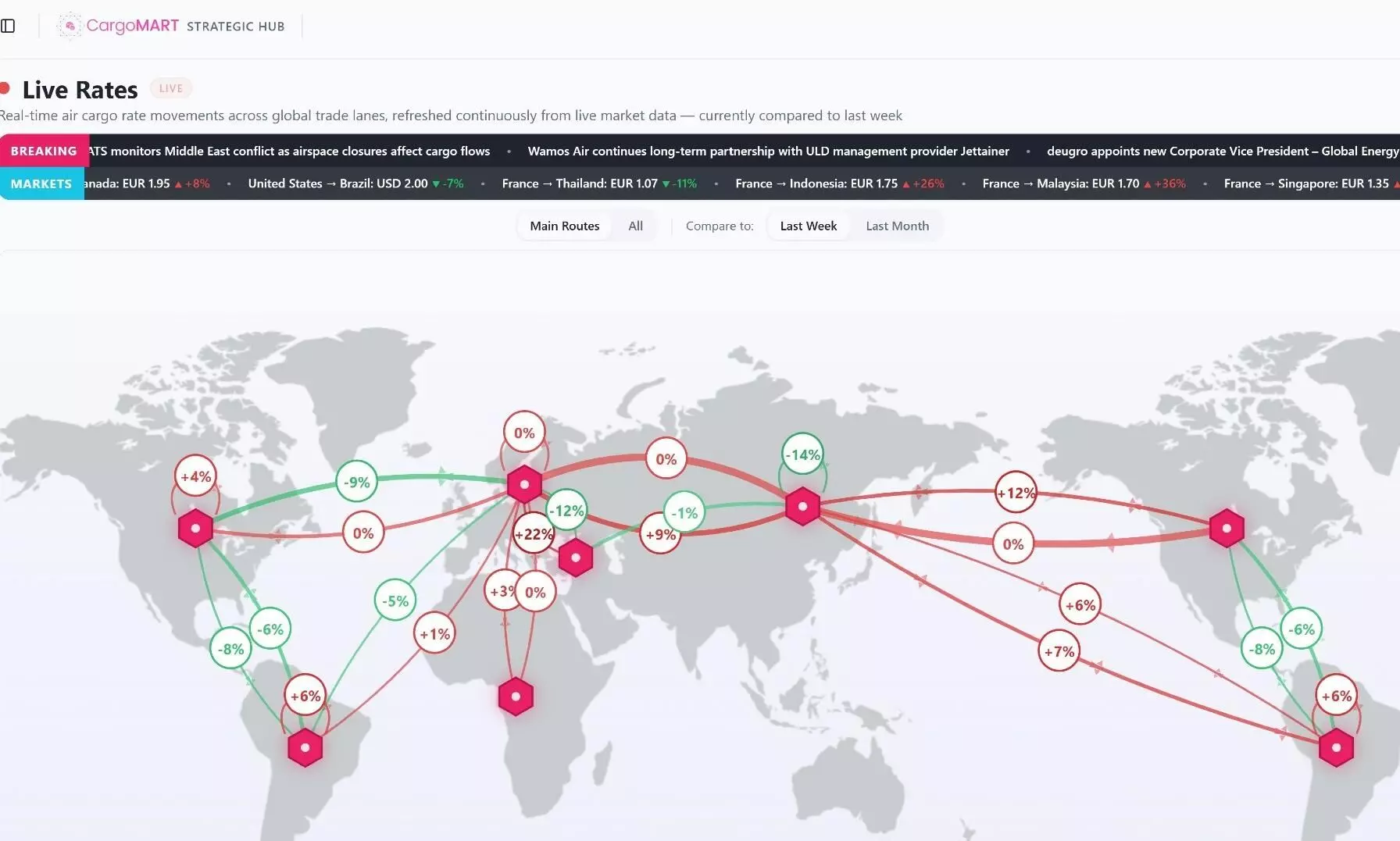
The escalation of the Iran conflict is already creating a ripple effect across global air cargo markets, tightening capacity on several key trade lanes and pushing up freight rates in multiple regions.
Middle Eastern carriers play a critical role in the global air cargo network, acting as major hubs that connect Asia, Europe, Africa and the Americas. Disruptions to their operations and airspace routing are beginning to affect capacity across these routes, according to the latest market data.
Freight rates have already started to respond to these pressures. Rates between Europe and the Middle East have increased by 22 percent, while Asia–North America rates are up 12 percent and Europe–Asia rates have risen by 9 percent. At the same time, some markets remain flat or slightly softer as cargo flows rebalance, with North America–Europe rates down 9 percent and Asia–Europe rates down 1 percent.
The conflict is also pushing oil prices higher, which is expected to translate into increased fuel surcharges in the coming weeks. This could add further pressure to air freight rates worldwide.
In this environment, real-time market visibility is becoming increasingly important. CargoAi said users of its platform can monitor these changes directly through continuously updated rate data and operational insights, as traditional datasets with a one-month lag are no longer sufficient in a fast-moving market.