
How Sustainable Aviation Fuel is reshaping global aviation
Airlines, fuel producers and logistics companies are stepping up efforts to scale Sustainable Aviation Fuel as aviation searches for practical ways to cut emissions.
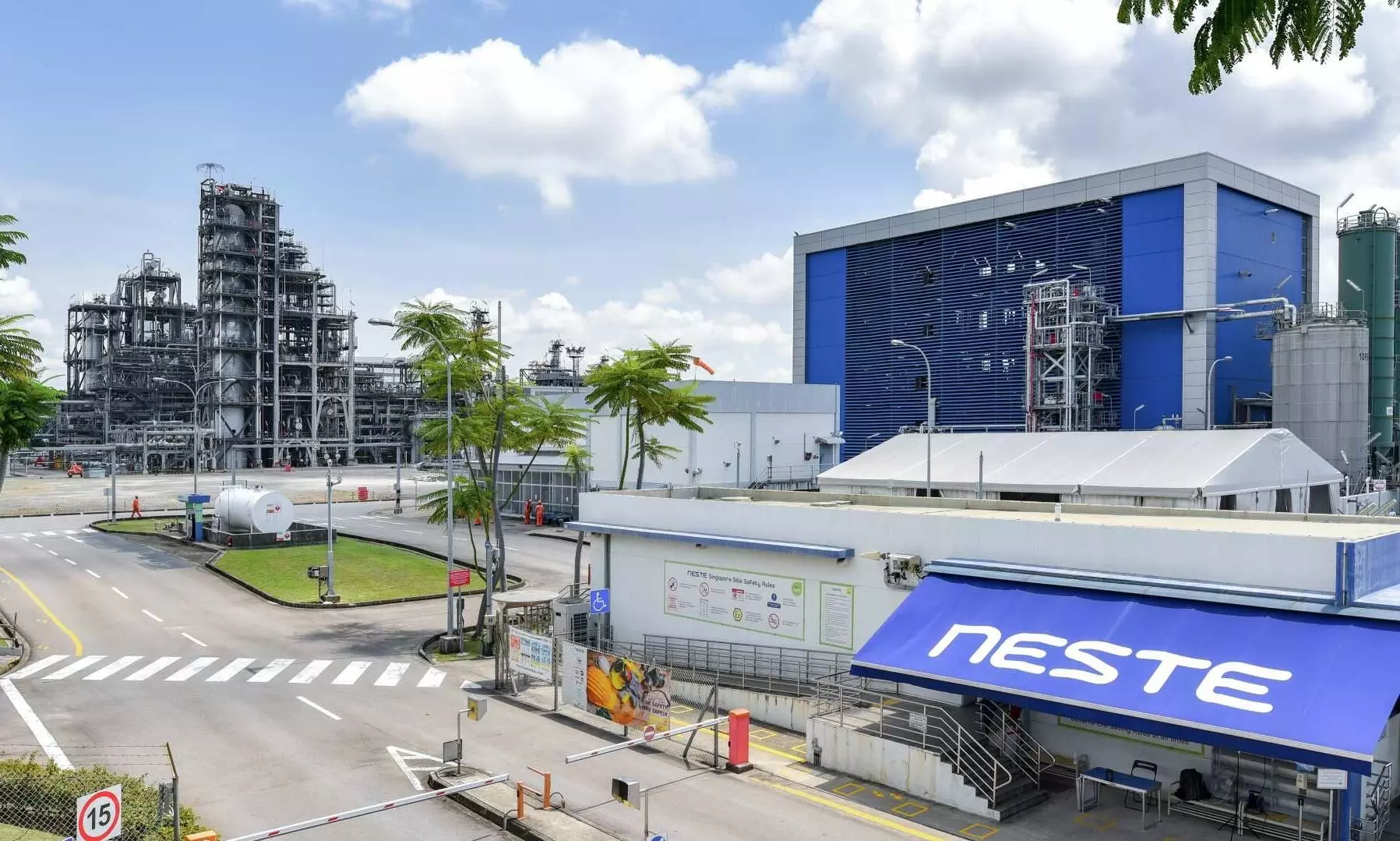
Neste Singapore refinery
The aviation industry is accelerating its search for cleaner fuels. Airlines, fuel producers and logistics companies are increasingly turning to Sustainable Aviation Fuel (SAF) as one of the most practical solutions to reduce aviation emissions while keeping global air transport running.
Unlike many other transport sectors, aviation still depends heavily on liquid fuels, especially for long-haul flights that carry a large share of global air cargo. Because of this, SAF is now seen as the most immediate way for the industry to reduce emissions without major changes to aircraft or infrastructure.
Across the aviation ecosystem, companies are starting to move from small pilot projects to larger commercial initiatives. Partnerships between airlines, logistics providers and fuel producers are growing, while governments are introducing policies designed to increase SAF production and use.
One of the reasons SAF is gaining attention is its environmental impact. According to DHL Group, SAF can reduce lifecycle greenhouse gas emissions by up to 80 percent compared with conventional jet fuel, depending on the feedstock and production method.
A DHL cargo plane is refueled at DHL's largest hub in Leipzig.
Another advantage is that SAF can be used in existing aircraft without major changes. It is considered a “drop-in fuel”, meaning it can be blended with conventional jet fuel and used with current aircraft engines and airport infrastructure. The fuel is typically produced from renewable materials such as used cooking oil, animal fats, agricultural residues and other waste sources.
Logistics companies are already increasing their use of SAF as part of their sustainability strategies. DHL Express has secured supply agreements for more than 240,000 metric tonnes of SAF over three years to reduce emissions across its aviation network. The company has also introduced services such as GoGreen Plus, which allows customers to lower the emissions linked to their air freight shipments by using SAF within DHL’s air network.
Partnerships across the aviation industry are also helping expand the SAF ecosystem. Logistics provider Kuehne+Nagel and Swiss International Air Lines have joined forces to support the scaling of synthetic aviation fuel, Created by combining green hydrogen (from water) and captured carbon dioxide, developed by clean technology firm Synhelion. The partners plan to use the fuel for air cargo shipments from 2027, reflecting growing interest in alternative SAF production technologies.
Governments are therefore starting to play a bigger role in supporting SAF adoption. Policies and mandates are increasingly being introduced to create demand for SAF and encourage investment in production.
One example is Singapore. The Civil Aviation Authority of Singapore has announced that flights departing the city-state will be required to use SAF from 2026. The policy will require a one percent SAF blend at Singapore Changi Airport, with the target expected to rise to between three and five percent by 2030.
Singapore has also launched a voluntary SAF procurement trial involving nine organisations to help develop a national SAF ecosystem ahead of the mandate.
Fuel producers are also expanding their role in the transition. Renewable fuel producer Neste has increased its cooperation with United Airlines to expand the use of SAF across three major airports in the United States, reflecting wider efforts to build reliable supply chains.
Neste Singapore refinery
The spokesperson at Neste also highlights the importance of scaling production. “Neste’s Singapore refinery is the world’s largest SAF production facility with a production capability of one million tonnes per annum, which is more than enough to meet Singapore’s one percent SAF target going forward,” the company says.
Production capacity is also rising globally. Neste operates the world’s largest SAF production facility in Singapore, where fuel is produced from renewable waste and residue materials such as used cooking oil using HEFA technology, short for Hydroprocessed Esters and Fatty Acids. This process converts waste oils and fats into aviation fuel that can be blended with conventional jet fuel and used in existing aircraft engines.
The company is also expanding its refinery in Rotterdam, which will increase its global renewable product production capacity to 6.8 million tonnes annually. Once completed in 2027, Neste’s global SAF production capability is expected to reach 2.2 million tonnes per year.
Despite growing interest, cost remains one of the biggest barriers to wider SAF adoption. According to Neste, SAF can currently cost two to three times more than conventional jet fuel, depending on market conditions. The company notes that the comparison does not include the environmental cost of fossil fuels, adding that the question should also be what the cost will be if the industry delays its transition to cleaner fuels.
For airlines and cargo operators, however, these policies also bring financial implications. Cargo carriers say the SAF levy introduced in Singapore will apply to all shipments originating in the country, including cargo transported in the belly hold of passenger aircraft.
At Lufthansa Cargo, shipments departing Singapore will be subject to the locally mandated SAF levy, which the airline will collect from customers and pass on to authorities.
“The SAF levy announced by the Civil Aviation Authority of Singapore will apply to all origin-destination cargo shipments departing from Singapore,” the spokesperson at Lufthansa Cargo says, adding that the charge will be displayed as a separate line item for shipments.
The spokesperson notes that the levy will operate alongside its existing Airfreight Surcharge structure, which already reflects cost changes such as fuel prices, currency fluctuations and regulatory requirements.
For airlines operating major cargo networks in Asia, another key question is how SAF policies might influence competition between aviation hubs. According to Cathay Pacific, scaling SAF is essential for aviation to meet its decarbonisation targets but requires collaboration across the industry.
“Scaling SAF is essential to meeting the industry’s decarbonisation targets, but it cannot be done by airlines alone,” the spokesperson says. “Collaboration across the value chain is key to meaningfully scaling SAF and balancing its environmental and business impacts.”
Cargo customers are also playing a growing role in the transition. Airlines report that sustainability is increasingly being discussed alongside reliability, speed and cost when companies choose logistics services.
Cathay Pacific spokesperson says demand for lower-carbon transport options is growing among cargo customers. Through its Corporate SAF Programme launched in 2022, the airline works with corporate partners to purchase SAF and reduce emissions linked to cargo shipments and business travel. The programme had 17 global partners in 2025, including logistics companies looking to reduce the carbon footprint of their air freight operations.
Together, these developments show that SAF is gradually moving from small trials to wider adoption. Fuel producers are expanding capacity, governments are introducing supportive policies and logistics companies are integrating SAF into their operations.
The transition will take time. Production still needs to scale and costs remain high. But across the aviation ecosystem, the direction is becoming clearer. SAF is steadily gaining ground as the industry works toward a lower-carbon future for global aviation and air cargo.