
How Central Asia is rewriting the map of global air cargo routes
With rising e-commerce and new trade routes, Central Asia is emerging as a major corridor for global air cargo.
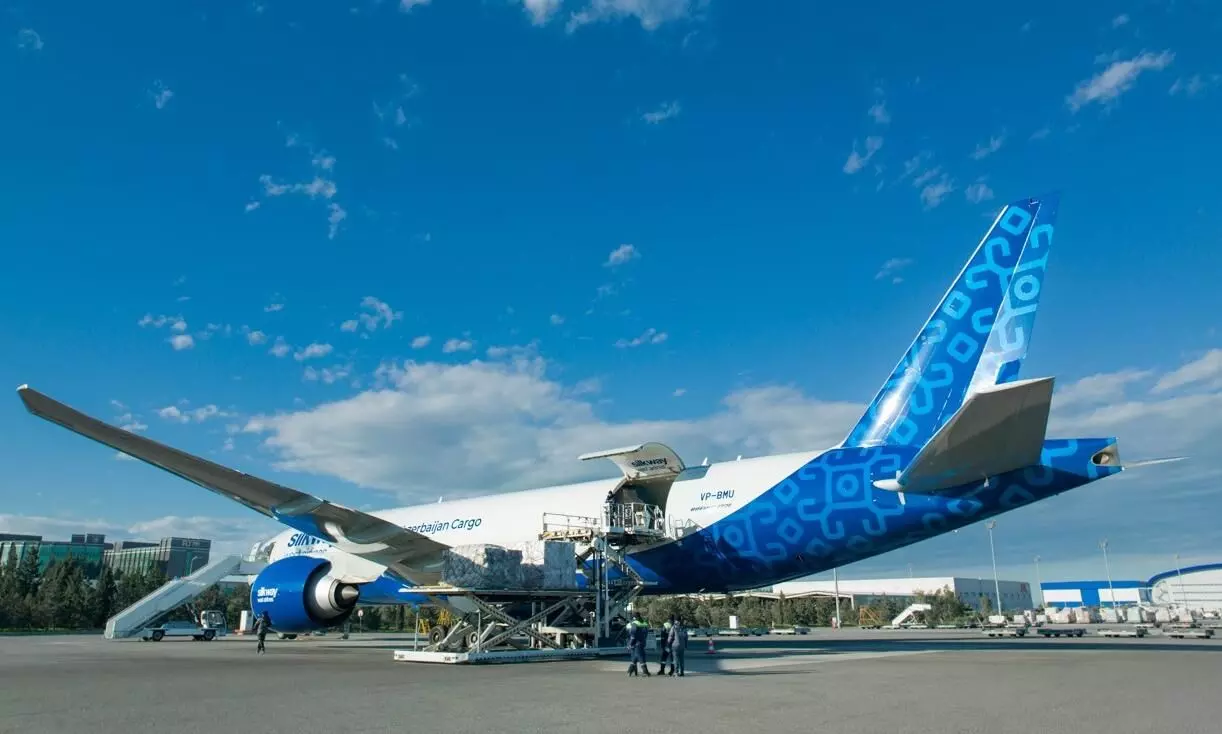
Central Asia is quietly rewriting the map of global air cargo. Once viewed primarily as a landlocked region dependent on surface transport, the area stretching from the Caspian Sea to China's western borders is rapidly evolving into a strategic logistics corridor connecting three of the world's most dynamic economic zones: Asia, Europe, and the Middle East.
This transformation is being driven by several converging forces: the diversification of global supply chains, the explosive growth of e-commerce across emerging markets, infrastructure modernisation programmes across the region, and the strategic repositioning of cargo carriers seeking alternatives to congested traditional routes. For airlines with deep roots in the region, these shifts represent not just opportunity but validation of long-held strategic bets on Central Asia's geographic and economic potential.
The European Bank for Reconstruction and Development’s latest Regional Economic Prospects report projects that the Central Asian economies of Kazakhstan, the Kyrgyz Republic, Mongolia, Tajikistan, Turkmenistan, and Uzbekistan will grow by an average of 6.1% in 2025.
This solid growth is driven by strong industrial output, firm domestic demand, rising investment, higher real wages, and healthy remittance inflows. While the outlook for these economies remains positive in 2026, growth is forecast to ease to 5.2%.
According to the IATA Air Cargo Market Analysis data of October 2025, the corridors between Europe and Asia, as well as within Asia, experienced significant gains in 2025, as trade policy changes promoted the rerouting of goods. While demand in the former expanded by 10.6% YTD, the latter added 9.4%. By contrast, the Asia-North America corridor contracted by 1.1% year-to-date.
This combination of shifting trade routes and robust regional economic expansion is creating a convergence moment for carriers positioned to capitalise on Central Asia's geographic advantages.
A historical gateway reimagined
For Georgia, positioning itself as a modern air cargo hub represents a return to historical form rather than a departure from it. The country sits at the crossroads of Europe, Central Asia, the Middle East, and China, a geographic advantage that once made it a vital node along the ancient Silk Road. Today, that heritage is being translated into contemporary logistics infrastructure.
“Georgian Airlines views Georgia not simply as a transit country, but as a historical and natural gateway between civilisations,” explains Tsisia Phanchvidze, First Deputy General Director of Georgian Airlines. “For centuries, Georgia was positioned along the ancient Silk Road, serving as a land bridge where trade, culture, and diplomacy moved between Asia and Europe. This heritage forms the foundation of Georgia’s contemporary transport ambitions. The country has always been a place where routes converge, where goods change hands, and where east meets west.”
What makes Georgia particularly compelling in the current environment is its ability to offer what Phanchvidze describes as “the shortest multimodal link between Asia and Europe.”
“We aim to serve as the anchor carrier, offering dependable scheduled and charter capacity that ensures regional connectivity even in volatile market conditions.”
Tsisia Phanchvidze, Georgian Airlines
“Unlike alternative routes that are congested or geopolitically constrained, the Georgian corridor, through its air gateways at Tbilisi, Kutaisi, and Batumi, enables rapid, predictable, and cost-efficient movement of commercial goods from China, Central Asia, and the Middle East onward to European markets and vice versa,” she adds. In an era when supply chain reliability has become as important as cost, this combination of speed and predictability carries significant weight.
Building the infrastructure ecosystem
Georgian Airlines' ambitions extend beyond simply operating aircraft. The carrier is working toward what it calls a “single-window” air logistics ecosystem in Georgia, which will enable customers to move cargo through Georgia with single-point coordination, faster clearance, reduced cost, and guaranteed reliability.
“This approach directly reflects the function Georgia historically performed under the Silk Road, acting as an efficient convergence point rather than a passive transit zone,” adds Phanchvidze.
Phanchvidze outlines several critical infrastructure priorities: “The development of modern, scalable cargo terminals equipped with advanced ULD management systems is critical. Today’s global cargo flows, particularly driven by e-commerce and supply chain regionalisation, require rapid processing capability, automated sorting, and high-capacity storage.”
Equally important, she emphasises, is customs modernisation. Faster clearance cycles, digital pre-arrival documentation, and fully integrated e-customs platforms would reduce dwell times, improve predictability for shippers. The expansion of cold chain and pharmaceutical handling capabilities represents another priority, particularly as the global movement of perishables, vaccines, and medical supplies continues to grow.
For e-commerce specifically, one of the fastest-growing cargo segments, Georgia is looking to develop bonded warehouses, automated parcel sorting systems, cross-border fulfilment centres, and one-stop customs processing. The goal is to transform Georgian airports into what Phanchvidze describes as “modern connectivity platforms that reduce transit time and increase economic competitiveness across Eurasia.”
Baku's strategic positioning
Further east, Azerbaijan has emerged as another critical node in the Central Asian air cargo network. Baku's geographic position at the literal crossroads of East and West, combined with modern infrastructure and strong operational capabilities, has made it an increasingly attractive transit hub for cargo moving between continents.
Silk Way West Airlines, the region's largest cargo carrier, has been systematically strengthening its Central Asian network. The carrier views the region not as a peripheral market but as core to its long-term strategy.
“Central Asia is transforming into a strategically important region in global logistics. Its rapid development, expanding industries, and growing trade links are turning it into a key connector between Asia, Europe, and the Middle East. For us, this region is not just an opportunity; it’s a core part of our long-term network strategy, and we are actively strengthening our presence through new projects and dedicated services,” says Vugar Mammadov, Vice-President of Silk Way West Airlines.
Mammadov points to several factors driving the region's attractiveness: “Azerbaijan and Central Asia are experiencing steady, sustainable growth. Purchasing power is rising, consumer markets are expanding, and industrial development continues. All of this drives demand for imported cargo. Baku’s location at the crossroads of East and West makes it an ideal transit hub. Combined with modern infrastructure and our strong operational capabilities, the region offers a compelling environment for air cargo operations.”
Diverse cargo flows fueling growth
The types of cargo moving through Central Asian corridors reflect the region's economic complexity. E-commerce dominates growth statistics, with online shopping having significantly increased cargo volumes across the region. This mirrors global trends, but the growth rates in Central Asian markets have been particularly dramatic as digital payment infrastructure, logistics capabilities, and consumer confidence have all matured simultaneously. According to data from IMARC Group, the Central Asia e-commerce market reached USD 14.7 billion in 2024 and is projected to grow to USD 182.2 billion by 2033, registering a CAGR of 30.63% between 2025 and 2033.
“E-commerce remains the fastest-growing segment, and online shopping has significantly increased cargo volumes across the region,” Mammadov confirms. “At the same time, there is a stable demand for construction materials, driven by infrastructure projects, and for oil-and-gas-related equipment, which is essential for both Azerbaijan and Central Asian markets.”
Phanchvidze says, “From a geographic standpoint, our operations have already extended beyond Georgia to include Italy, France, Belgium, Hungary, Romania, Israel, the United Arab Emirates, Kazakhstan, China and Hong Kong. These markets represent either origin-destination flows or transit points where we consolidate cargo to channel through Georgia.
She notes that growth is being driven by China–Europe flows through the Black Sea, increased Central Asia–Europe transit activity, and fast-expanding e-commerce linking the Caucasus with Türkiye, the Gulf and the EU.
Operational realities and strategic responses
Operating in Central Asia presents a unique mix of advantages and challenges. On the positive side, many Central Asian airports remain relatively uncongested compared to major European or Asian hubs, giving airlines operational flexibility and smoother turnaround times, a significant advantage in an industry where delays cascade quickly through networks.
However, infrastructure development remains uneven. “Some of these airports are still developing their cargo-handling infrastructure.” Mammadov acknowledges. “This can create challenges in processes, experience levels, and special cargo handling. We work closely with local partners to improve procedures and share best practices as the market evolves.”
This hands-on approach to market development, working directly with airport operators and ground handlers to build capabilities, has become characteristic of carriers operating in the region.
Fleet strategies for a dynamic market
Both Silk Way West and Georgian Airlines are pursuing fleet strategies that balance long-term modernisation with short-term market responsiveness.
“We are balancing long-term fleet renewal with short-term adaptability. Along with ordering two more A350F aircraft, we are also operating a wet-leased B737. These give us the flexibility needed for regional and feeder routes, helping us respond quickly to market demand and offer more frequent and efficient services in Central Asia. Three new B777-200F aircraft have already joined our fleet, the fourth will arrive early next year, and several more are on the way. We have also ordered 4 A350F and 4 B777-8F to be delivered by the end of this decade and the early 2030s,” says Mammadov.
The carrier also operates Boeing 747F and 747-8F freighters alongside its fleet of Boeing 777Fs.
Georgian Airlines is backing this positioning with concrete fleet expansion plans. “We expect to add additional B767 freighters to reinforce regional connectivity, followed by the gradual introduction of wide-body freighters that can support growing intercontinental and e-commerce flows. This plan reflects the lessons drawn from markets like Hainan, where our growth was accelerated by the liberalisation of air rights and demand for flexible fifth and seventh-freedom networks. As Georgia strengthens similar frameworks and demand scales, we aim to synchronise our fleet expansion so that capacity development supports service quality rather than merely reacting to market volume. Our timeline for expansion remains within the next 12 to 18 months, which we believe is realistic and aligned with both market demand and our ambition to establish a single-window cargo service platform in Georgia,” says Phanchvidze.
Image: YUPENG LU/LinkedIn
This multi-aircraft approach reflects the operational reality of serving Central Asia effectively. Widebody aircraft handle trunk routes between major hubs, while narrowbody freighters provide the frequency and flexibility needed to serve smaller markets and build regional networks.
Digital transformation and network intelligence
Beyond aircraft and infrastructure, technology is becoming a crucial differentiator. Silk Way West is developing its own reservation and schedule-planning system to improve both operational efficiency and customer experience. This move toward proprietary digital platforms reflects a broader industry trend, but it's particularly relevant in Central Asia, where legacy systems at some airports may not integrate seamlessly with global standards.
Network planning has also become more sophisticated and responsive. “The air cargo market reacts instantly to global economic and trade shifts. We continuously track these changes, especially along the East–West corridor. Based on this data, we adjust our network, capacity, and routing to stay aligned with real demand and ensure the most efficient transit options for our customers,” Mammadov notes.
“Many Central Asian airports are still uncongested, which gives airlines more flexibility and smoother operations, a clear advantage.”
Vugar Mammadov, Silk Way West Airlines
This agility proved particularly valuable during the global supply chain disruptions of recent years, when traditional routing options faced congestion, capacity constraints, and geopolitical complications. Central Asian corridors offered alternatives precisely because they had invested in building redundancy and flexibility into their networks.
Looking ahead
Central Asia's trajectory as an air cargo corridor is being shaped by multiple forces converging simultaneously. Infrastructure investments across the region continue to accelerate, with governments recognising logistics connectivity as critical to economic development. Airport expansions, customs modernisation programmes, and the development of specialised cargo facilities are transforming what were once basic transit points into sophisticated logistics platforms.
The region's carriers are responding with network expansion plans that extend beyond their home markets. Silk Way West is preparing new destinations in Asia and Europe for the upcoming year, while Georgian Airlines is synchronising growth with infrastructure development to ensure expansion supports service quality rather than simply adding capacity. But the momentum extends beyond individual airlines; the region is attracting interest from global integrators, freight forwarders, and e-commerce platforms seeking alternatives to congested traditional routes.
“We see ourselves as a principal catalyst in shaping Georgia's rise as a modern Eurasian air logistics centre,” Phanchvidze explains. “Our long-term ambition is not limited to operating flights, but to architect an integrated ecosystem where Georgia becomes the preferred transit and distribution point for cargo moving between China, Central Asia, Europe, and the Middle East.”
This ecosystem approach, combining aircraft operations, ground infrastructure, customs facilitation, and digital integration, represents the emerging model for hub development across Central Asia. Success requires not just moving boxes efficiently but creating seamless, transparent, digitally enabled systems that reduce friction at every stage of the logistics chain. Countries throughout the region are adopting variations of this integrated model, recognising that competing in global air cargo requires comprehensive solutions rather than piecemeal improvements.