
Chongqing launches Tel Aviv cargo route, expands Europe freight links
The new freighter service strengthens western China’s air cargo network with direct access to the Middle East and Europe
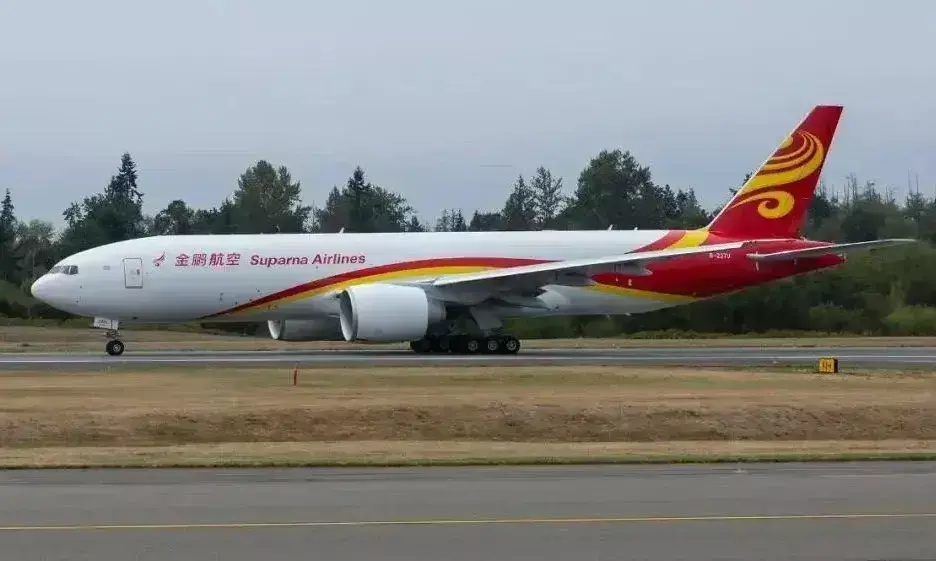
A new cargo air route between Chongqing in western China and Tel Aviv in Israel has begun operations, and while it may sound like just another flight announcement, it signals something much bigger.
On January 28, 2026, Suparna Airlines officially launched the Chongqing–Tel Aviv all-cargo service using a Boeing 777 freighter. The aircraft will operate two flights a week, carrying up to 103 tonnes of goods over a distance of 9,200 kilometres. The cargo on board will largely include cross-border e-commerce shipments, automotive parts, medical equipment and other commercial goods.
In simple terms, this route creates a direct freight bridge between western China and the Middle East. Until now, Chongqing did not have a dedicated all-cargo connection to this region. Goods often had to be routed through other Chinese cities or foreign hubs, adding time and cost. The new service closes that gap and allows exporters to move cargo faster and more directly.
The Tel Aviv launch is not an isolated development. It comes at a time when Chongqing Jiangbei International Airport (CKG) is steadily building an international freighter network. As of January 30, the airport is operating three long-haul all-cargo routes linking Chongqing with Europe and the Middle East. These include Suparna Airlines’ services to Liège in Belgium and Tel Aviv in Israel, and China Cargo Airlines’ route to Budapest in Hungary.
Chongqing is one of China’s largest manufacturing centres. The city produces electronics, vehicles, auto components and industrial equipment, much of which is destined for overseas markets. Unlike coastal cities such as Shanghai or Guangzhou, Chongqing is located deep inland. For exporters here, air freight is not a luxury but a necessity. Direct cargo flights reduce reliance on road and rail connections to distant ports and help manufacturers reach global markets more efficiently.
In recent years, Chongqing Jiangbei International Airport has increasingly focused on cargo rather than passenger traffic. The rise of cross-border e-commerce has played a major role in this shift. Online sellers require stable, predictable capacity and fast delivery times. Dedicated freighter aircraft, unlike passenger planes, can carry heavier loads, operate longer routes and remain unaffected by fluctuations in passenger demand.
The airport’s expanding cargo network reflects this reality. By linking Chongqing directly with key logistics hubs in Europe and the Middle East, the airport is shortening supply chains and making western China more competitive in international trade.
Europe remains a central pillar of this strategy. The Chongqing–Liège route operated by Suparna Airlines connects the city with one of Europe’s most important cargo airports. Liège has built its reputation as a freight-focused hub, handling large volumes of e-commerce and express shipments. Its location allows cargo to reach major European markets such as Germany, France and the Netherlands within hours by road. For Chinese exporters, this route offers fast access to Western Europe without the congestion often seen at larger passenger-heavy airports.
At the same time, the Chongqing–Budapest service operated by China Cargo Airlines strengthens links with Central and Eastern Europe. Budapest has emerged as a growing cargo gateway, serving not only Hungary but also neighbouring markets across the region. The route supports the flow of high-value manufactured goods and e-commerce shipments into Europe’s emerging consumer markets, complementing connections to Western Europe.
The addition of Tel Aviv now extends Chongqing’s cargo reach beyond Europe. Israel acts as a gateway to the Middle East and has strong demand for high-value and time-sensitive goods, particularly in the medical, technology and automotive sectors. The direct all-cargo service allows Chongqing’s manufacturers and online sellers to tap into this market more efficiently, while also opening onward connections to neighbouring regions.
Taken together, the three routes form a clear pattern. Liège links Chongqing to Western Europe, Budapest opens doors to Central and Eastern Europe, and Tel Aviv connects the city to the Middle East. This is not just route expansion. It is network building. As trade patterns evolve and speed becomes critical, Chongqing Jiangbei International Airport is quietly reshaping its role in global logistics, one freighter route at a time.